
Senigallia & Staffolo
April 4th 2026
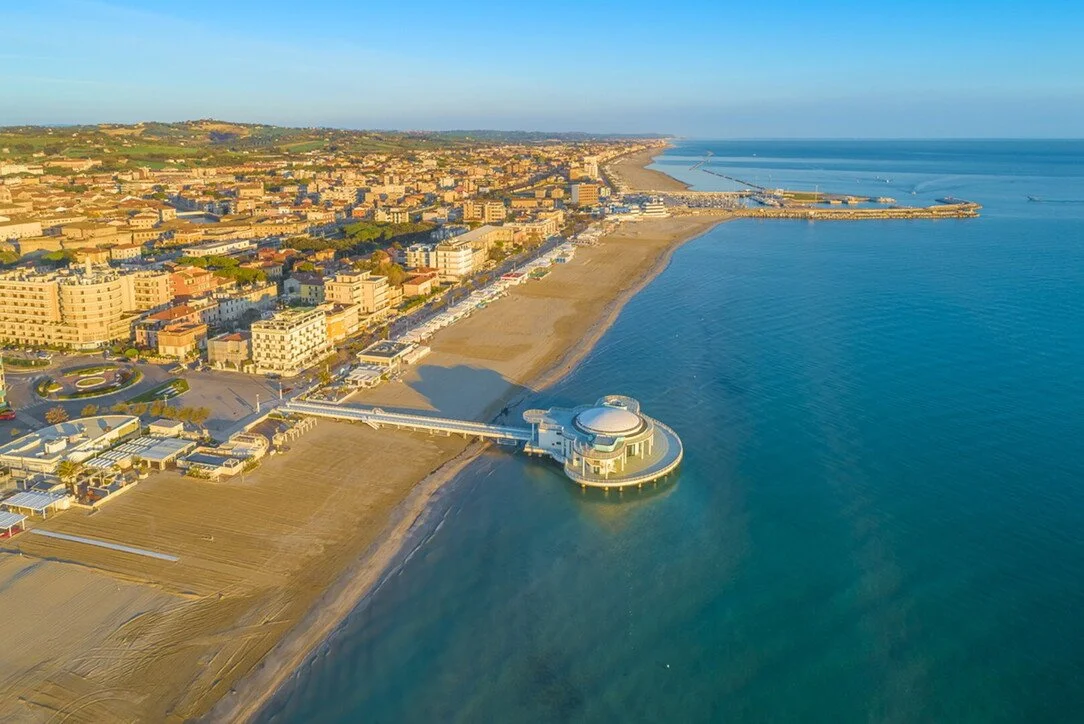
Senigallia
Senigallia is a historic Adriatic seaside town with a history going over 2000 years. It is known for is Velvet Beach (a long stretch of fine soft sand) where the Misa River meets the Adriatic Sea.
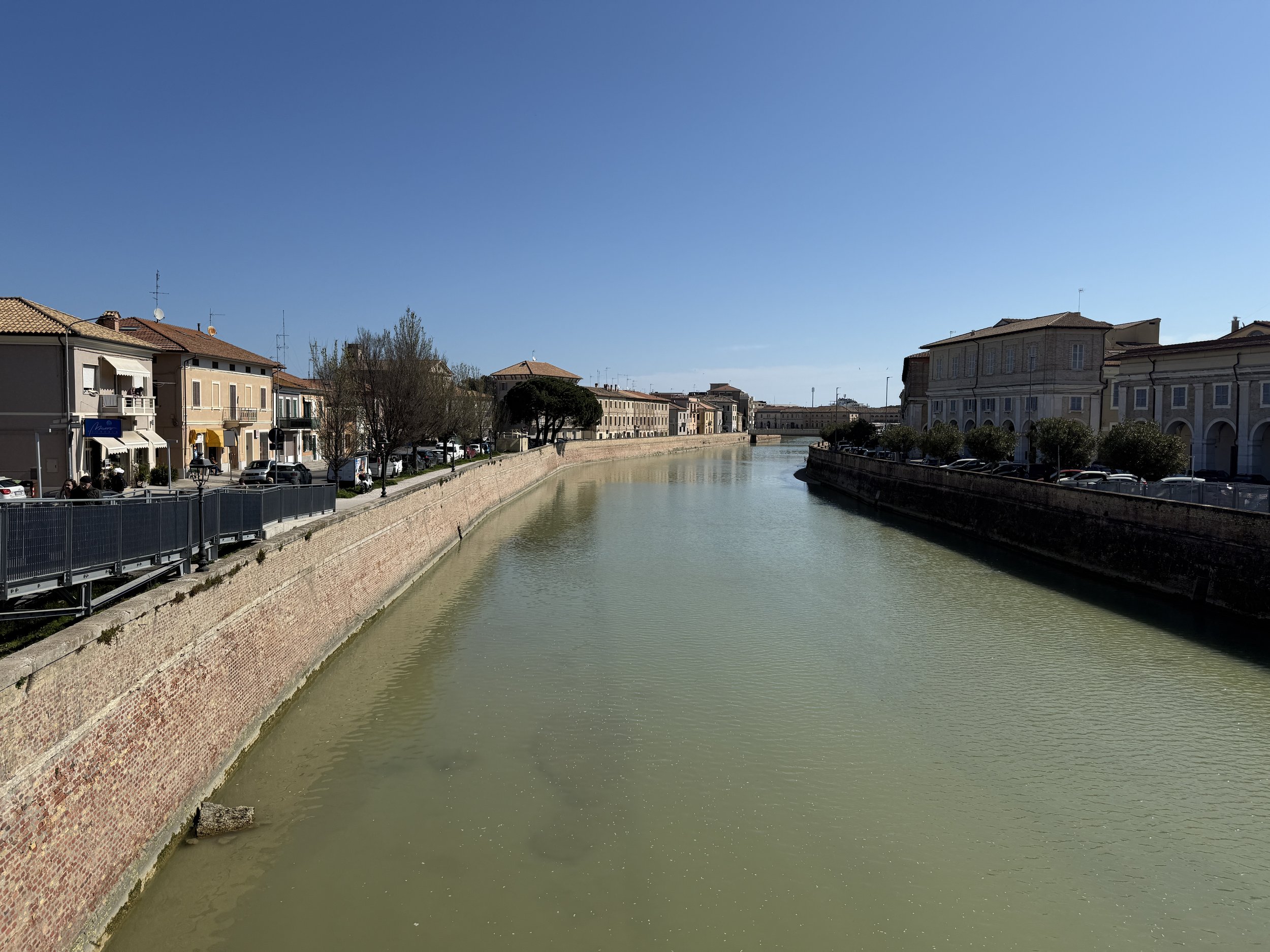
Misa River in Senigallia.
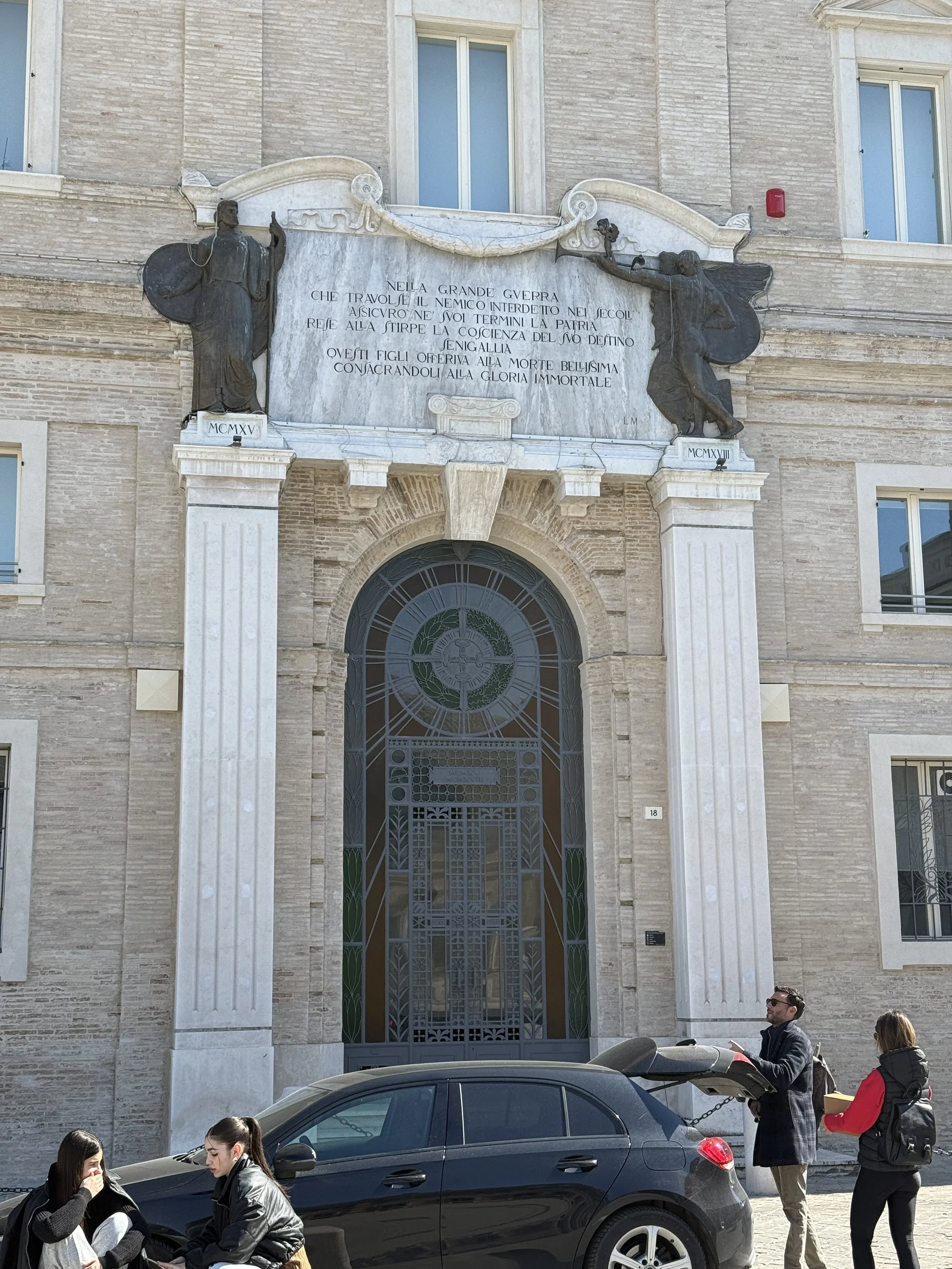
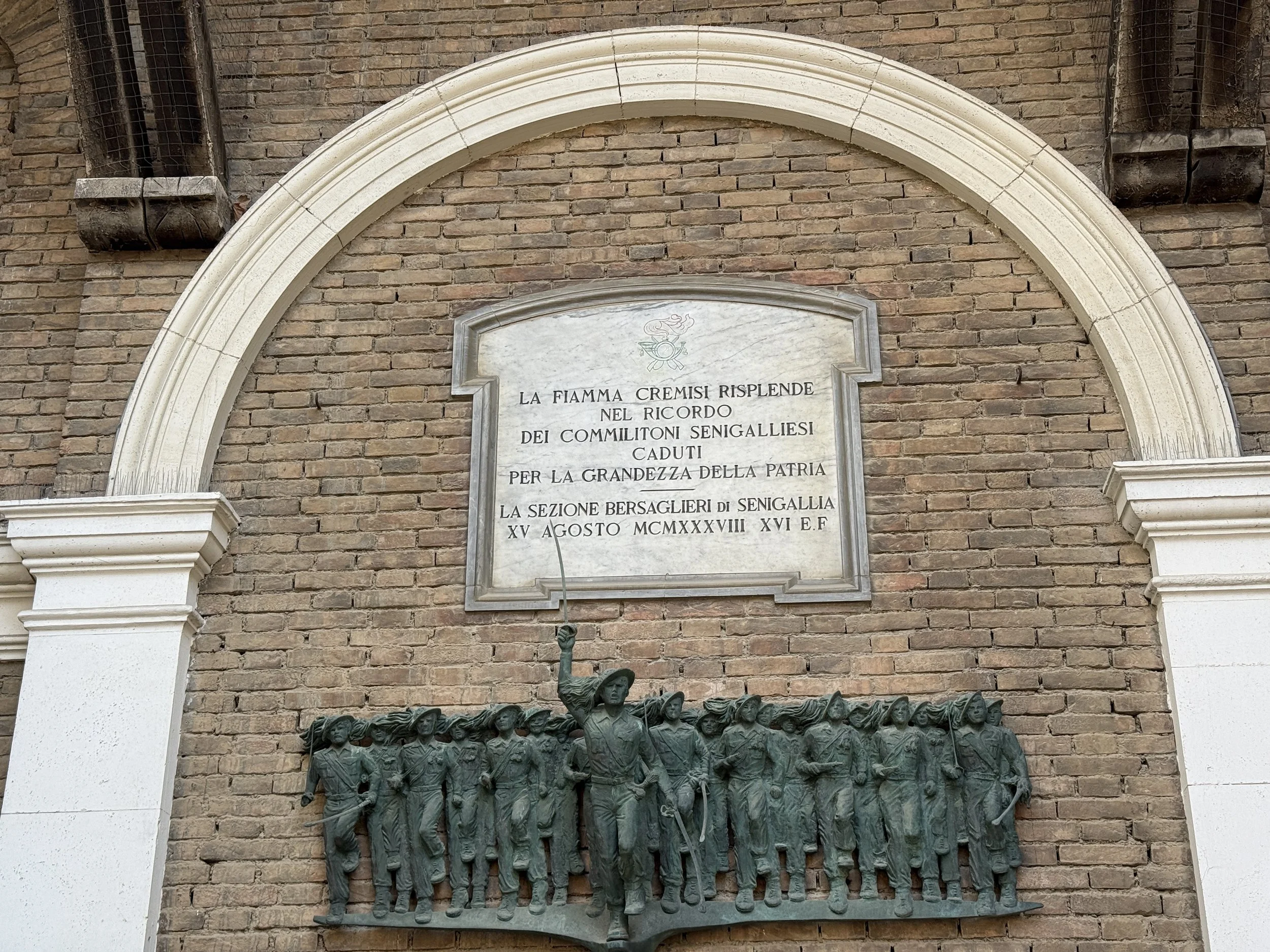
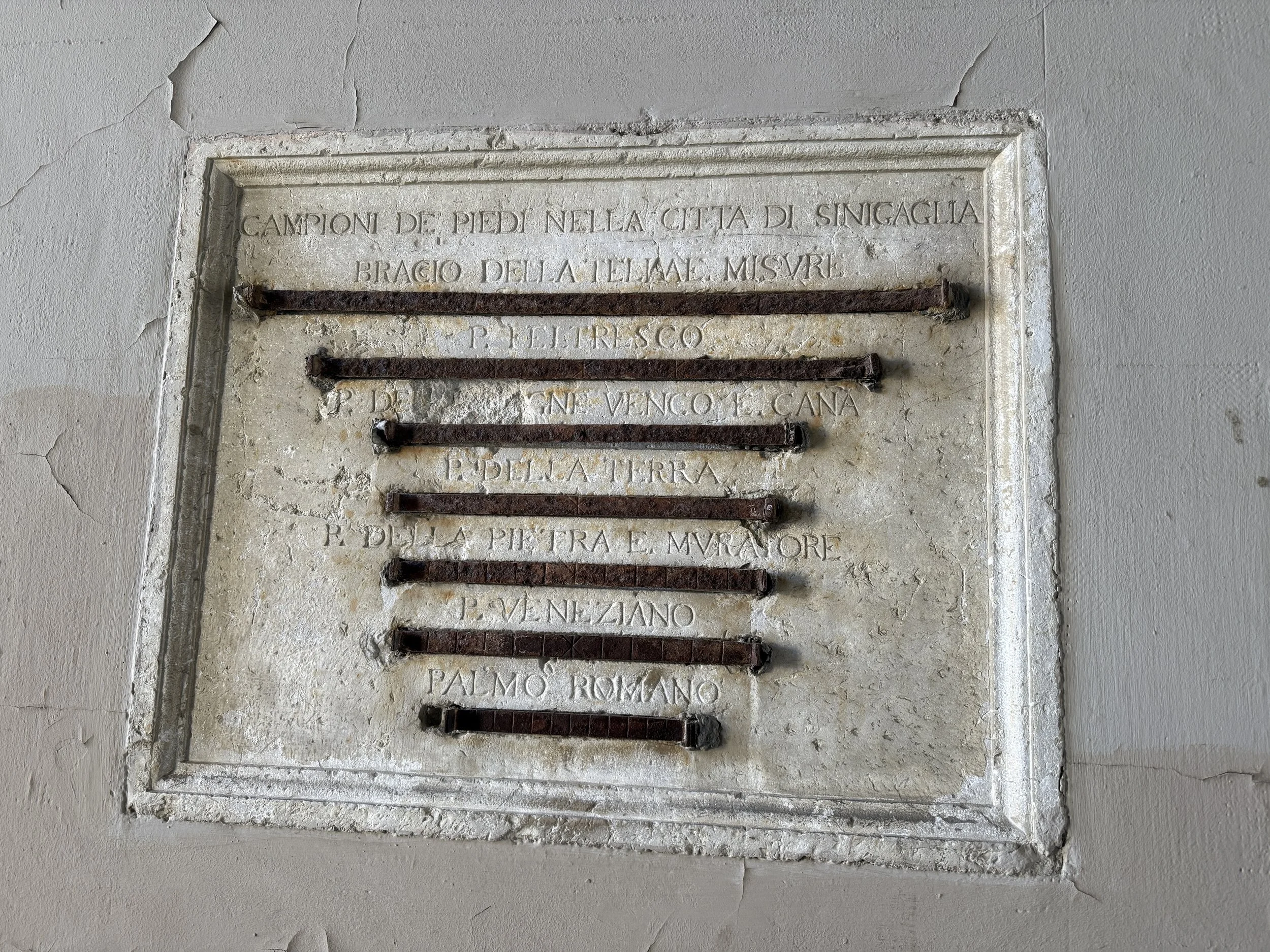
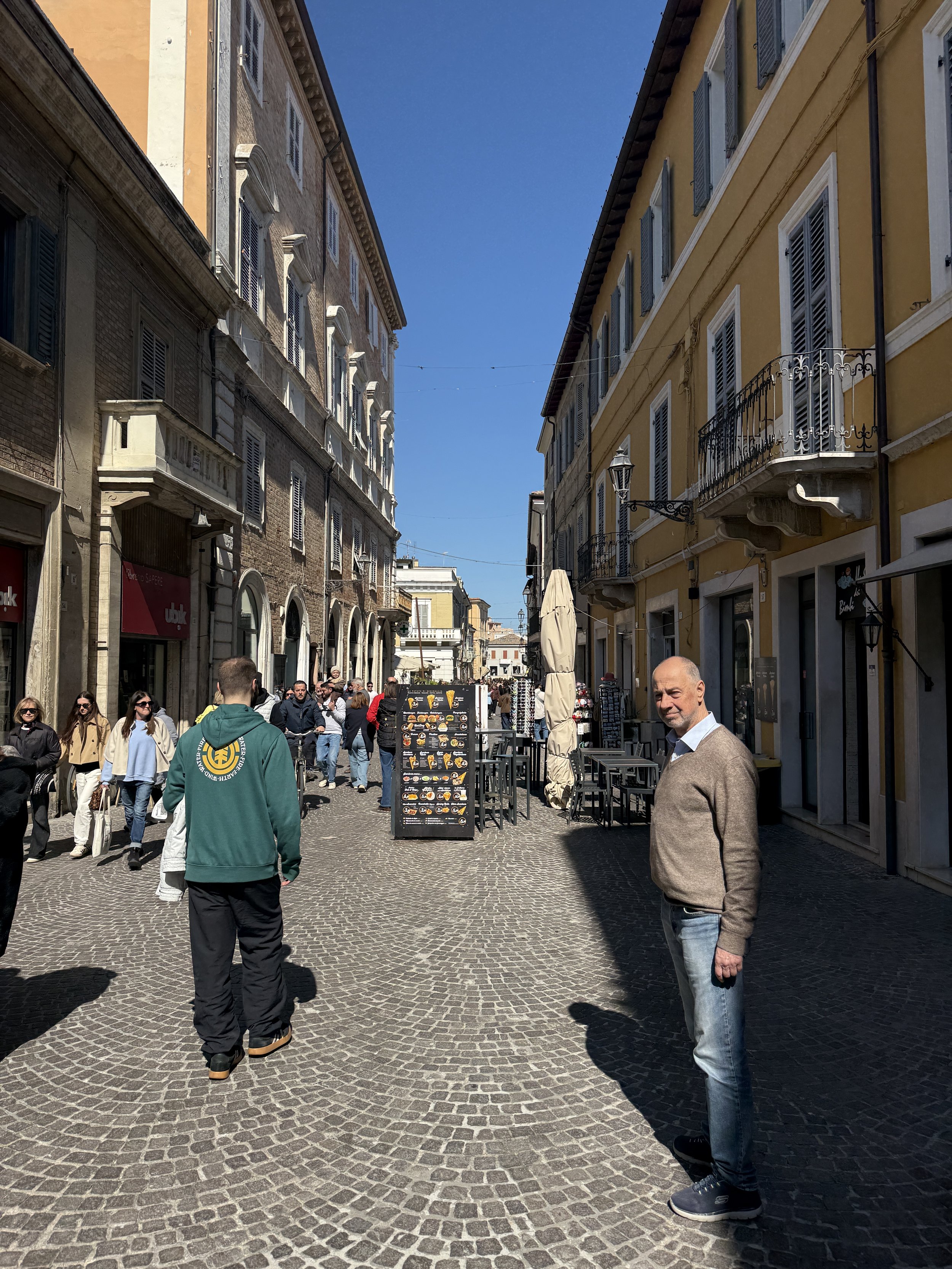
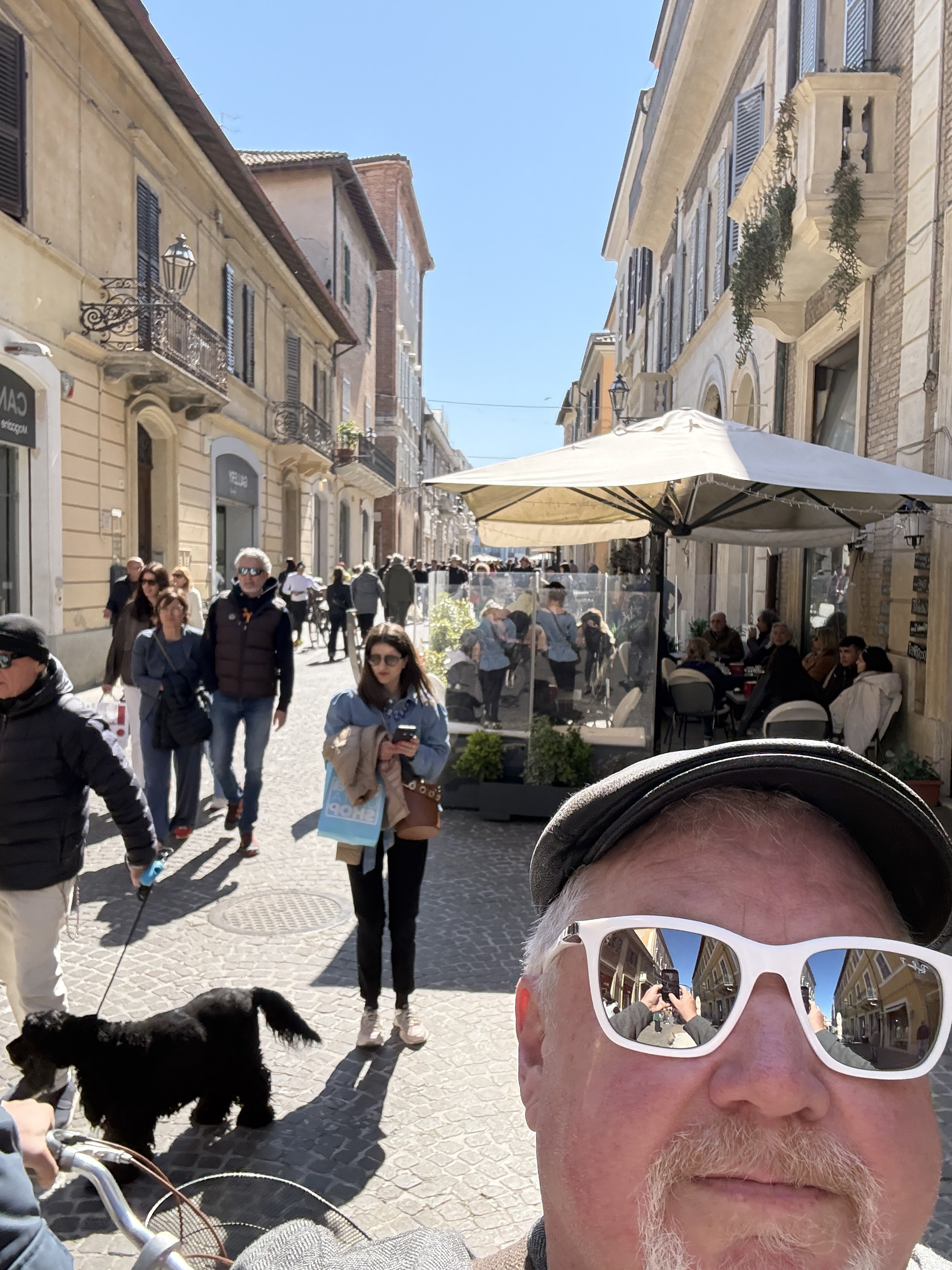
Antonio’s parents took us on a tour of the walled city of Senigallia. His dad was a history major and taught history, so he was a wealth of knowledge. It was a sunny Saturday, so the city was busy and full of life. We walked through the Piazza Garibaldi, where Pope Benedict IX had a great influence. We saw a few historic building, including the City Hall, a Mussolini Era commemorative plaque for soldiers killed in WWI and a board of official units of measure. The board was interesting in that it covered different length depending on the trade. Loom makers used one length, hemp used another and so did Land surveyors and masons. There were also measurements for the Venetian foot as well as the Roman Palm.
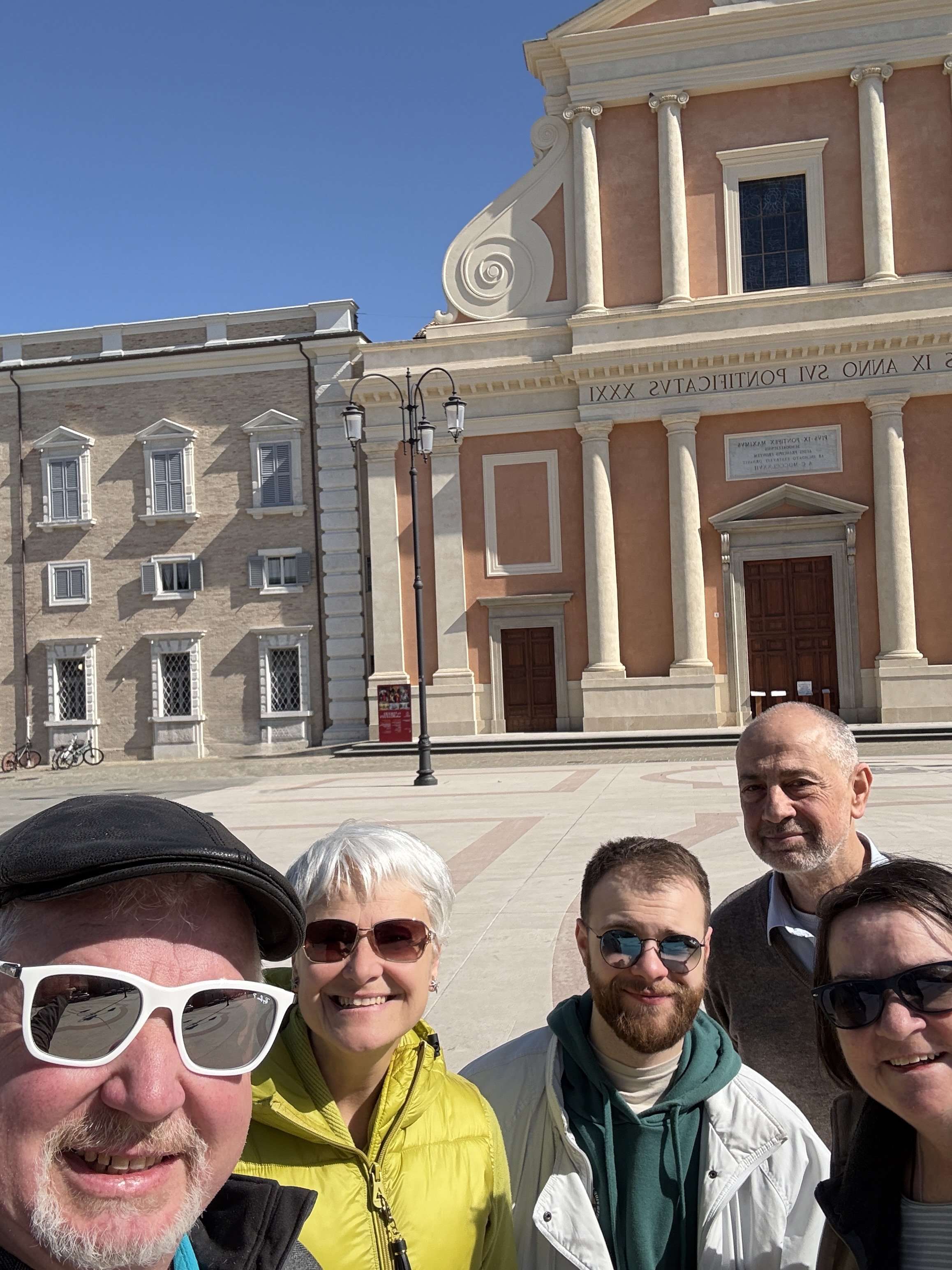
Piazza Garibaldi in Senigallia. Myself, Monica, Antonio, Palo and Sandy.
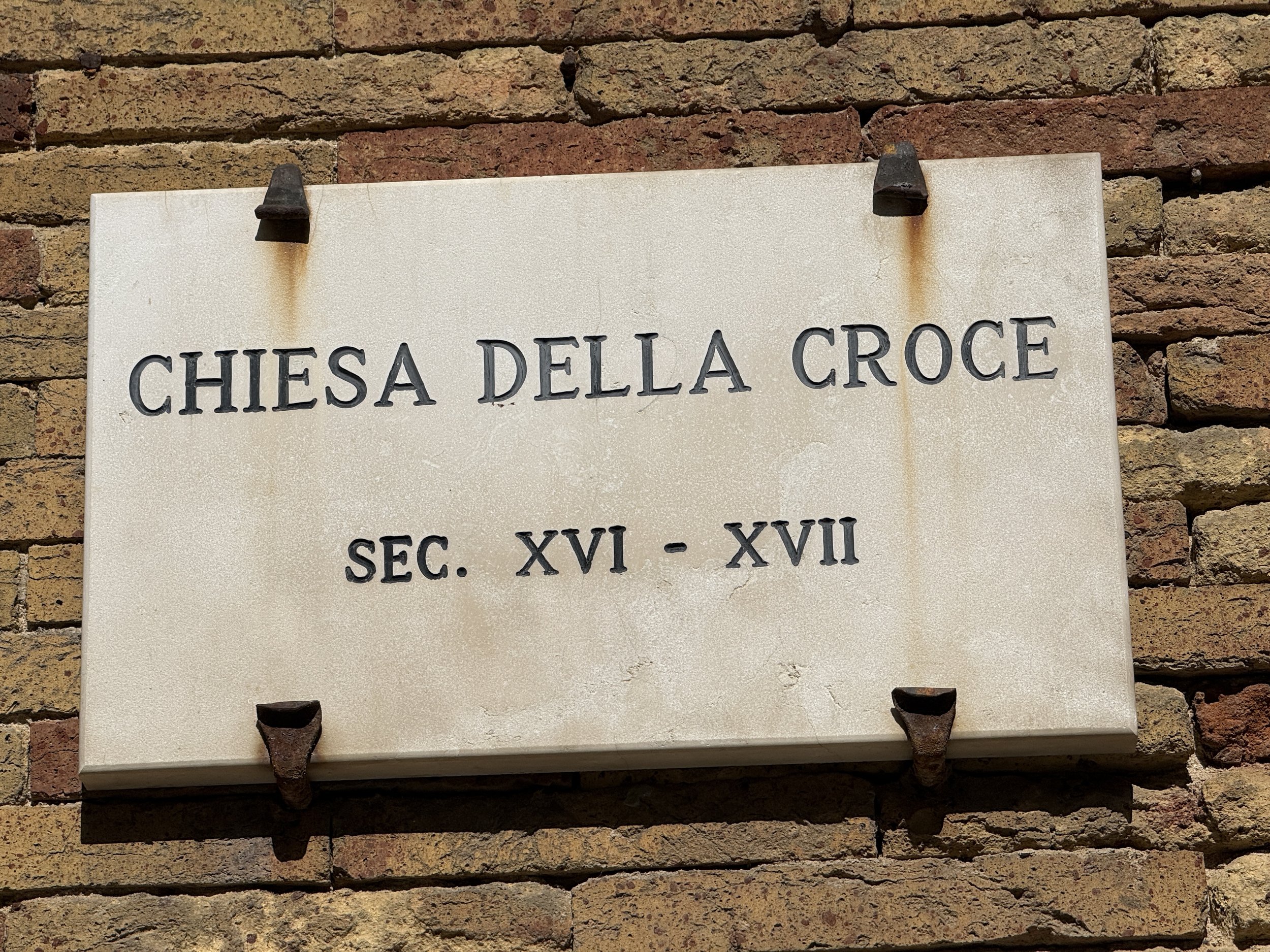
Chiesa Della Croce
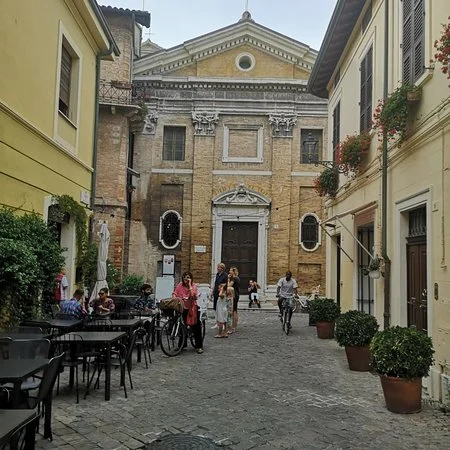
Palo also took us into the Chiesa Della Croce, a small late renaissance church with one of the most spectacular Baroque interiors. I was not able to photo graph inside, so I grabbed some stock photos off the internet.
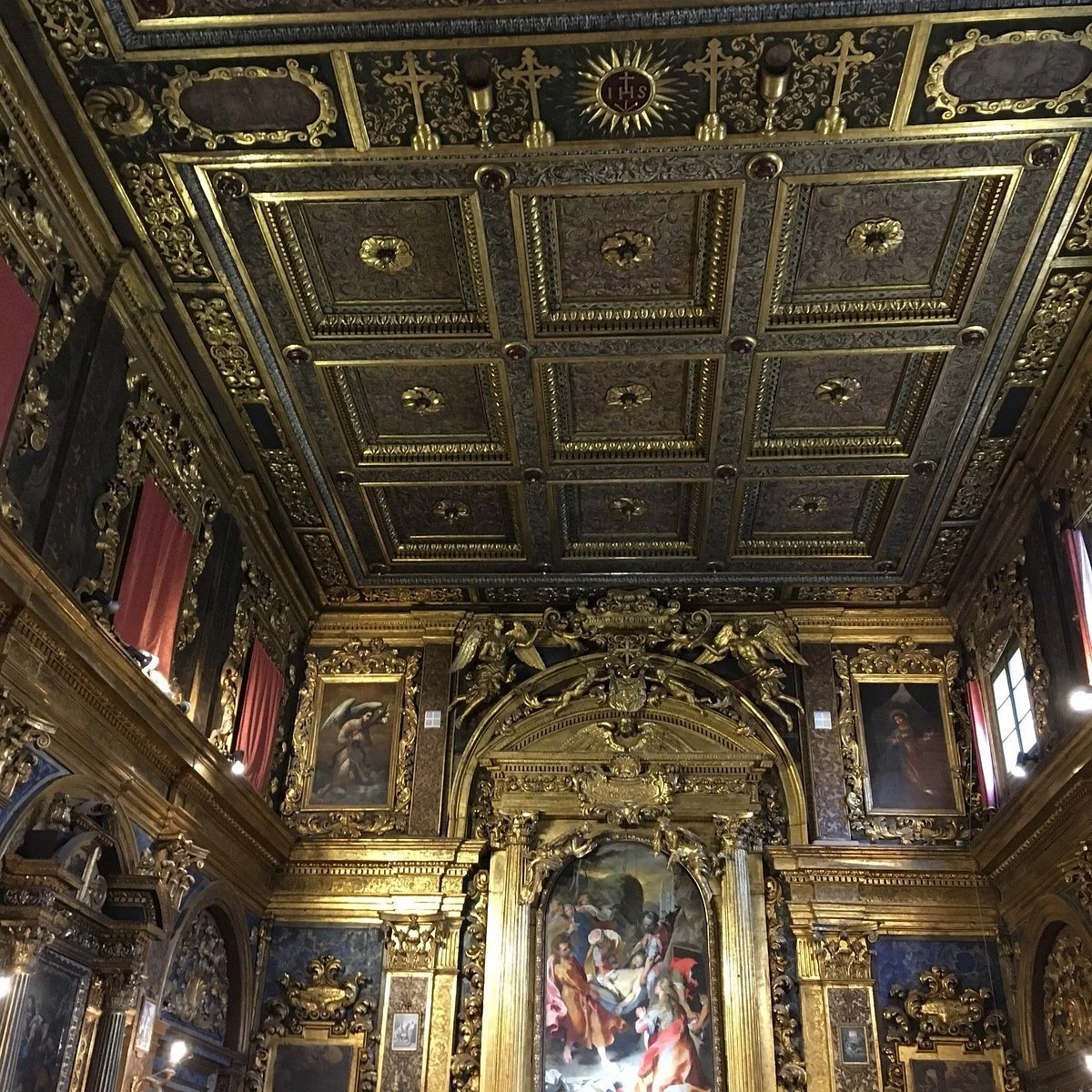
Rocca Roveresca
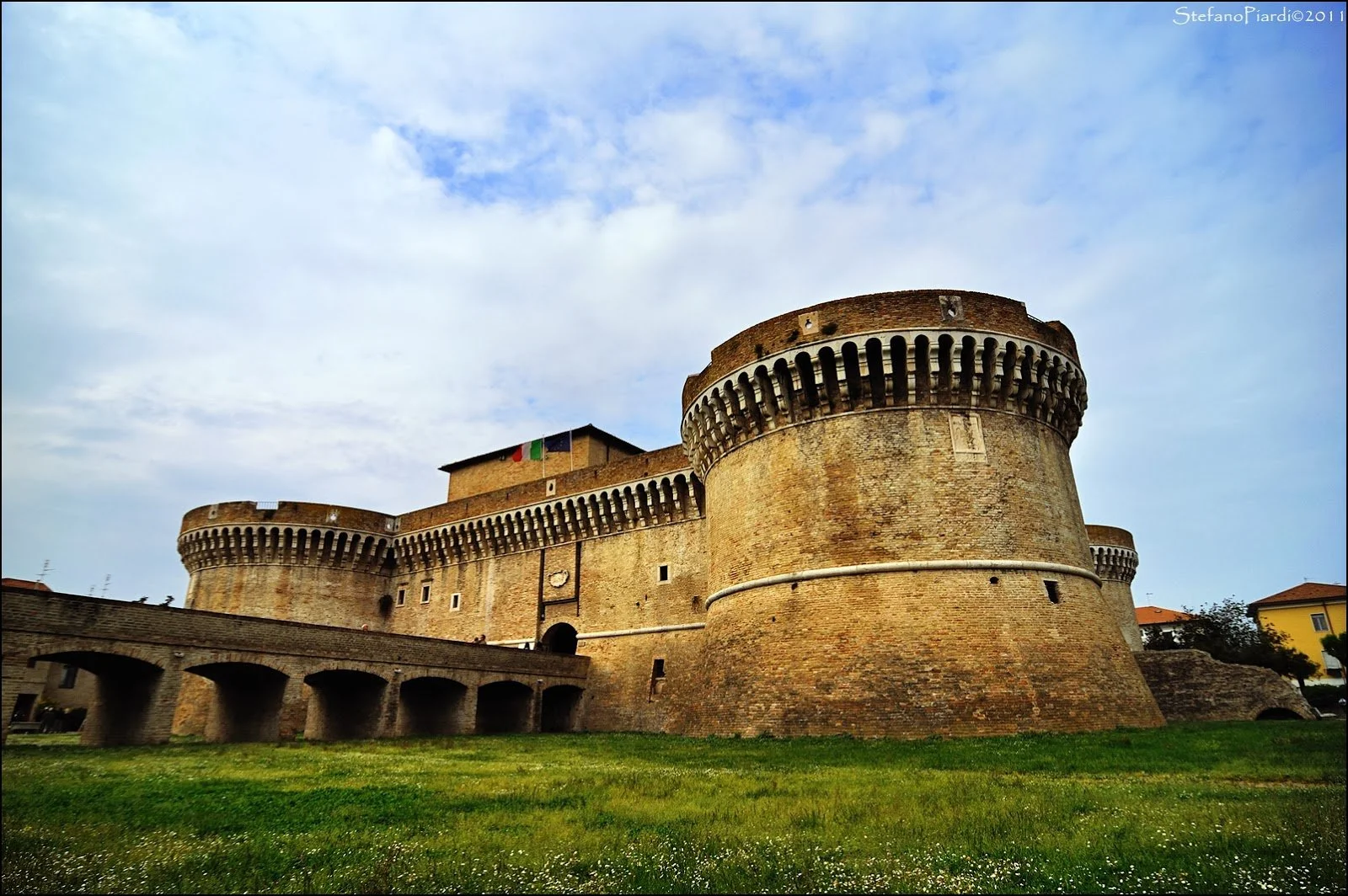
We also got to see the main fortress in town, the Rocca Roveresca. It has been built and rebuilt since Roman and medieval times. He told us of a massacre that occurred in the castle that was similar to the “Red Wedding” in Game of Thrones. In late 1502, Cesare Borgia (son of Pope Alexander VI) invited several powerful mercenary captains to Senigallia under the pretense of reconciliation and reward. He gave them a lavish welcome. Once they were in side the fortress and disarmed, he locked the doors and killed them all. Hard to believe these things actually happened!
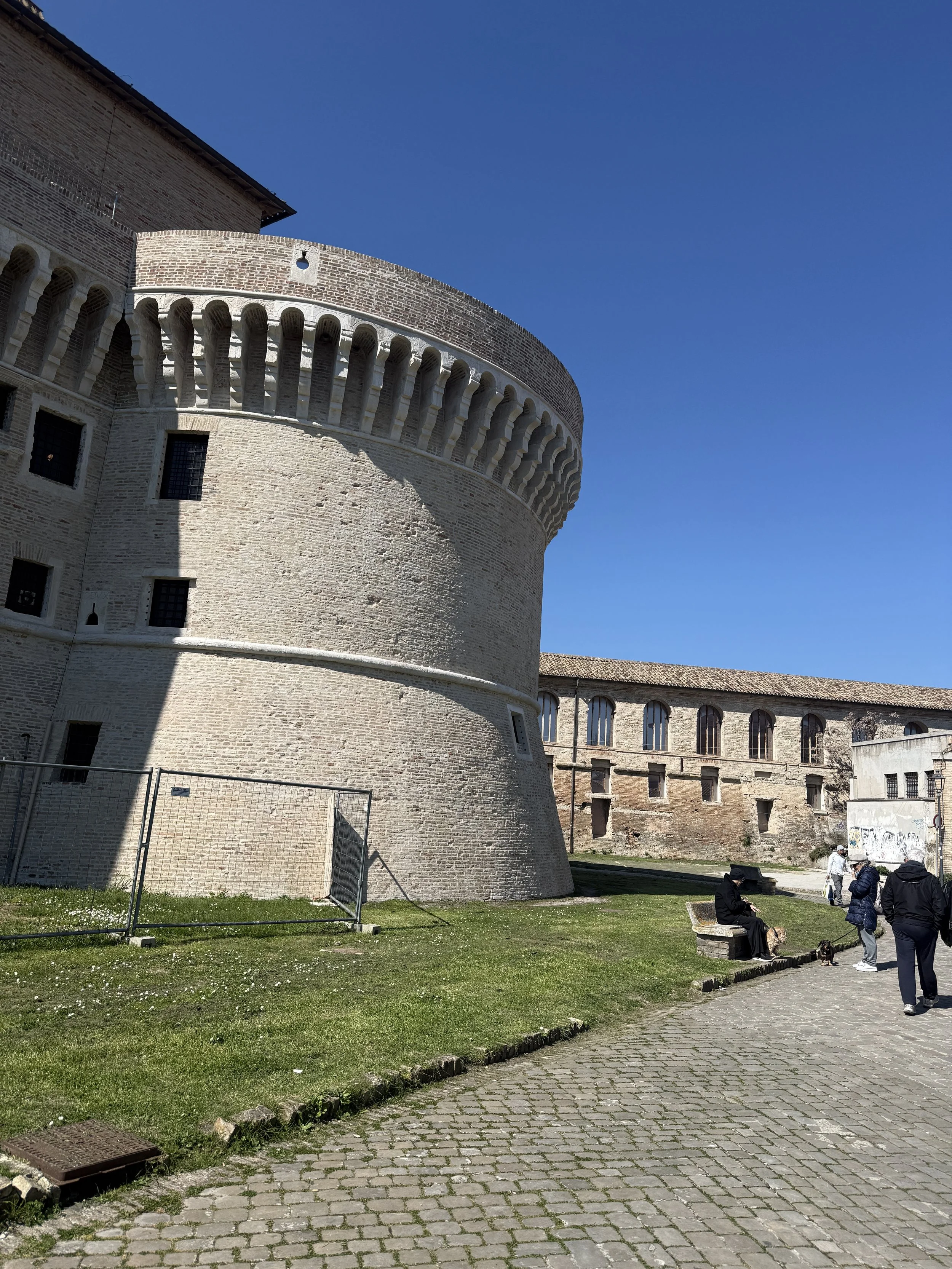
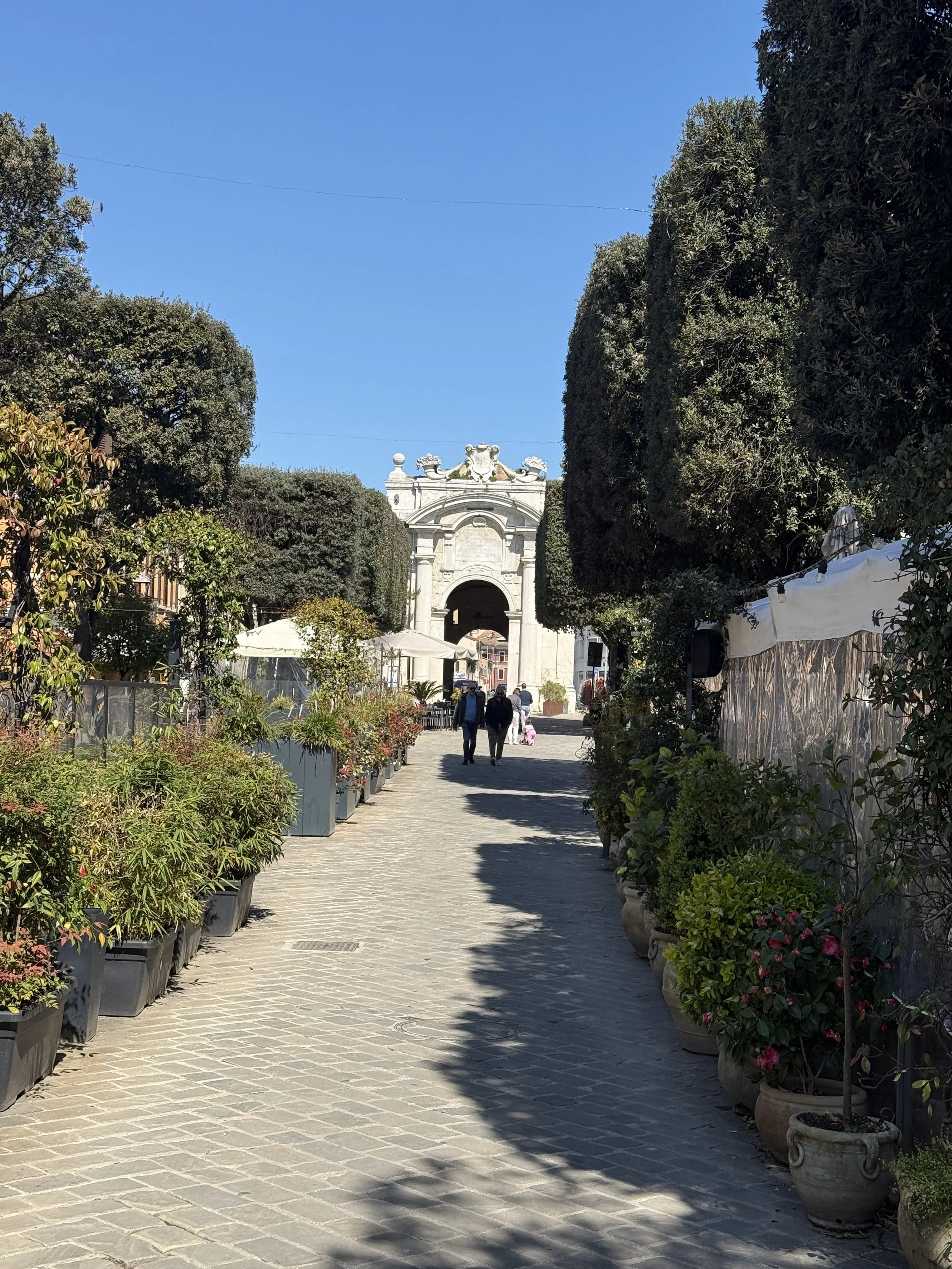
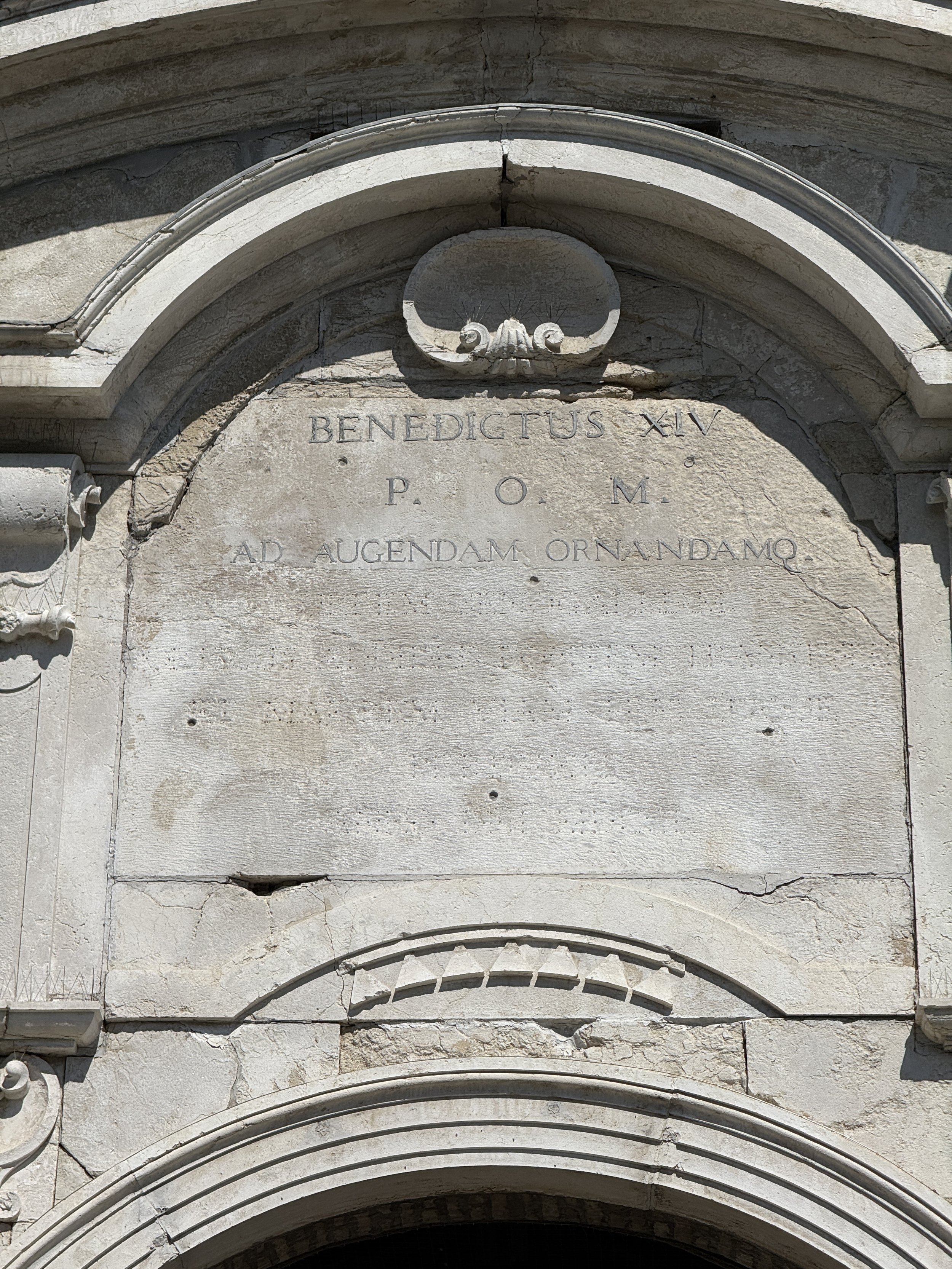
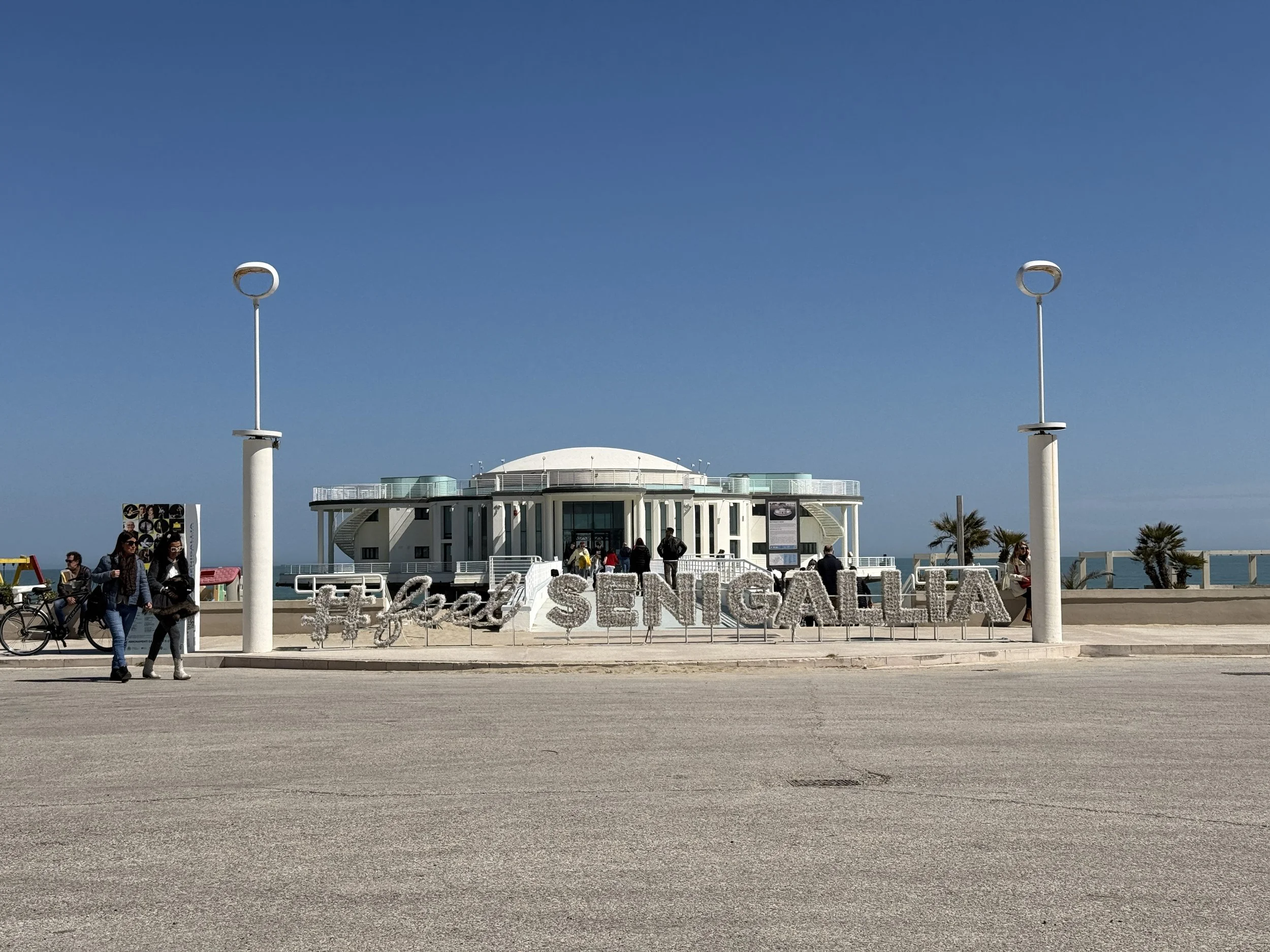
The fortress was closed for renovations, so we only saw the outside. We walked around the streets and took in the sights. We also came across the Lambertina Gate dedicated to Pope Benedict XIV. On our way out of town we stopped to see the Rotonda a Mare. This is a circular white modernist pavilion built in 1933. It was conceived to be a hydrotherapeutic recreational pavilion, then it was a social club in the 50’s and 60’s. It is now a cultural center for exhibitions and concerts.
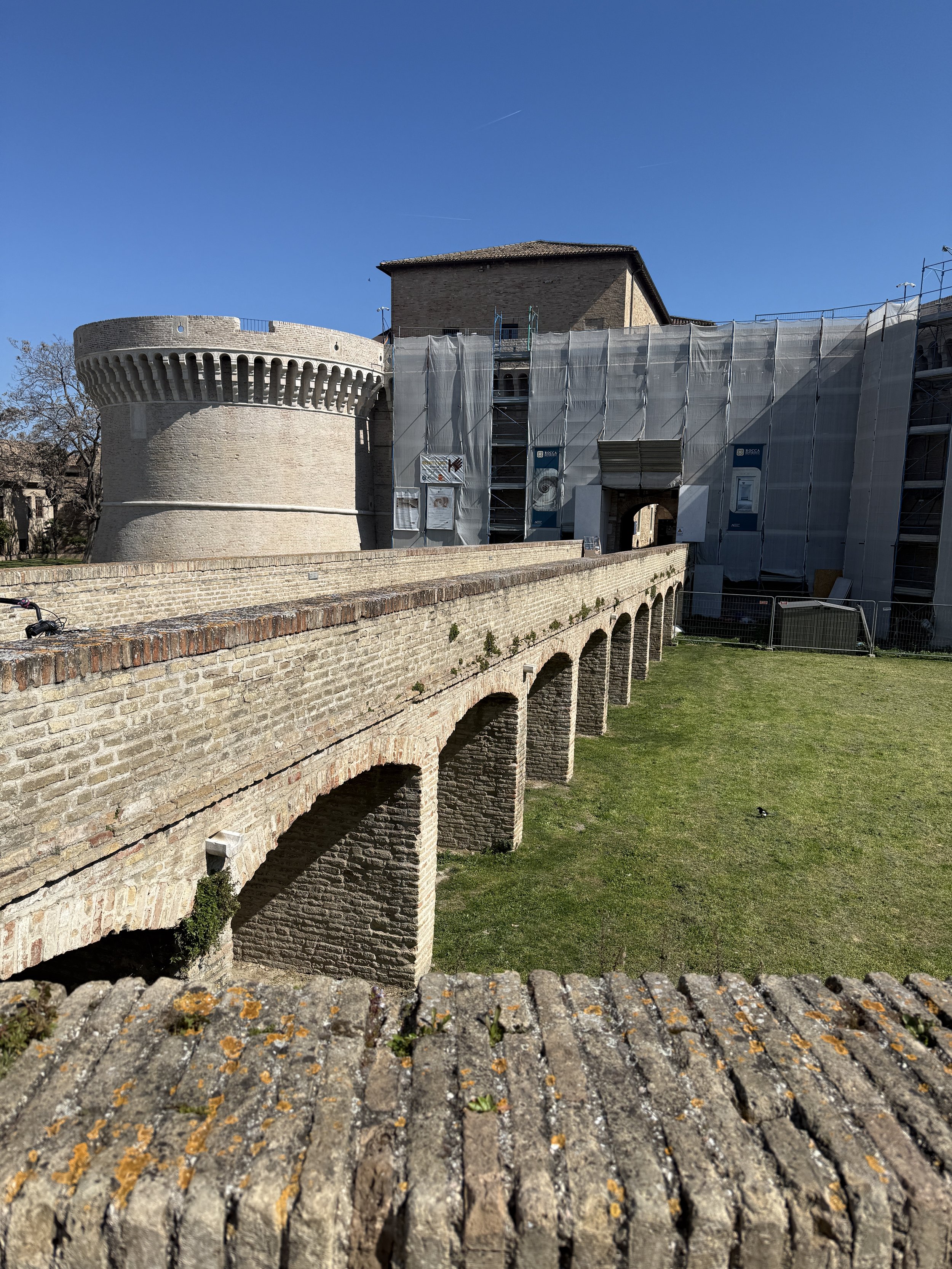
Rocca Roveresca Fortress. (under renovation)
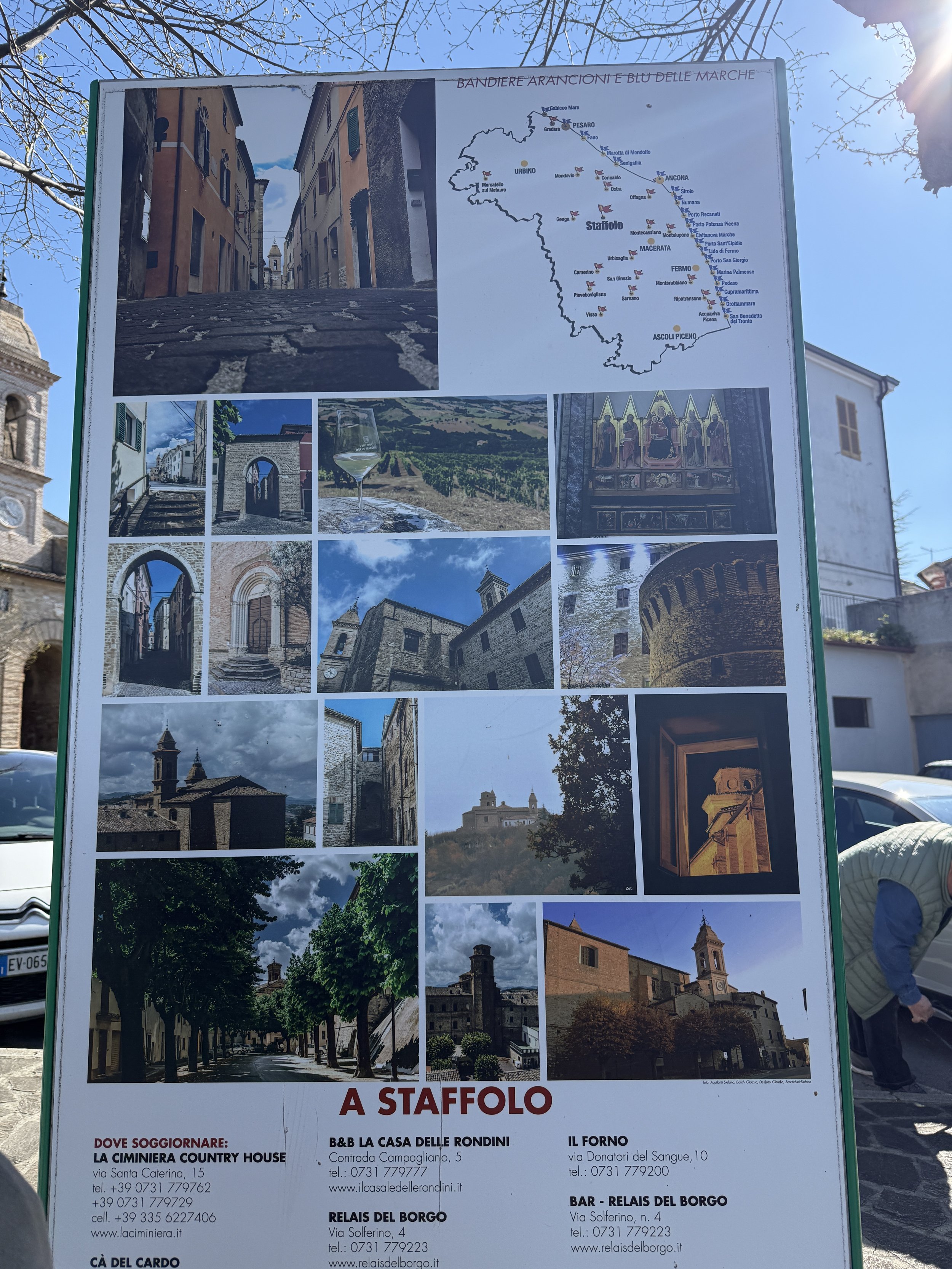
Staffolo
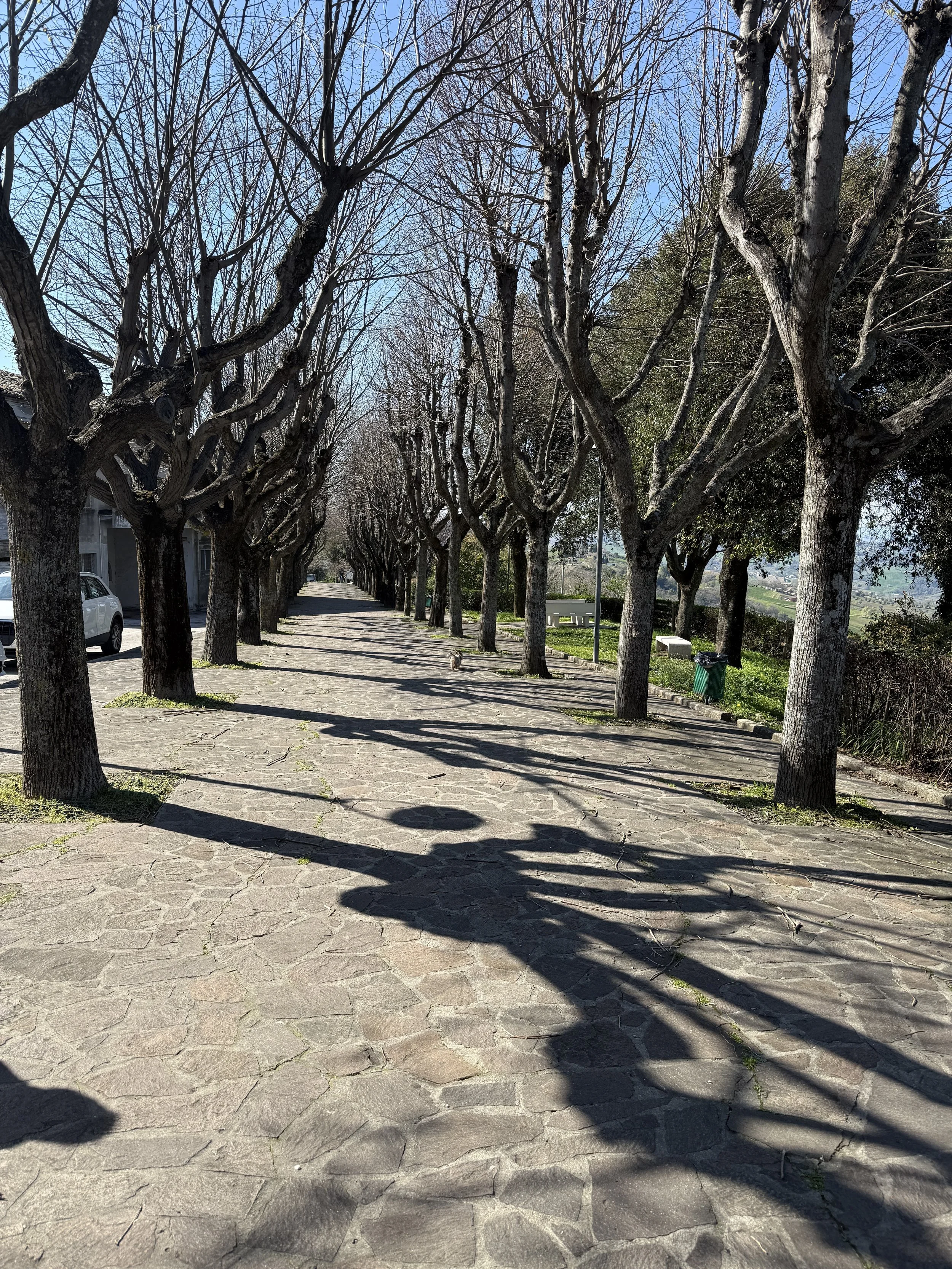
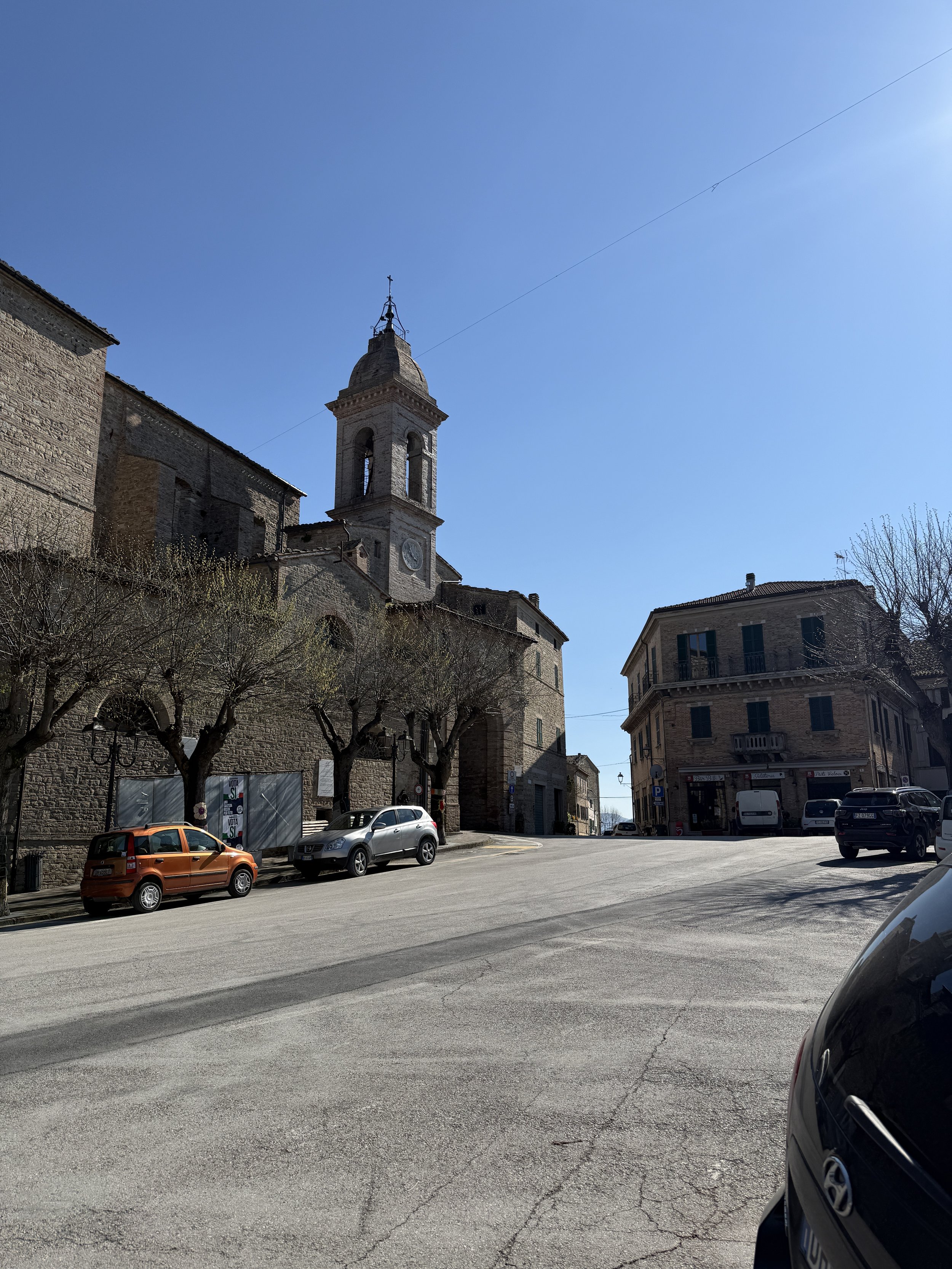
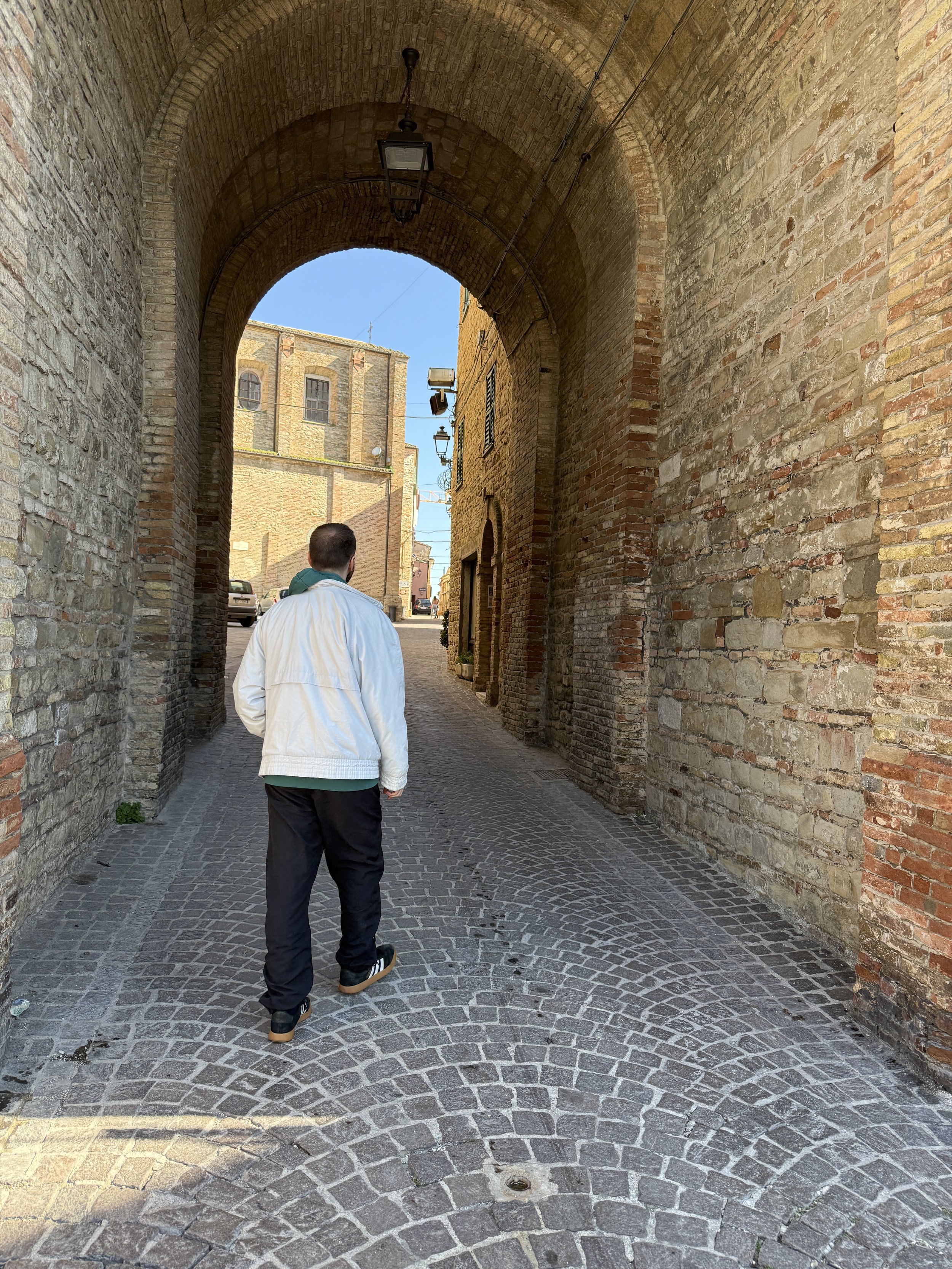
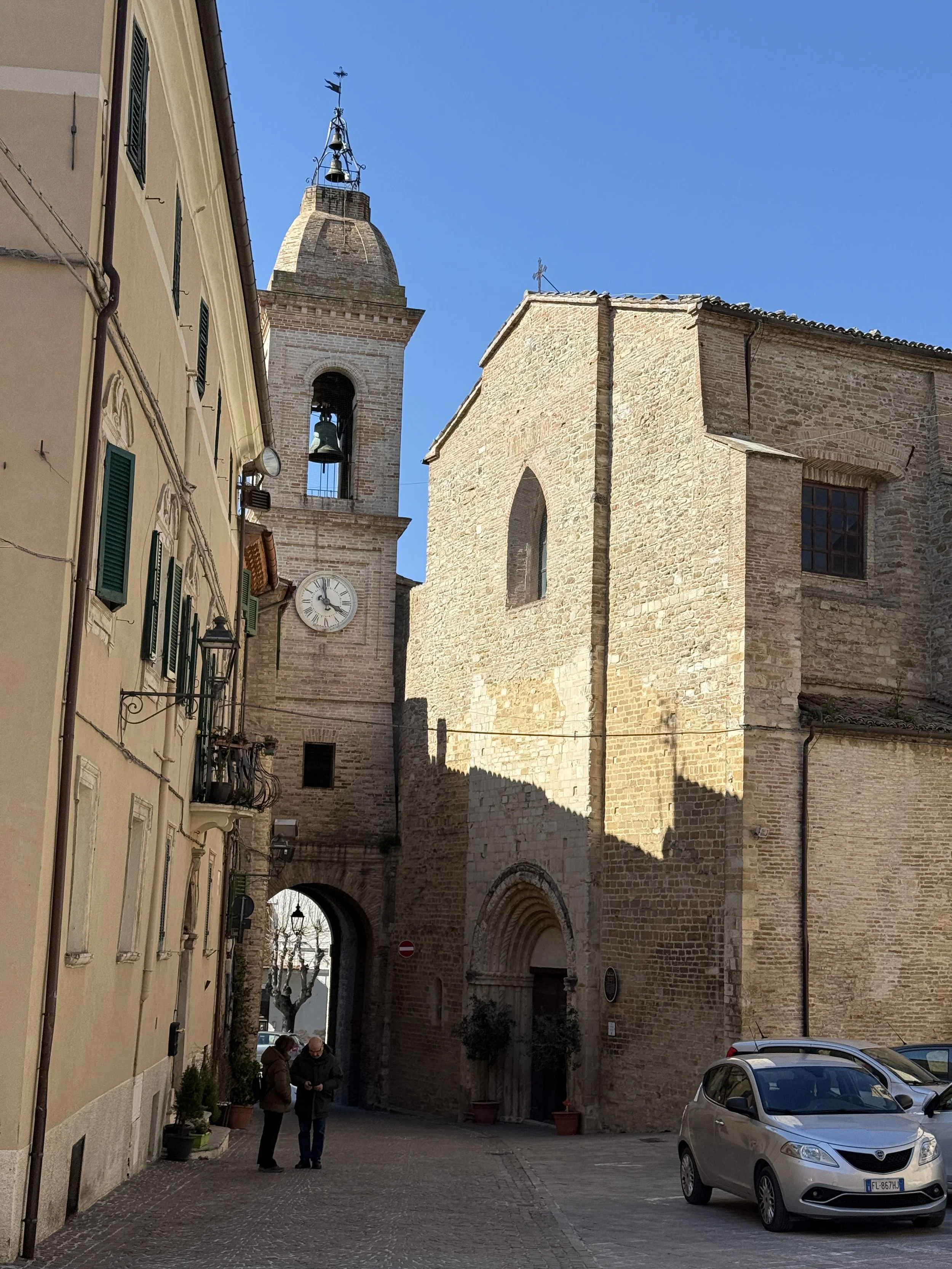
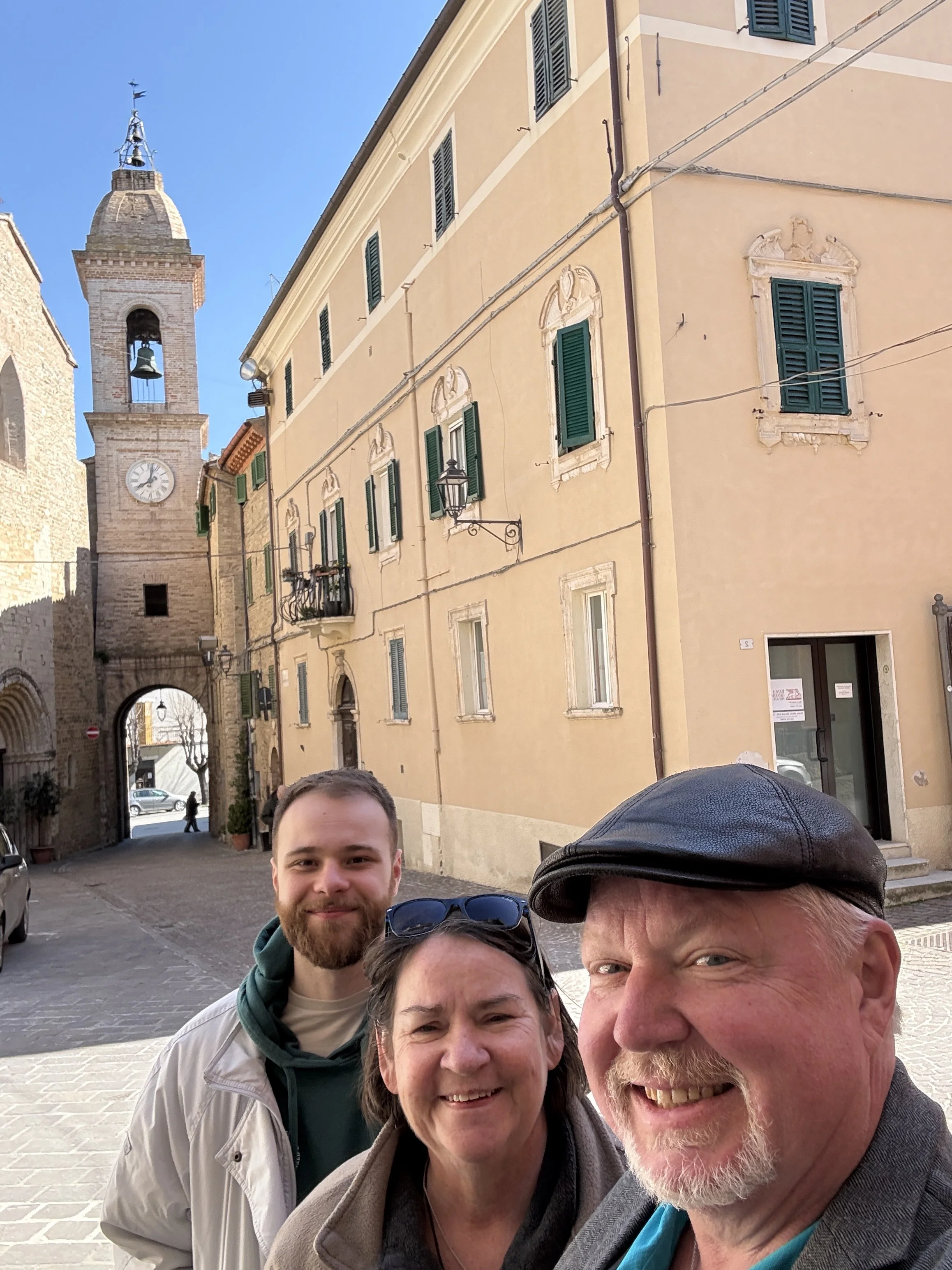
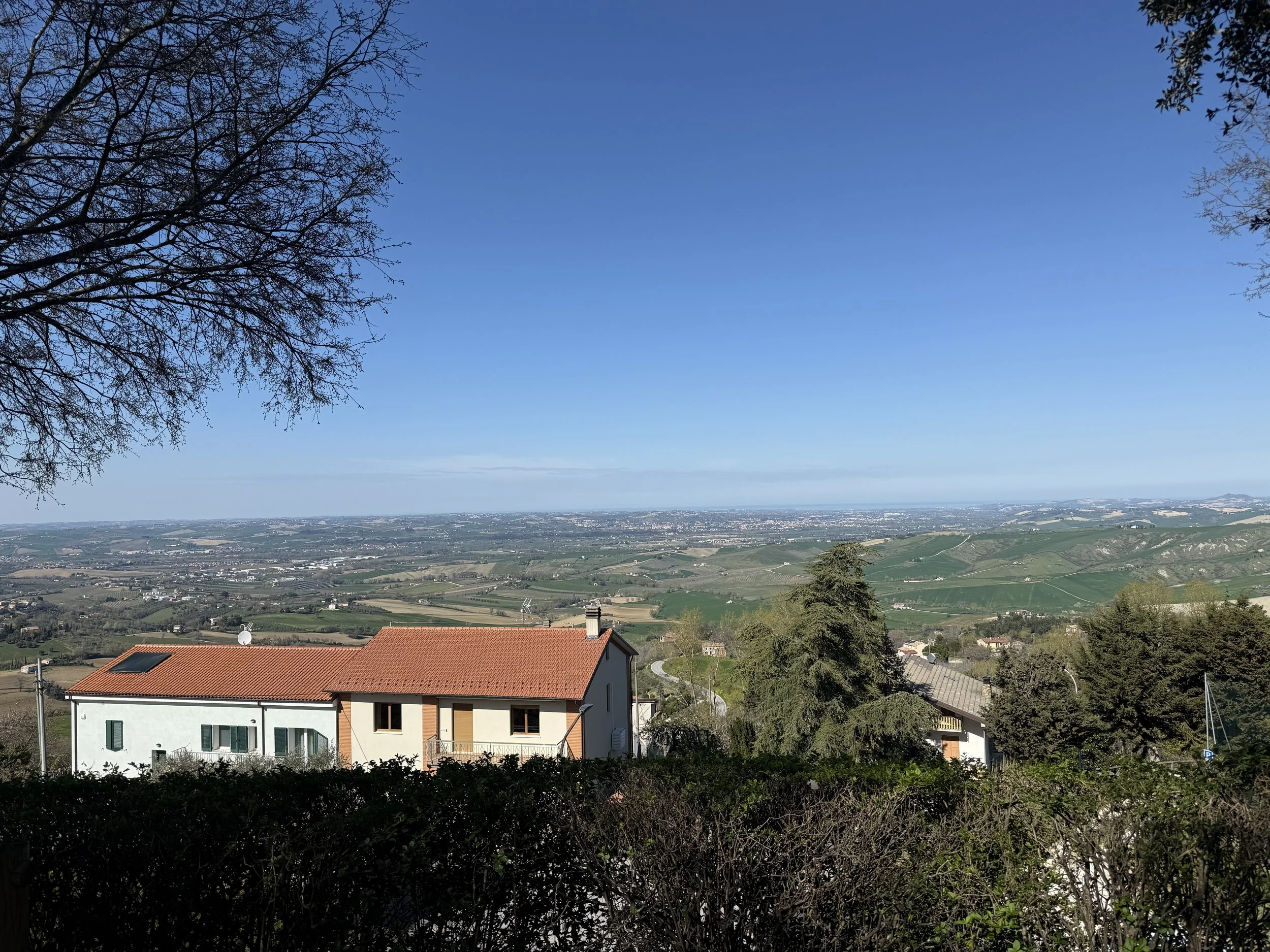
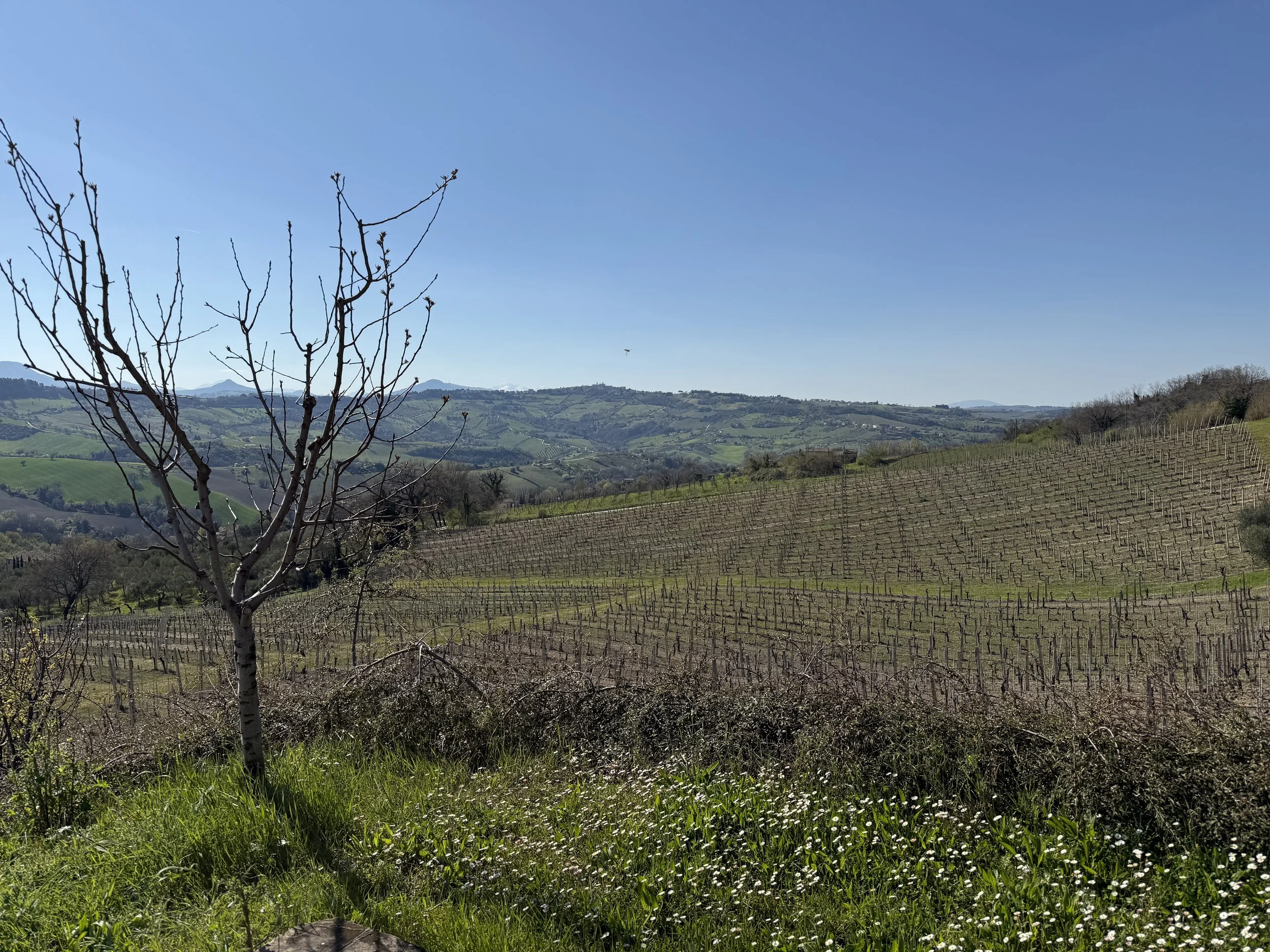
Staffolo is a hilltop village that overlooks the Vallesina Valley. It is also the town where Antonio’s father, Palo was born and raised. We drove up here this afternoon to have Antonio show us around and meet his parents at a local winery.
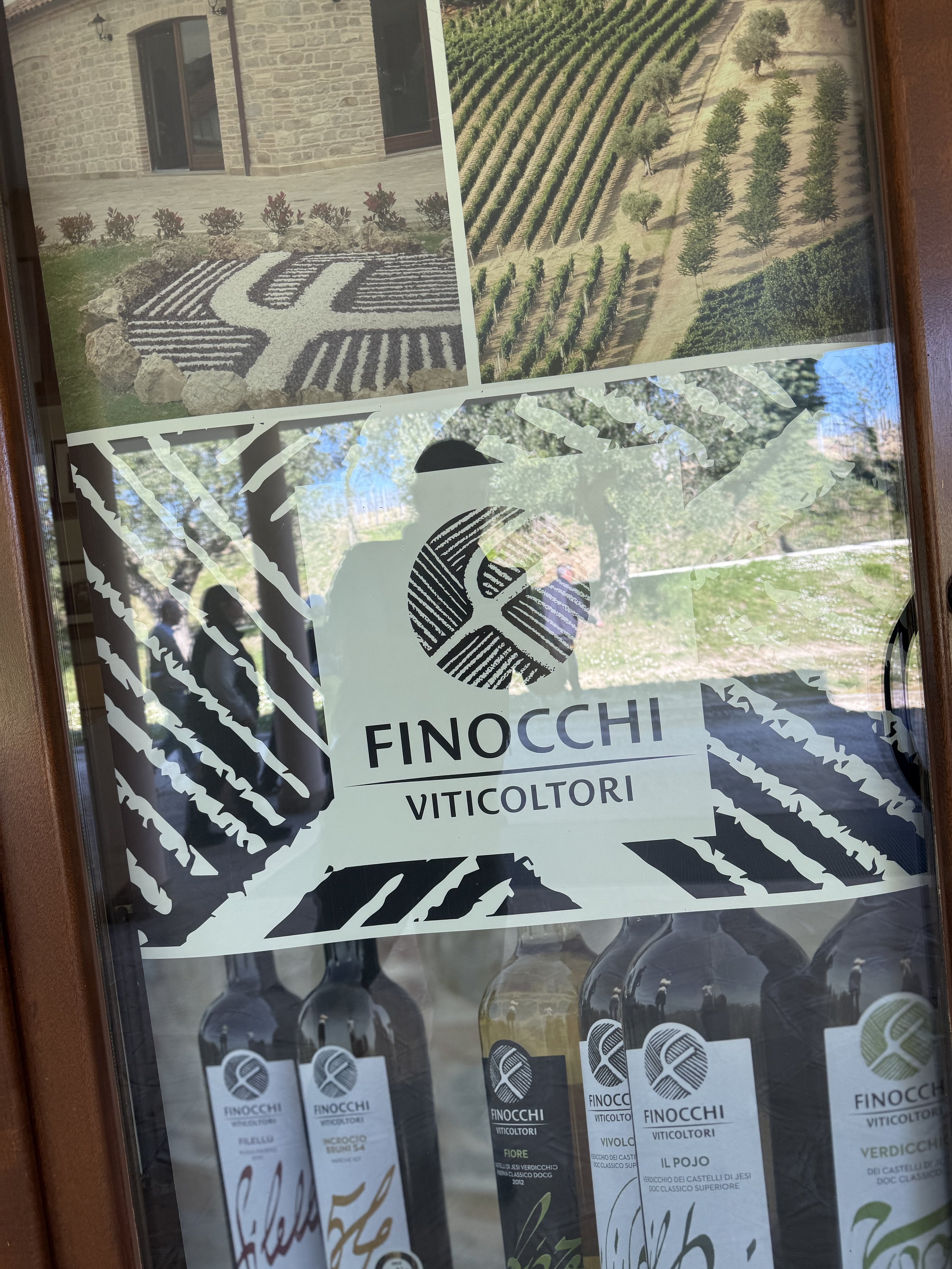
Finocchi Winery
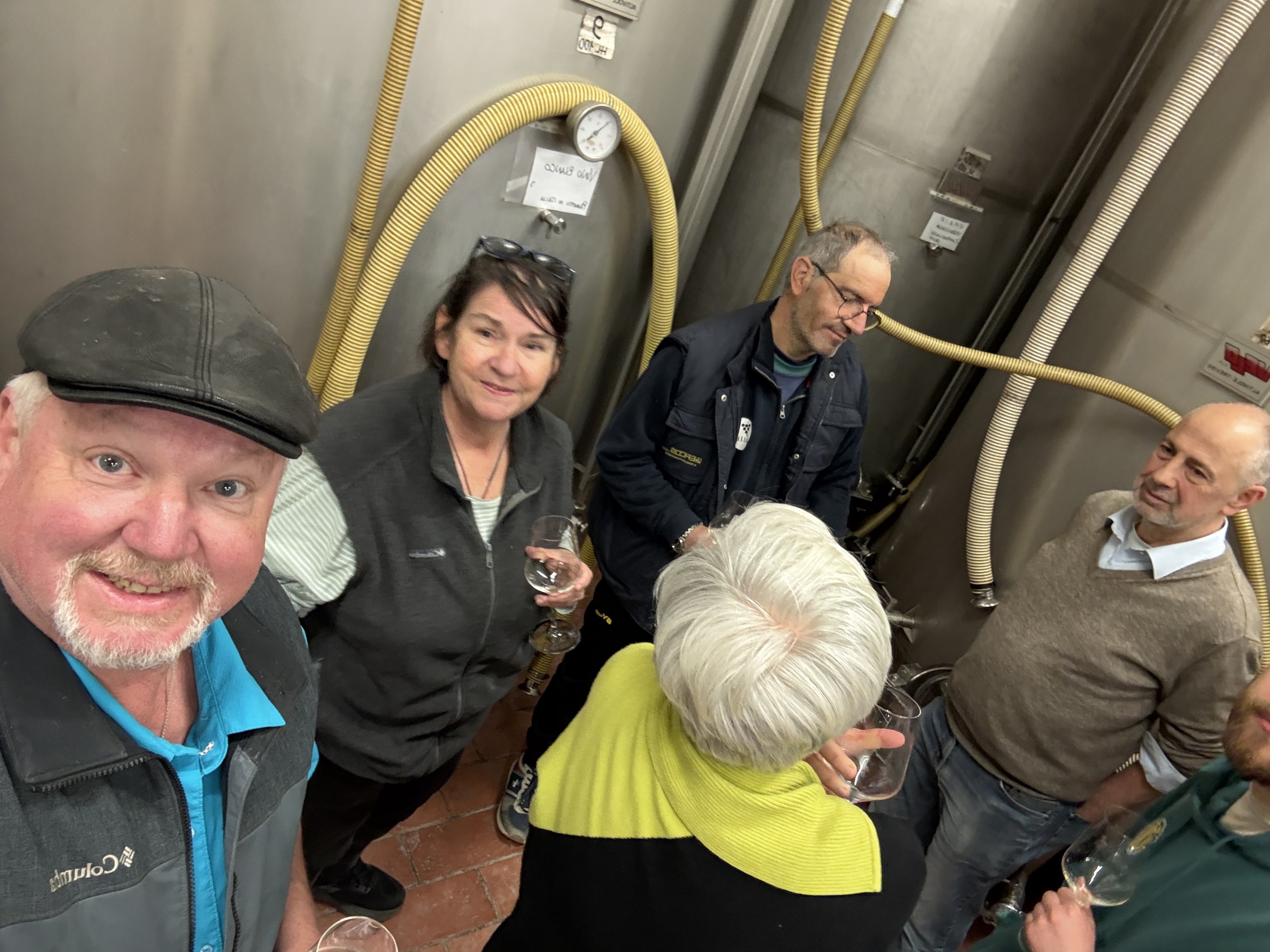
This is a small winery run by Palo’s childhood friend. Palo wanted us to try some local wine. His friend was working the vineyard with his dad and uncle when we arrived. Antonio’s dad called him to come see us. (Note: his friend is 68, so his dad and uncle had to be in their late 80s and still working the vineyard!)
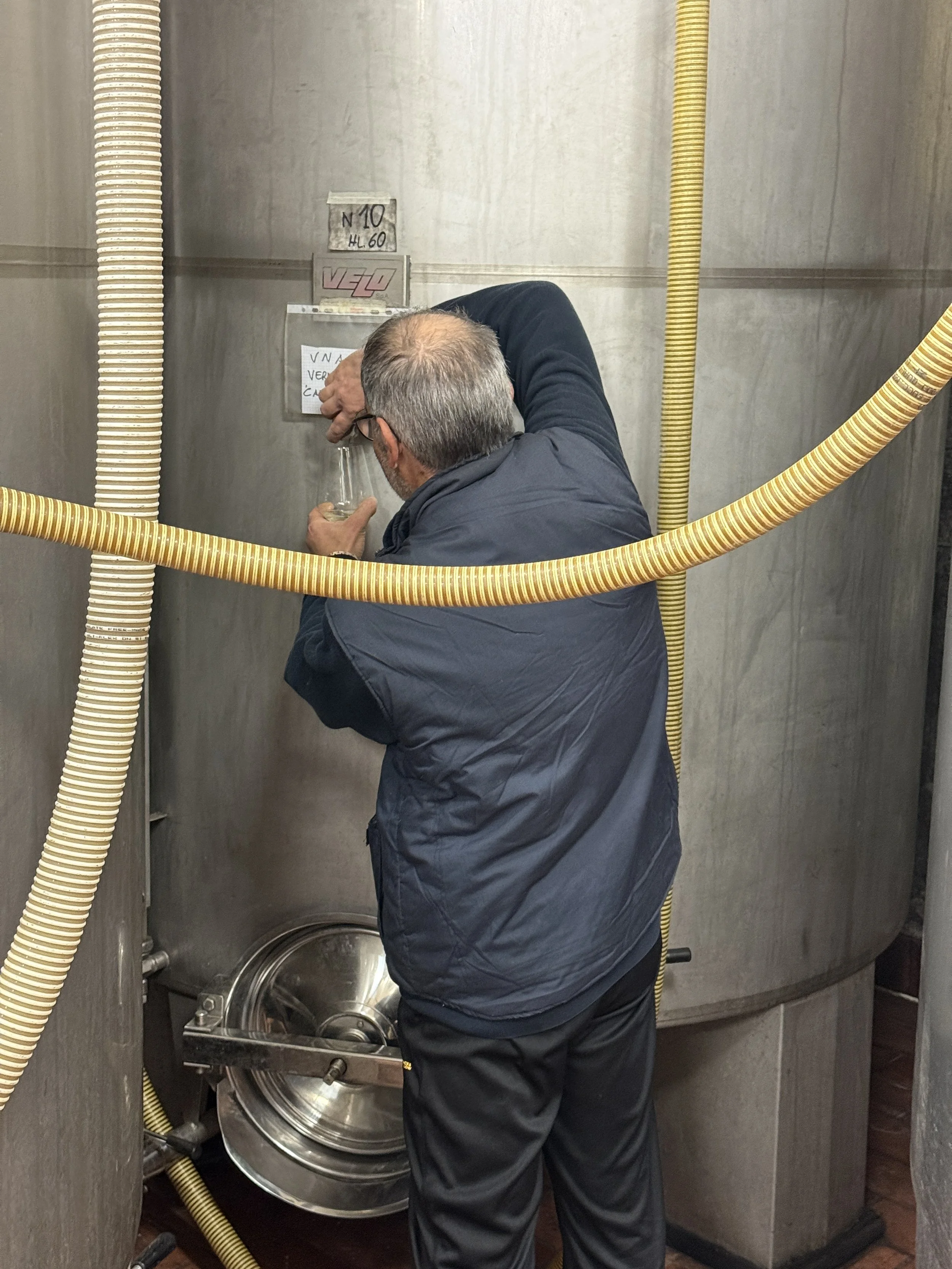
They grow the verdiccio grapes used to make their white wine. We got a personal tour of the process to make the wines.The use stainless steel and concrete vats for aging the wine. Concrete is more pourus, so it will age faster.
For the tasting portion, we were served wine straight from the vats. This was the first time I ever tasted wine straight from the vat!
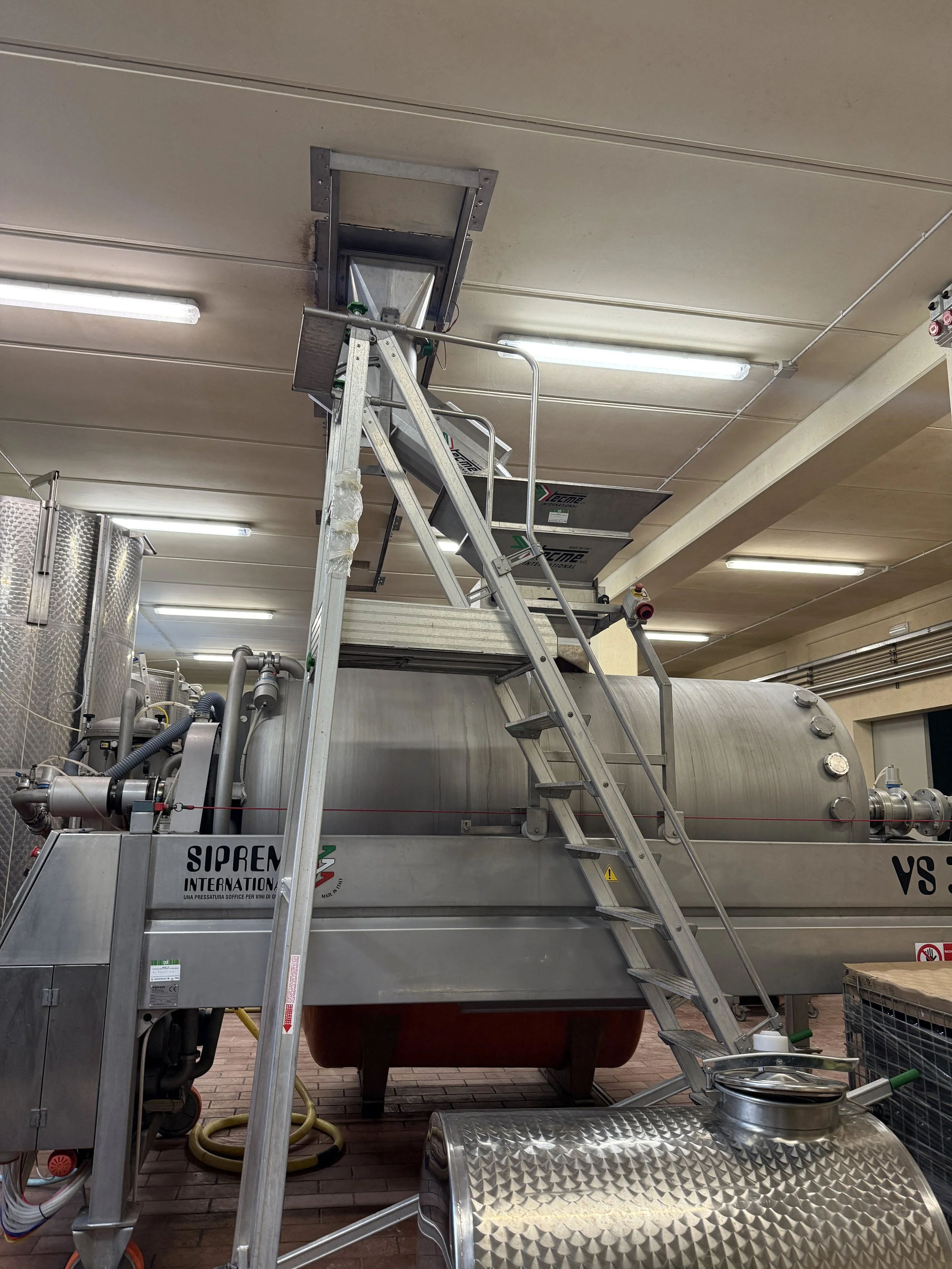
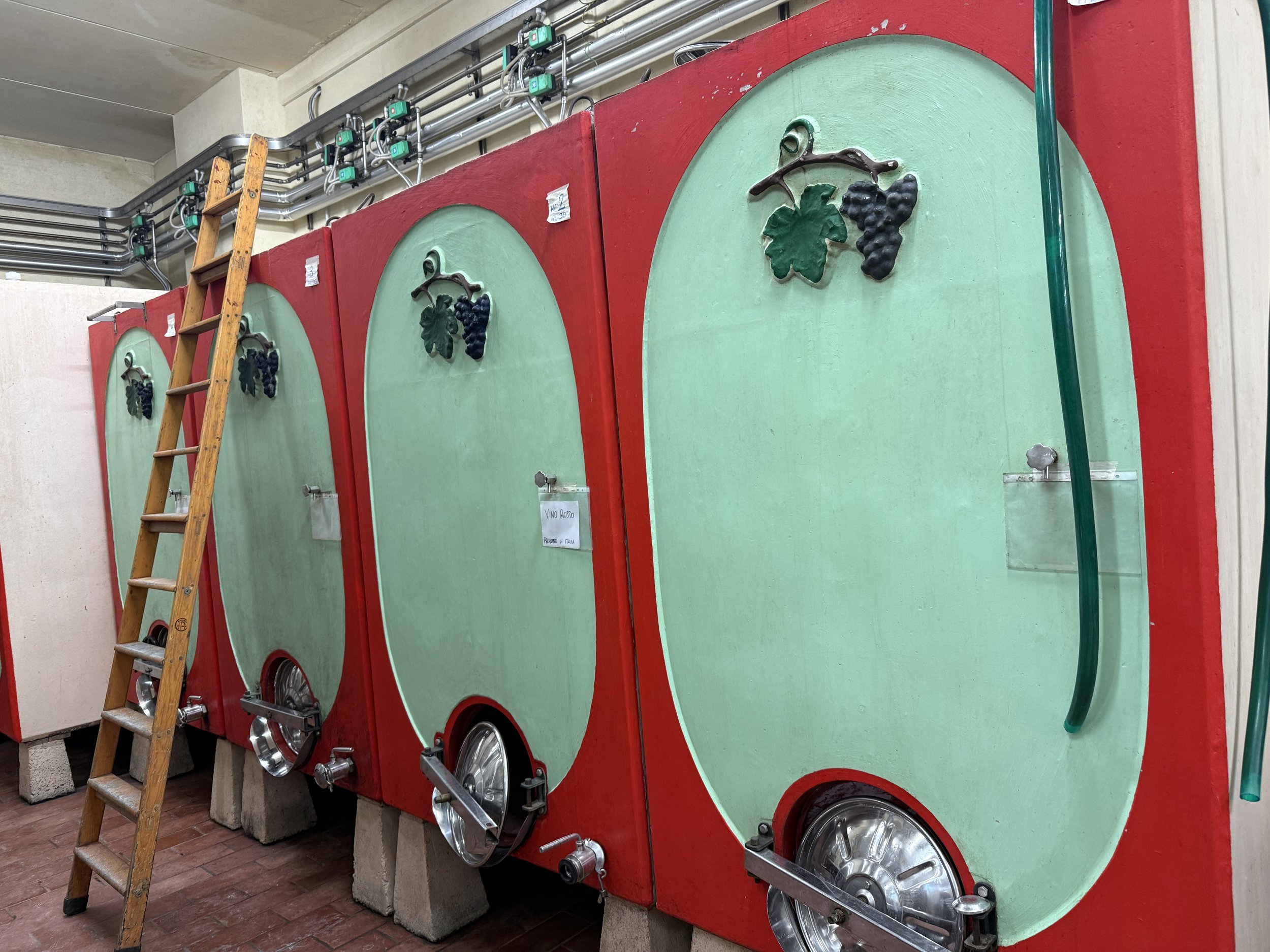
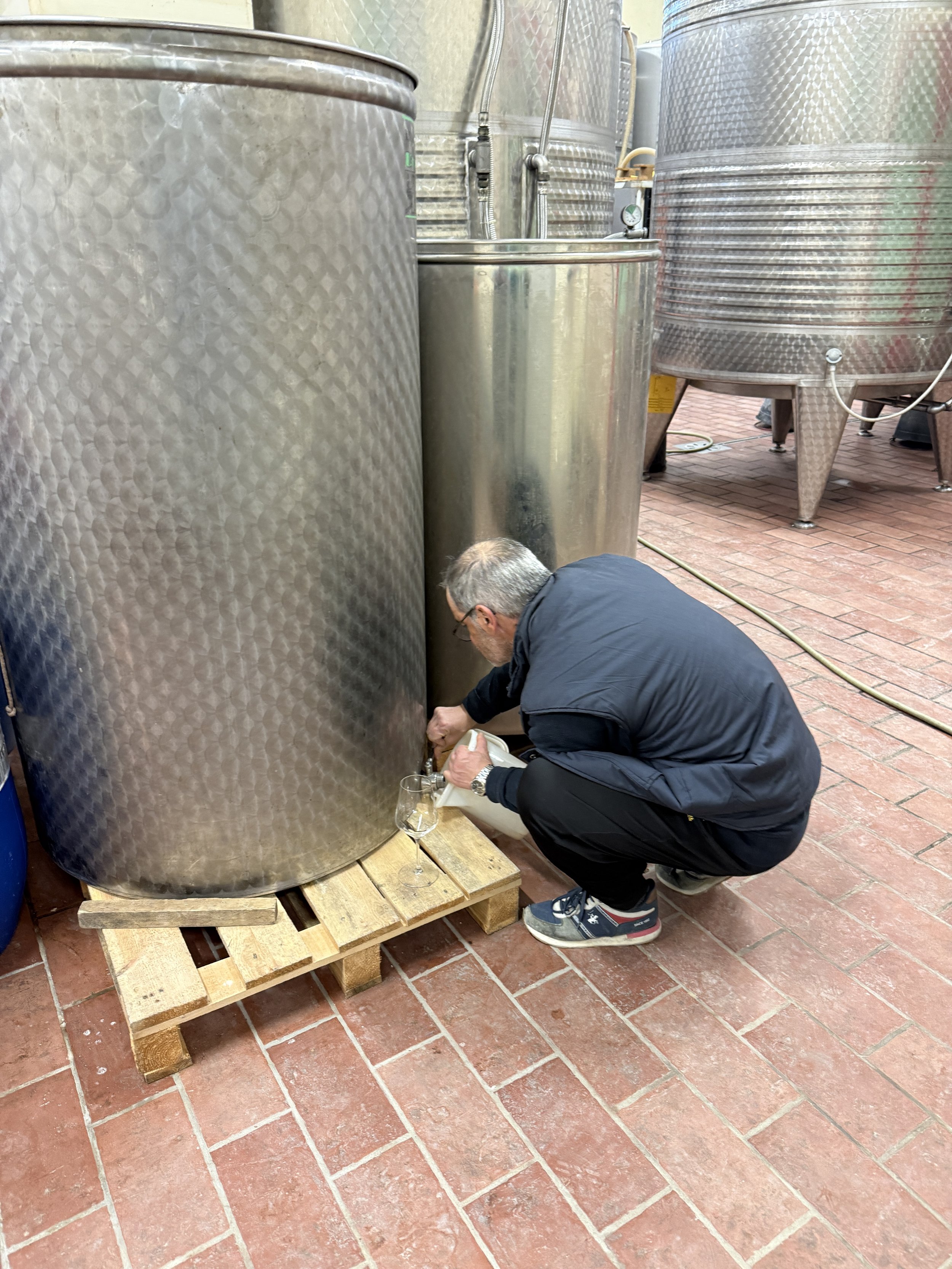
It was very good and we got a few bottles to bring to Easter dinner tomorrow.
