Chianti Classico
Today was a lazy day. I had a nice breakfast at the on-site restaurant here are the villa, then went for a soak in the hot tub in the spa.
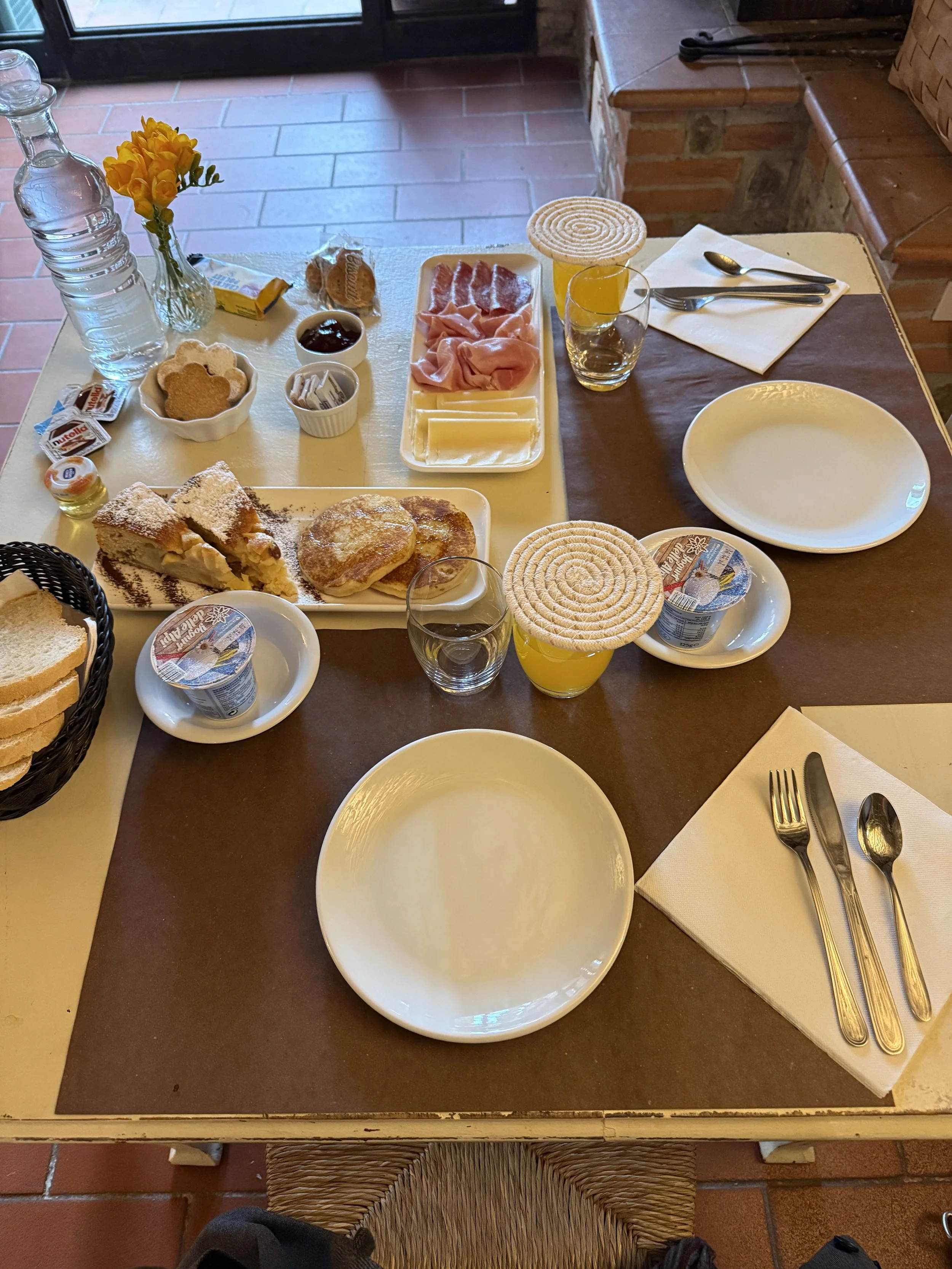
This is the breakfast spread I got every morning. Lots of food!
I had to schedule my soak in the hot tub the day before becasue they need time to set it up. I was not sure what that meant, but when I arrived, I found that they had a separate room set up with incense and candles around the hot hot. There was also bottles of wine! Since it was 9:00am, I just wanted a nice soak to relax and get ready for the day.
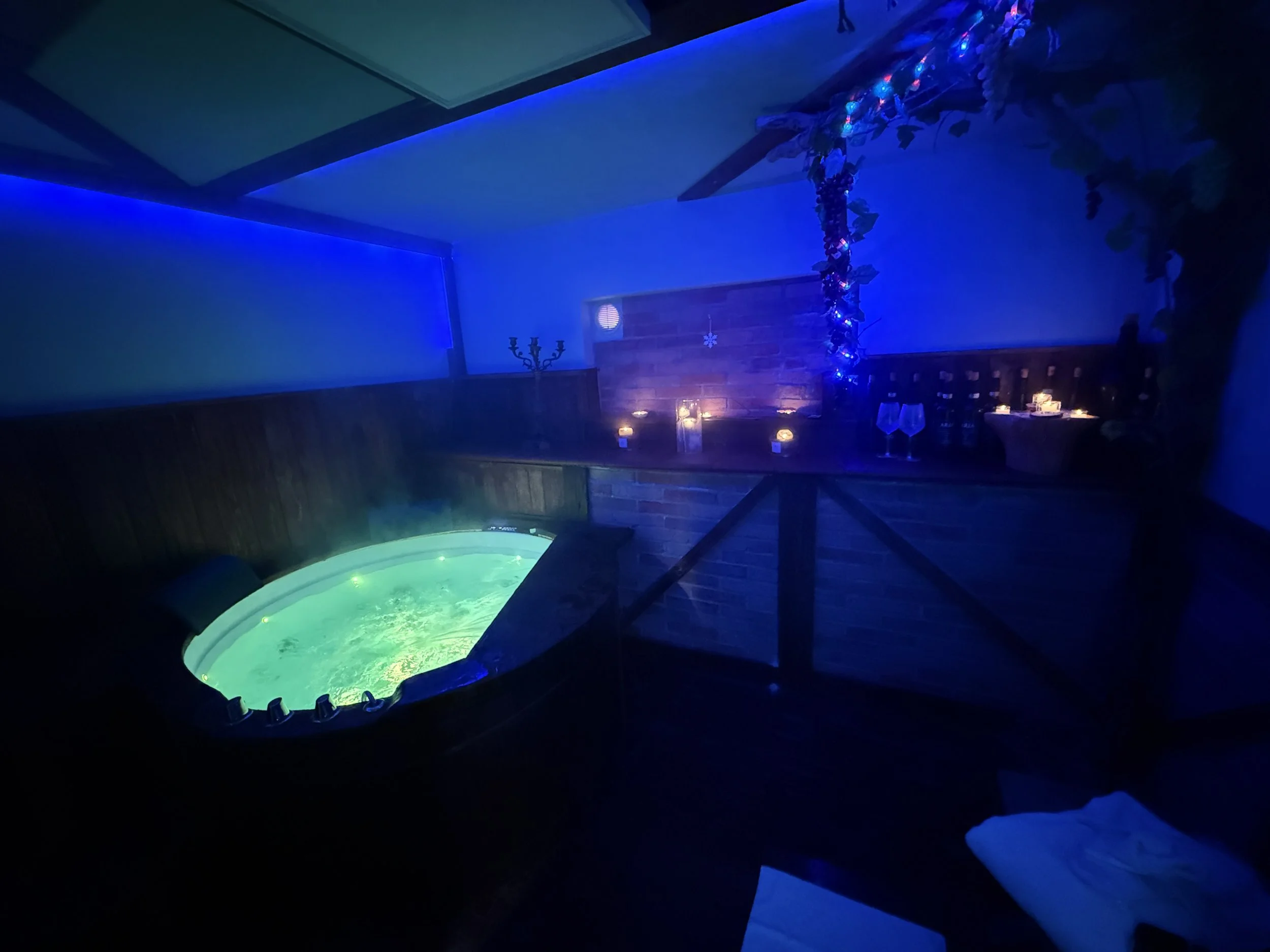
Hot tub room at the spa.
We are currently in the heart of the Chianti Classico Region. This is different from the Chianti Region we were in at San Gimimigano. The Chianti Classico Region is the original Chianti Region bounded by Florence to the north and Sienna to the south. In 1762, the Chianti region was expanded. The original region got the designation “Chianti Classico” and the rest simply Chianti. There are stricter rules used to distinguish the two wine regions. Chianti Classico wines can be identified with a black rooster on the label.
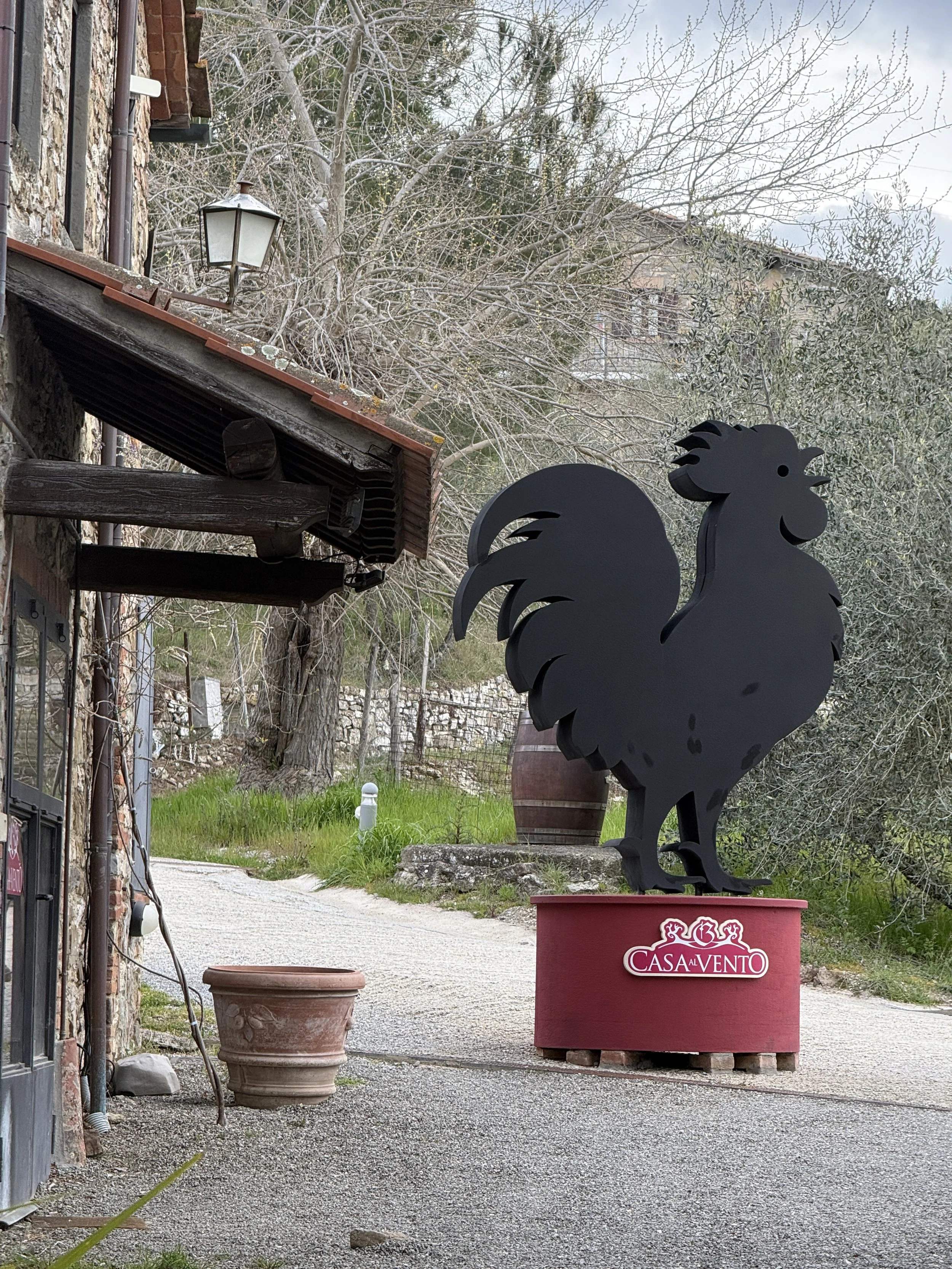
Black Rooster that can be found at Chianti Classico Wineries and Bottles.
We were hoping to try to tour and taste a few Chianti Classico vineyards today. Unfortunately, the first three we stopped at were not open for tastings due to the Easter Holiday week. Many had workers in the fields because it has been a very wet spring and this is the first chance they had to get out.
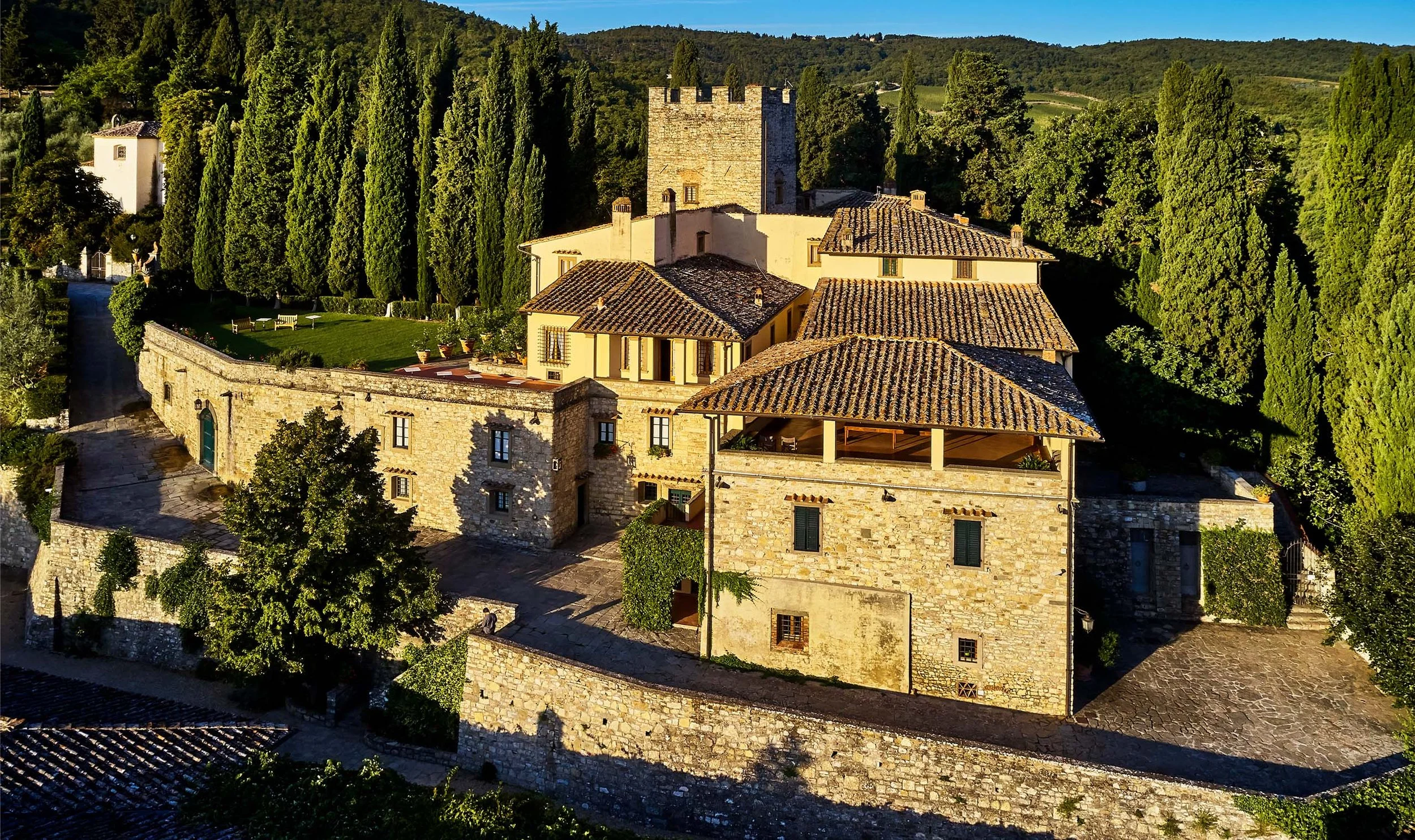
Castello Di Verrazzano
The Castle of Verrazzano is located in Greve in Chianti, in the heart of the Chianti Classico area, between Florence and Siena. It is considered the oldest documented winery in the area (noted in an ancient manuscript from 1150). The castle’s most famous resident, Giovanni da Verrazzano, born in 1485, would go on to become one of the most important Italian explorers of the New World. He was also the first to explore the east coast of the United States; New York’s Verrazzano-Narrows Bridge commemorates the day he first sailed into the New York harbor on April 17, 1524. He was reportedly eaten by cannibals in the New York area.
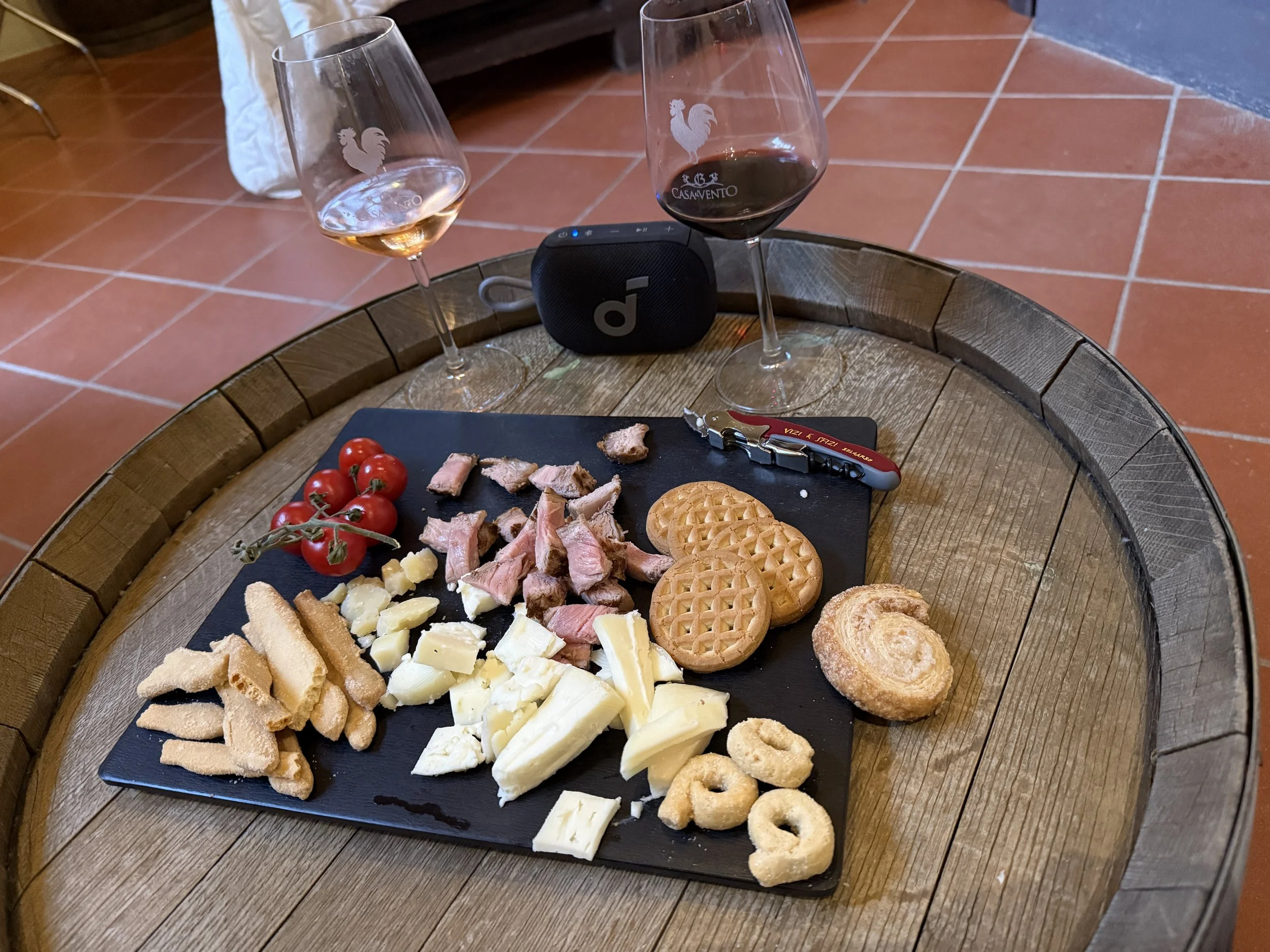
We eventually found Castello Di Verrazzano Winery. We got a table and had a tasting of wine with cheeses. Sandy got th e “I preferiti” - It included a Rose, Chianti Classico and a Super Tuscan. I got the Verrazzano Speical - It had a Bianco (white wine), Grand Selezione Reserve, and a Super Tuscan. I traded my white wine with Sandy’s Chianti Classico as she prefers white wines.
Our server was a young woman who is the grand daughter of the wine maker. She shared the story of how they started making white wines. Her grandmother really only like white wines and living in an area dominated by reds, she had a difficult time finding wine she enjoyed. So her husband decided to grow some white wine grapes and make a white wine just for her. Only a small area was planted, so the production is small. But her grandma got her wish!
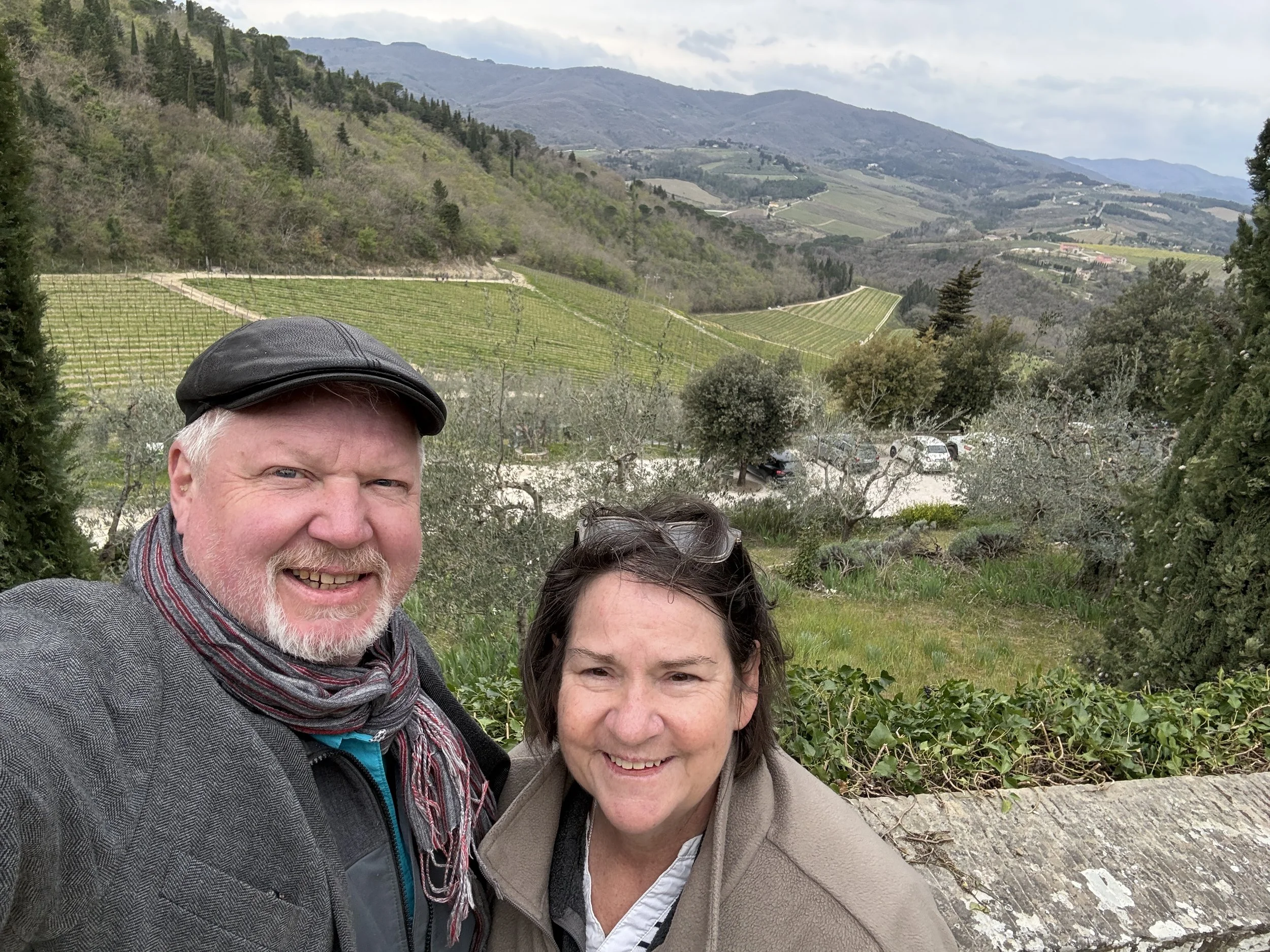
View of the Vinyards
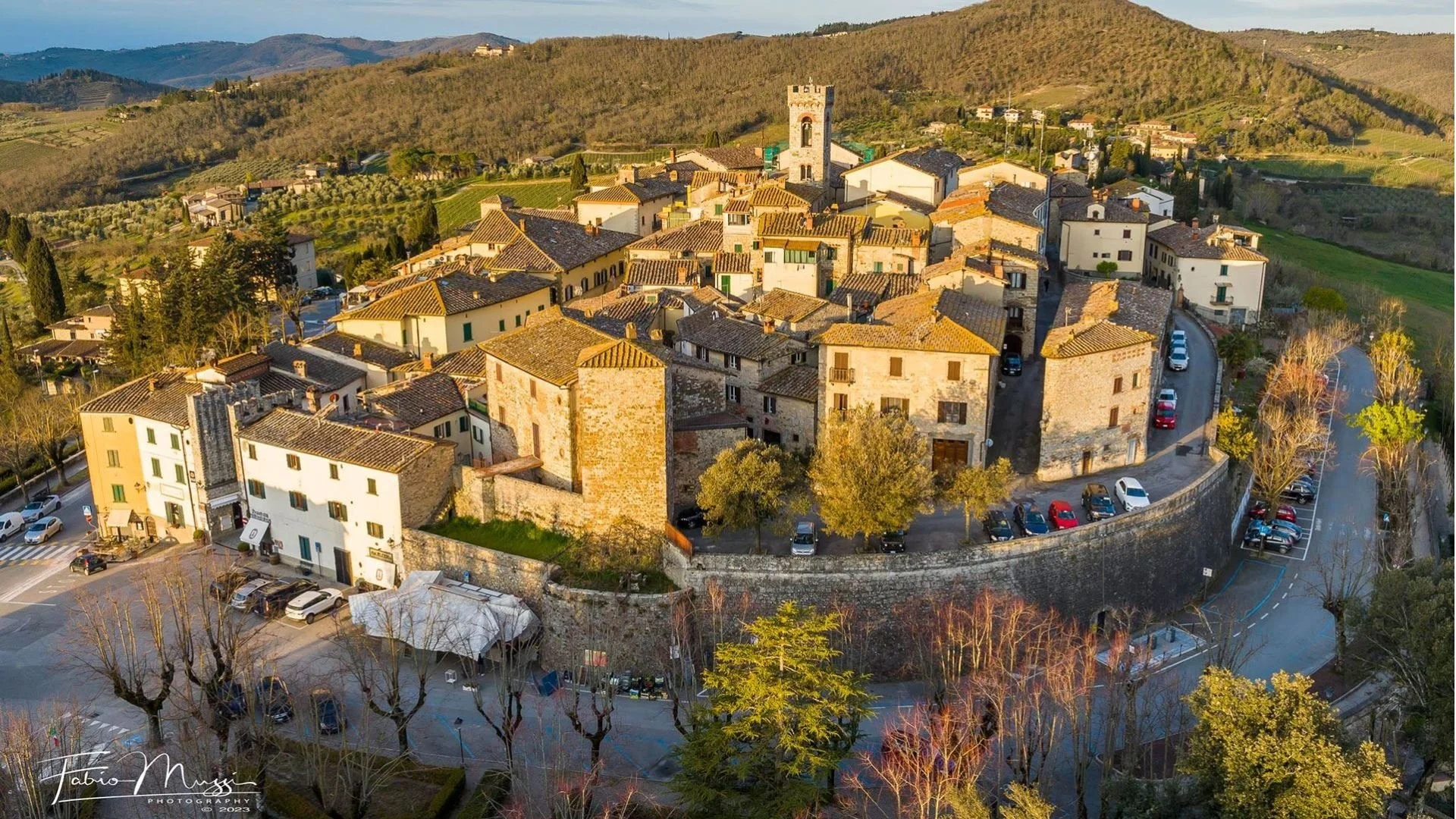
Radda
Radda is a medieval hilltown with deep Etruscan origins.
On our drive back, we meandered a bit and ran across the town of Radda. We were in search of pizza, but the restaurant was closed when we got there. We walked around the narrow streets. There were lots of bicycles and bike shops here. Apparently this is the center of the premier cycling hub for the area. There iks a well known 31 km route that starts and ends in Radda. We did not find pizza, but we did find Gelato!
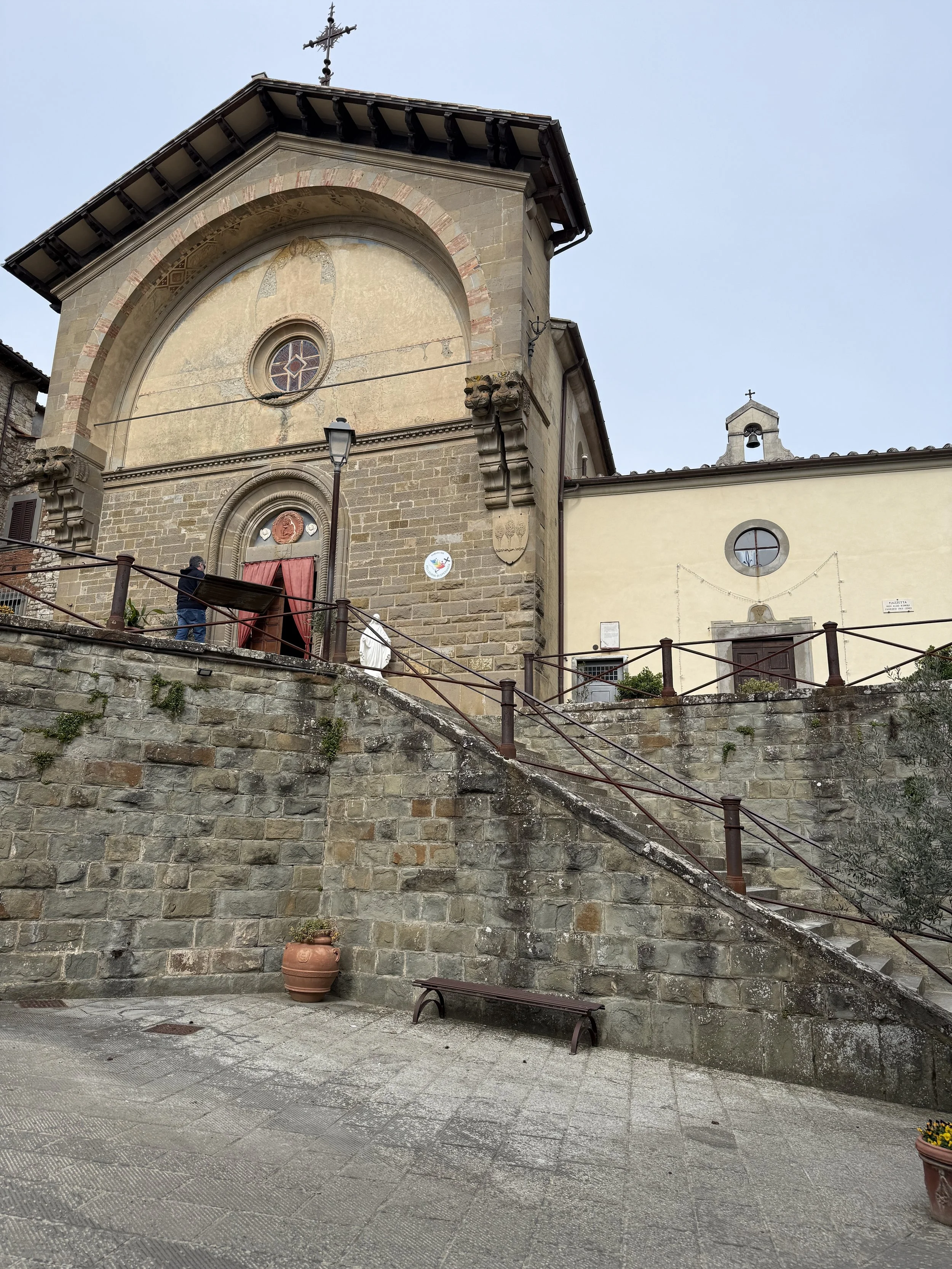
Chiesa di San Niccolo, the main parish church of Radda in Chianti.
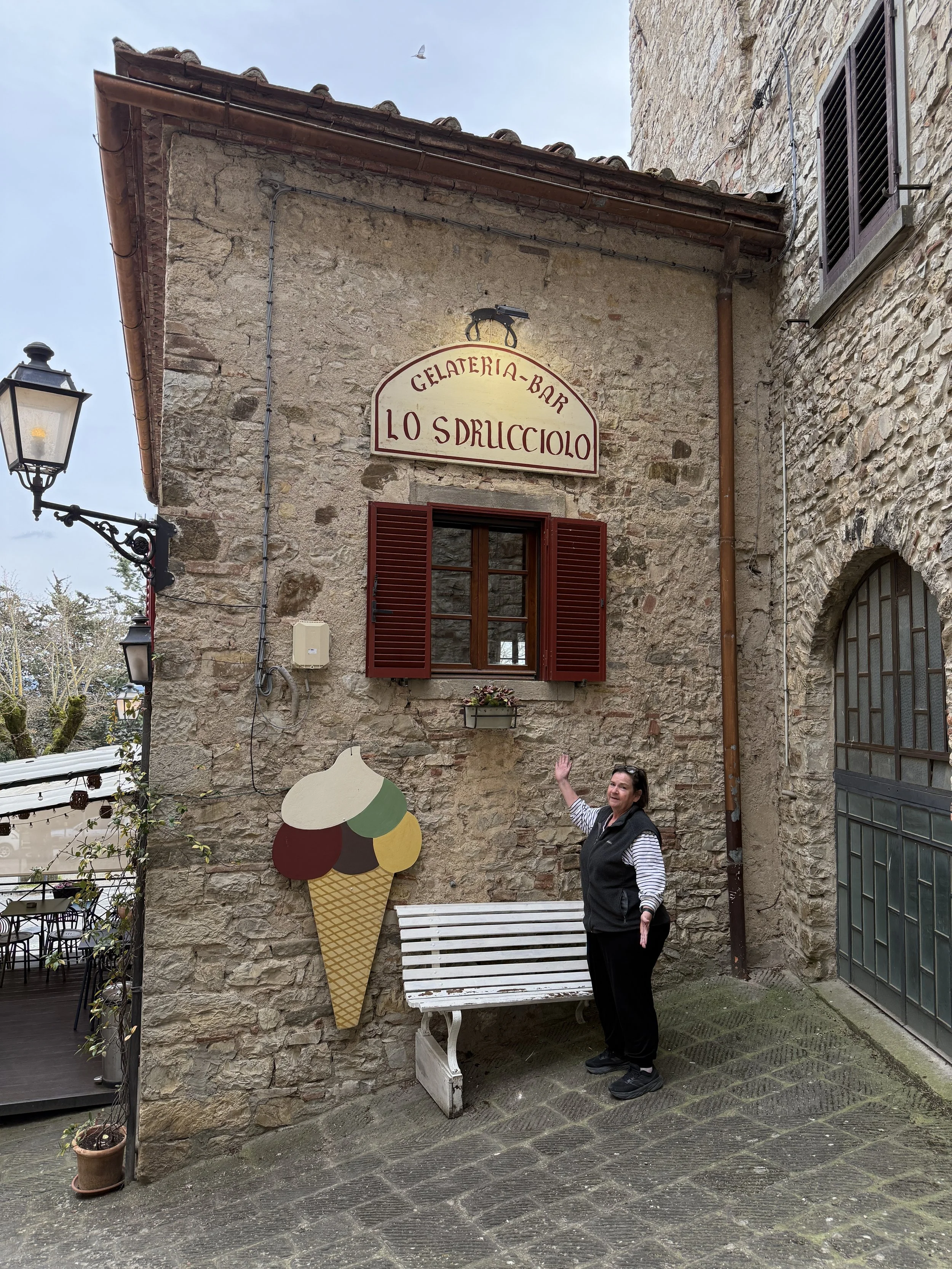
Lo Sdrucciolo Gelato bar
It was a long day, so we headed back to our villa and relaxed with some wine we picked up and a small charcuturie board I made with cheeses we had.