
Herculaneum Ruins
Today we will be touring the Herculaneum Ruins. It was a city that was also destroyed when Mt Vesuvius erupted in 79AD when Pompeii was destroyed. While the town is not as big as Pompeii, it has better preservation. It has upper stories that were preserved as well as carbonized wood, food and frescos. Herculaneum is located in Naples (Napoli). This is a very urban part of southern Italy. It is not a place I would like to visit. Our GPS did not do a very good job of taking us to the parking lot for the ruins. We ended up on the far side of the ruins near a fence that blocked it off. We rerouted ourselves back to the main entrance. Unfortunately, it routed us through some very busy streets. We were at a standstill for over 30 minutes. I knew we were in trouble when motorcycles would pass us, only to return going the other way. There was no place to turn around, so we just waited. There was no seeable reason for the traffic jam.
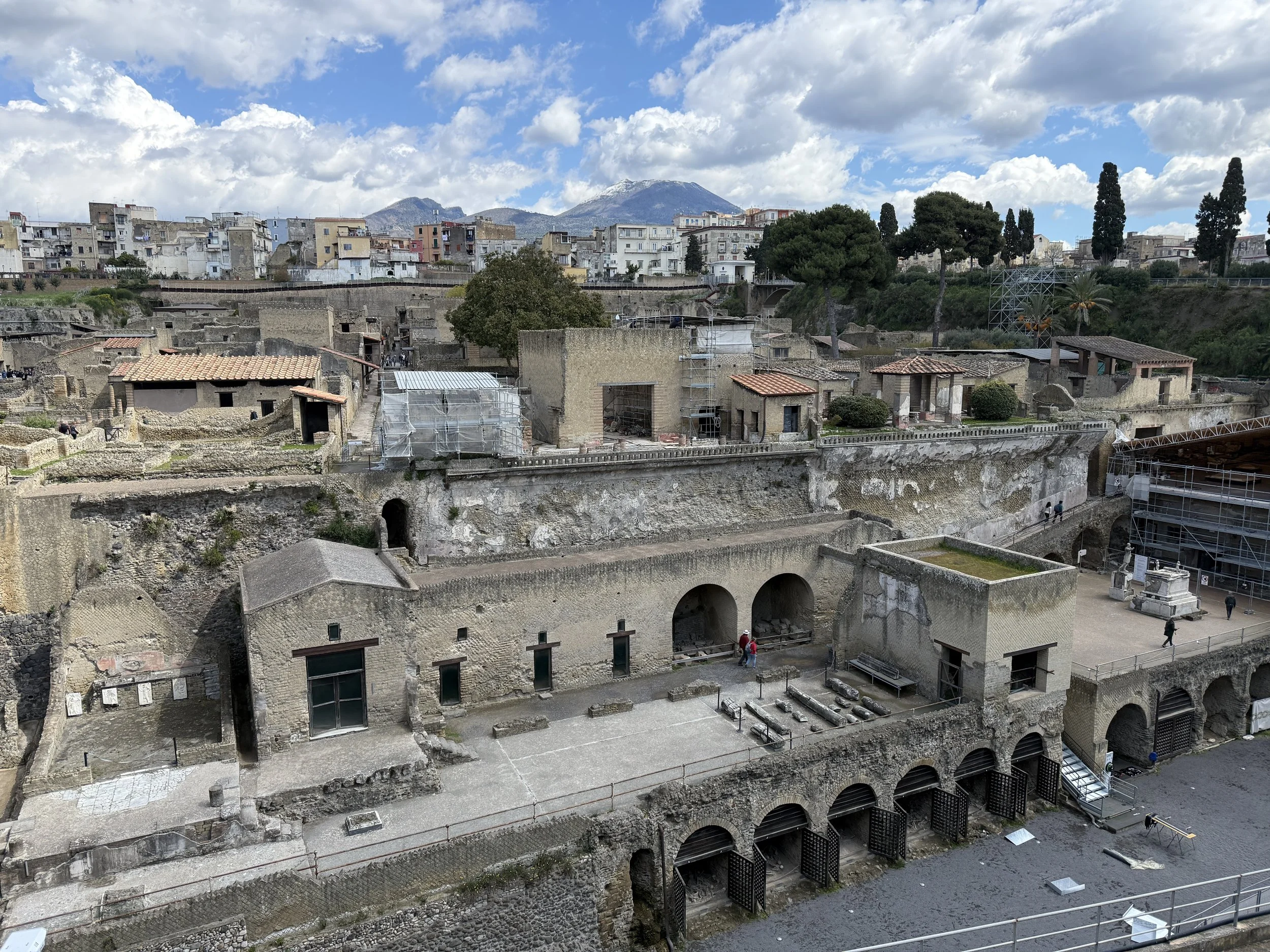
Mt Vesuvius is in the back ground. Most of the town is visible in this photo. The arches at the bottom were the boat houses. The sea came right up to this area.
This city was covered in 65 feet of Volcanic ash and lava and was lost for many years. There were rumors of the city for years and was discovered in the 1800’s, shortly after Pompeii. The excavation shows that it used to be closer to the water, the volcano completely covered it and extended the shoreline out further.
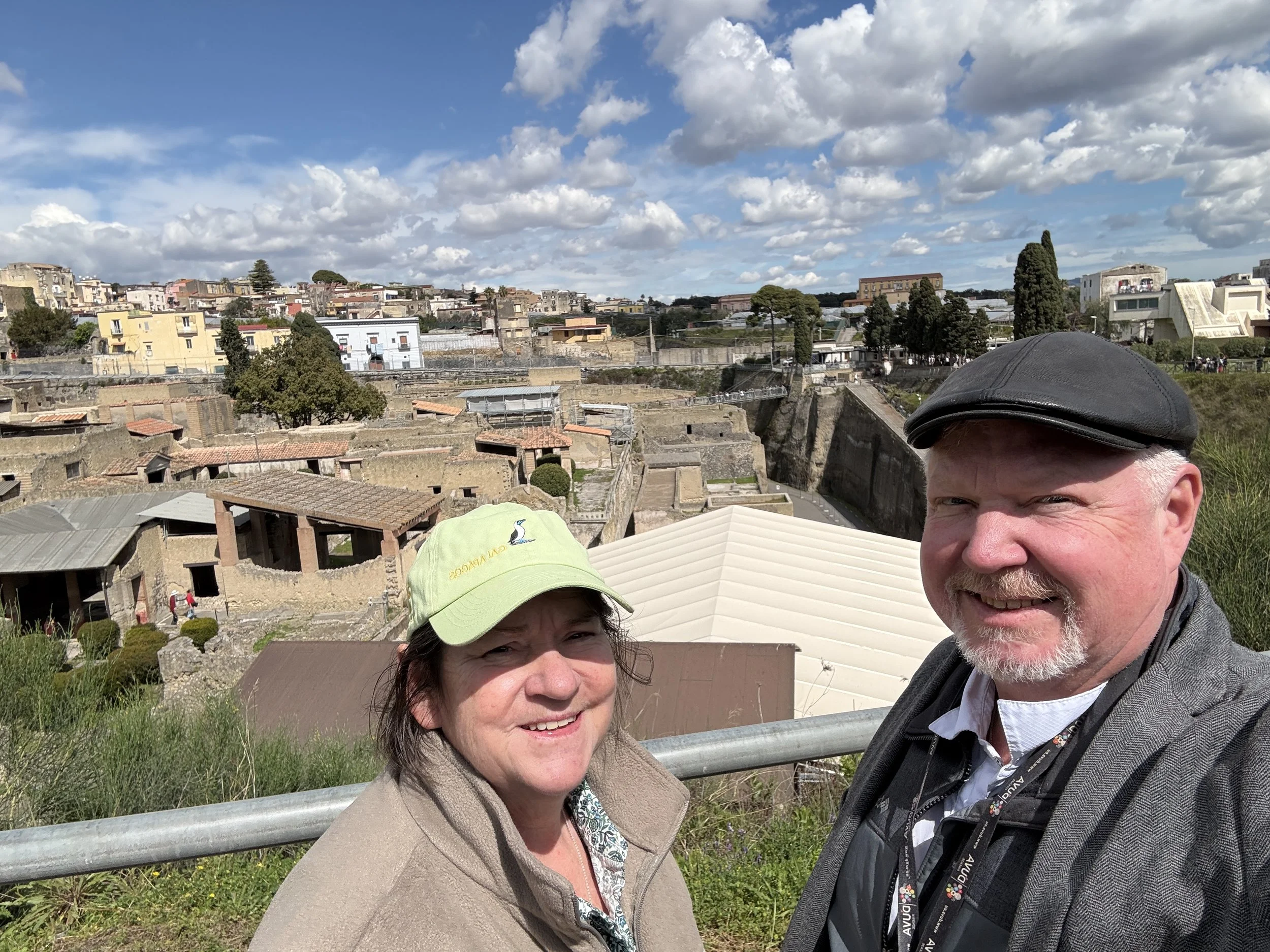
view looking down into the ruins.
The first thing we saw when we arrived was the Fornici, the boat houses. They were way down deep in the excavation. They had reproduced the gates on the entrances. These warehouses contain the skeletal remains of over 300 people who perished while waiting to be rescued, but the temperatures for the eruption was too much. They were vaporized immediately. It was pretty dramatic to see.
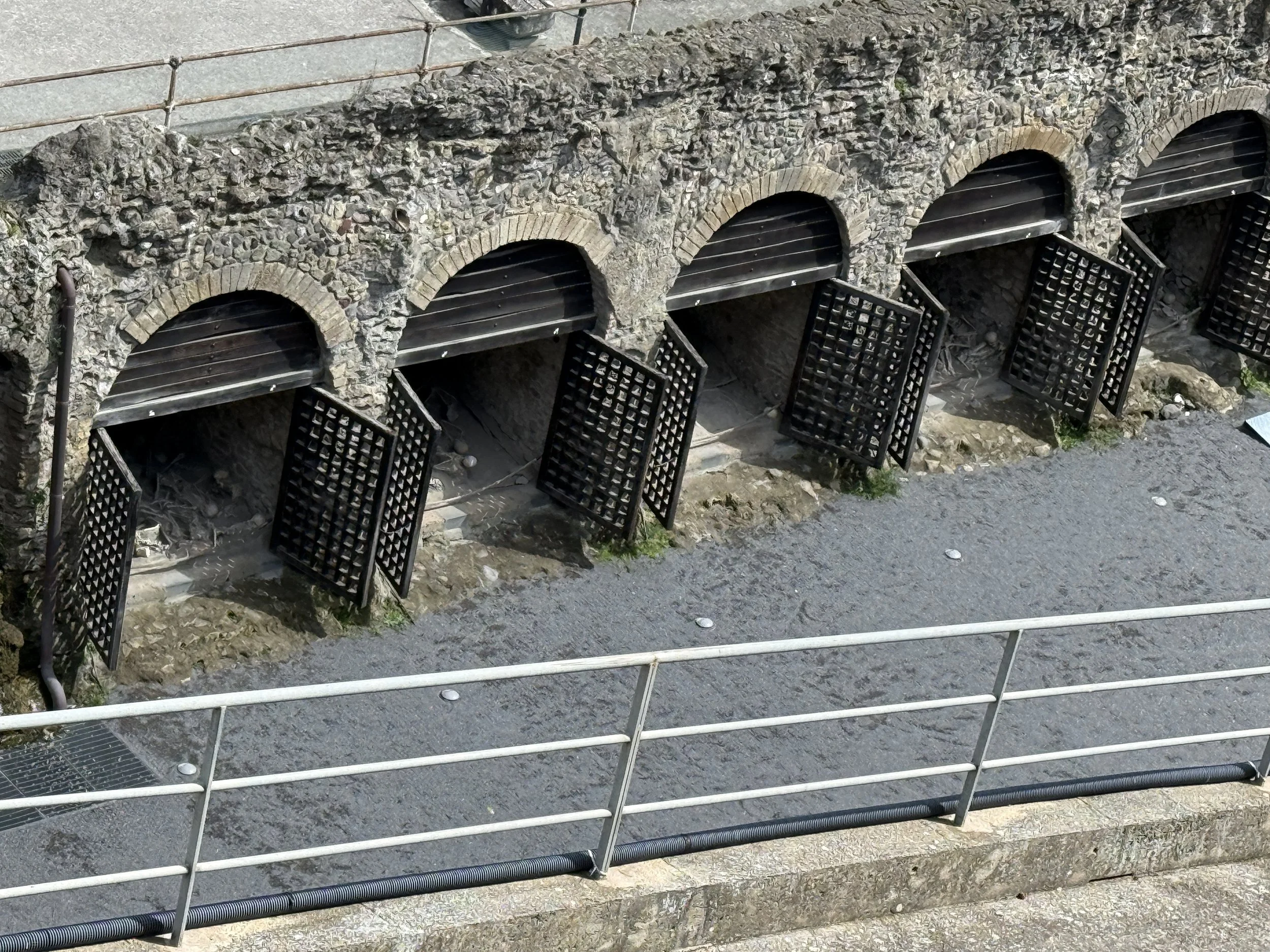
Fornici boat houses.
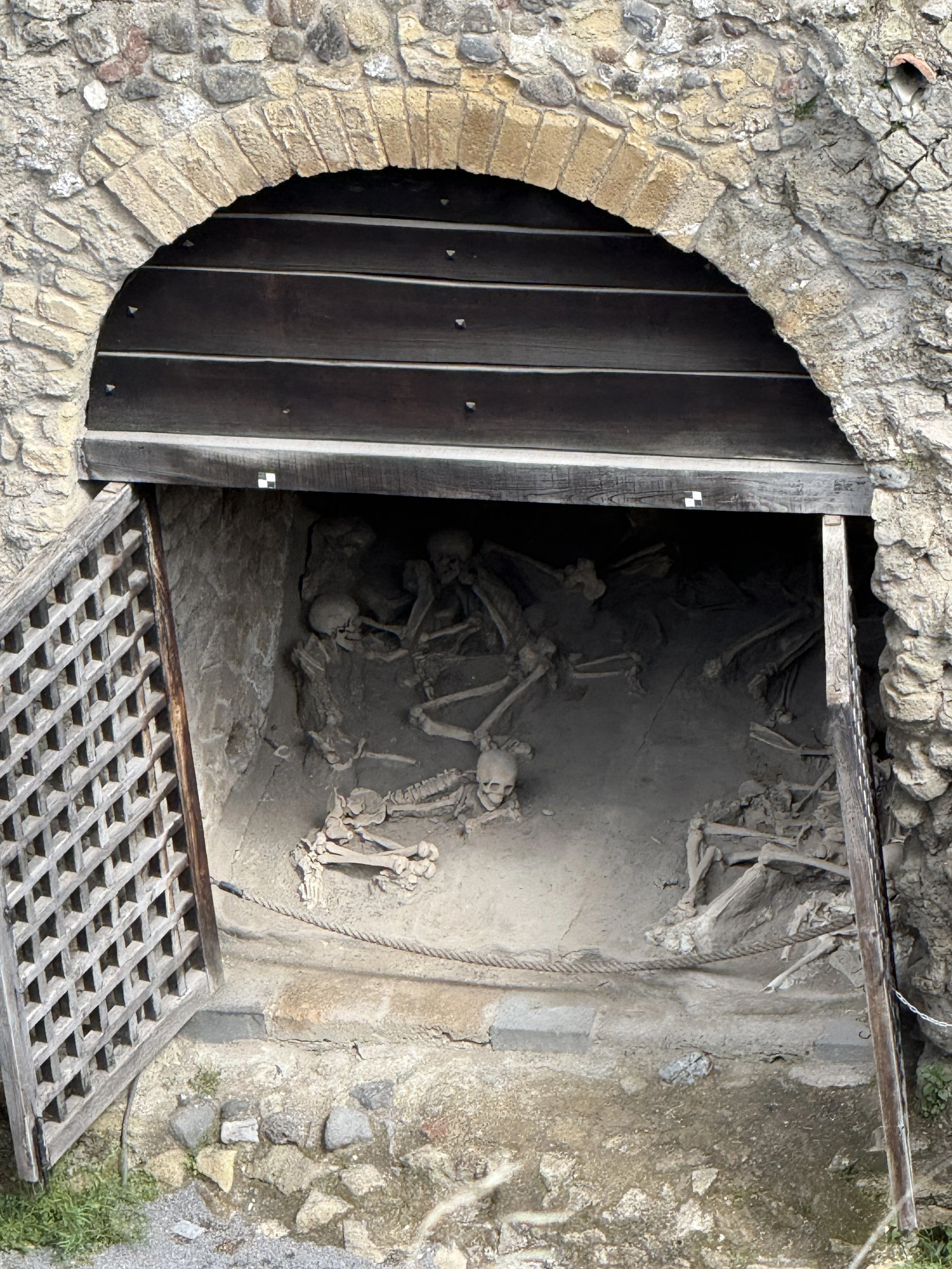
These are the skeletal remains of the people whose fled the city and hoped for rescue from the volcano.
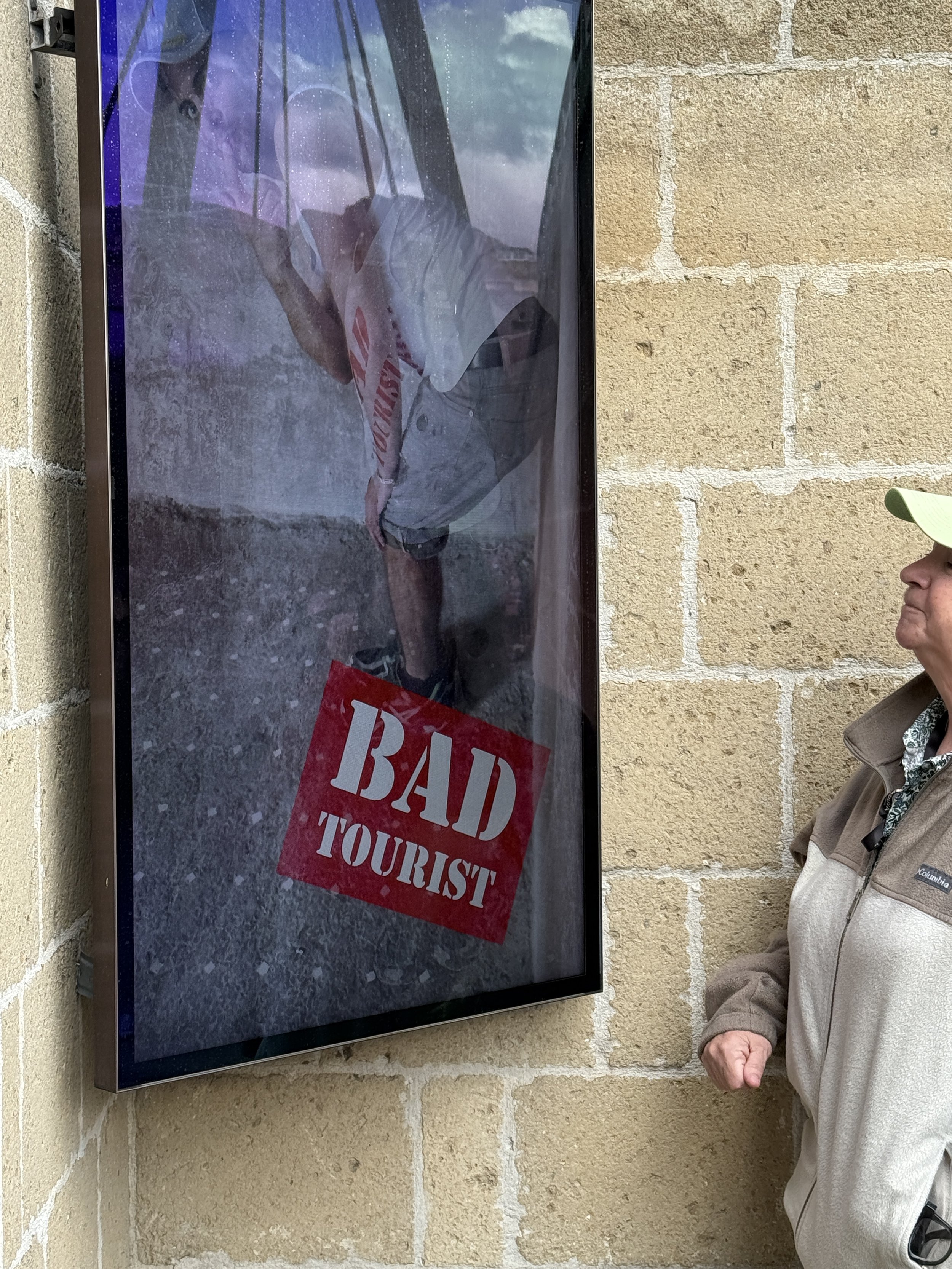
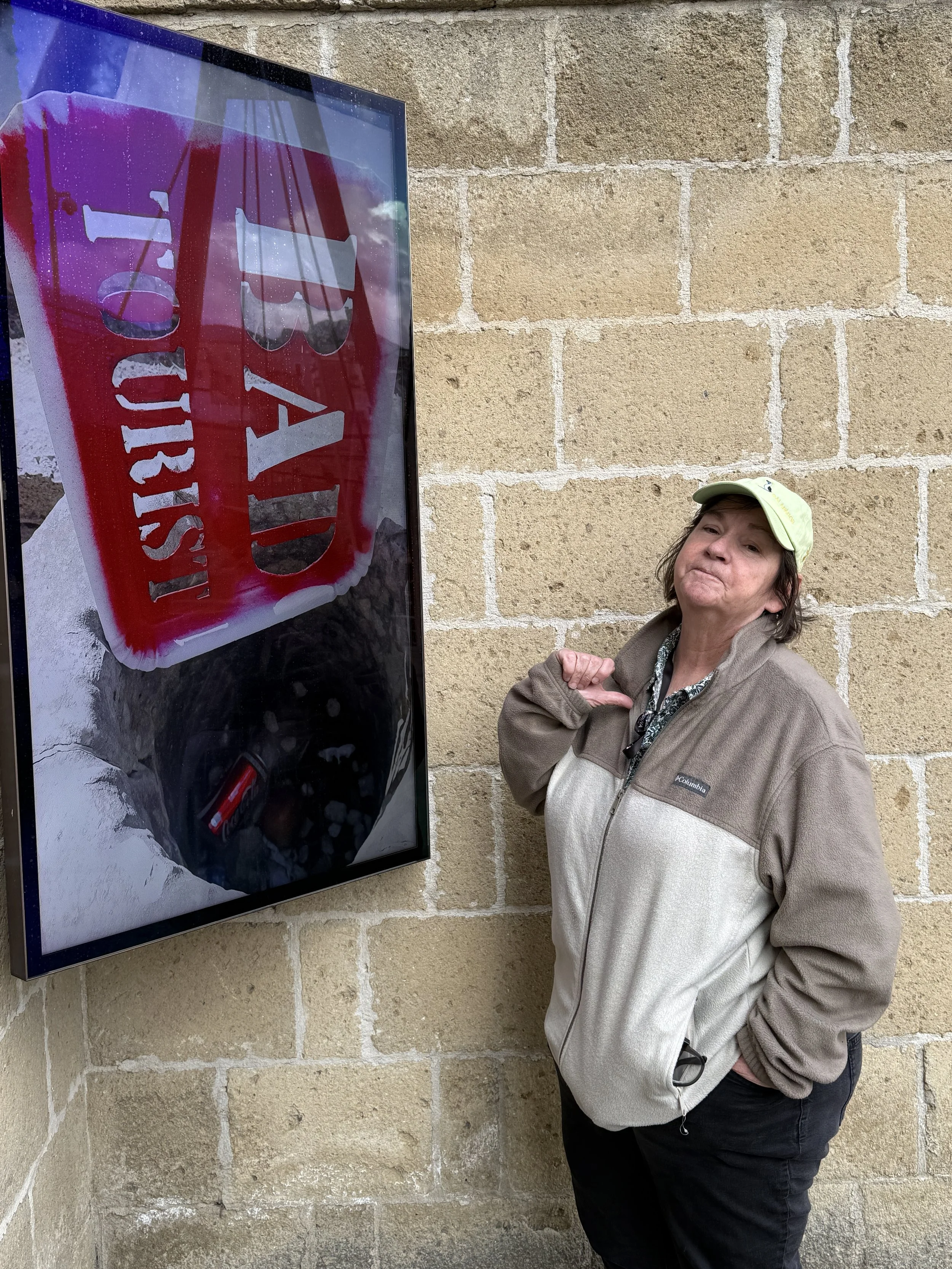
We were then able to enter the city and walk among the ruins. But first we had to go past a display warning us to not be a Bad tourist. It was a digital display showing all the things bad tourist do. It was pretty funny.
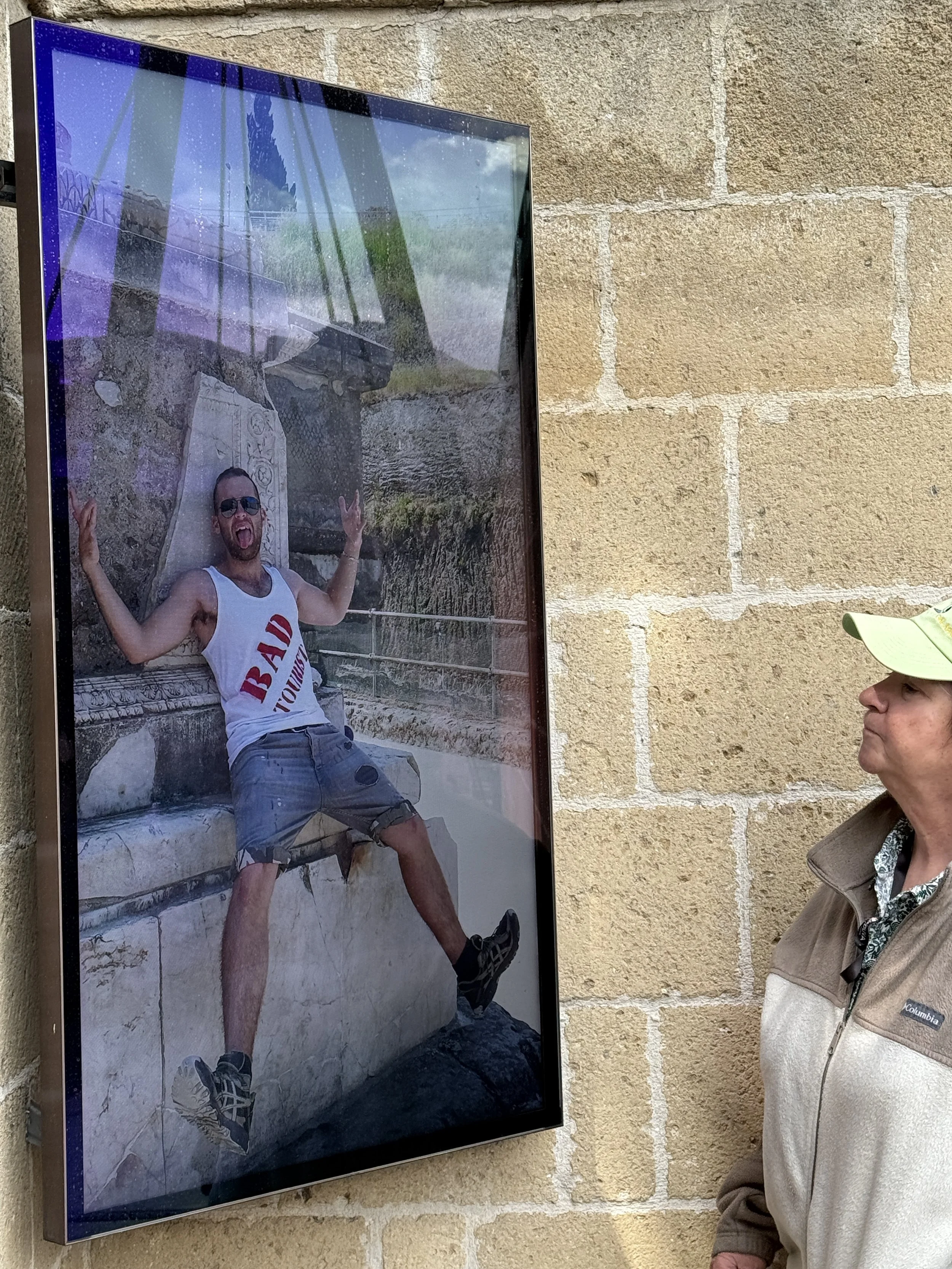
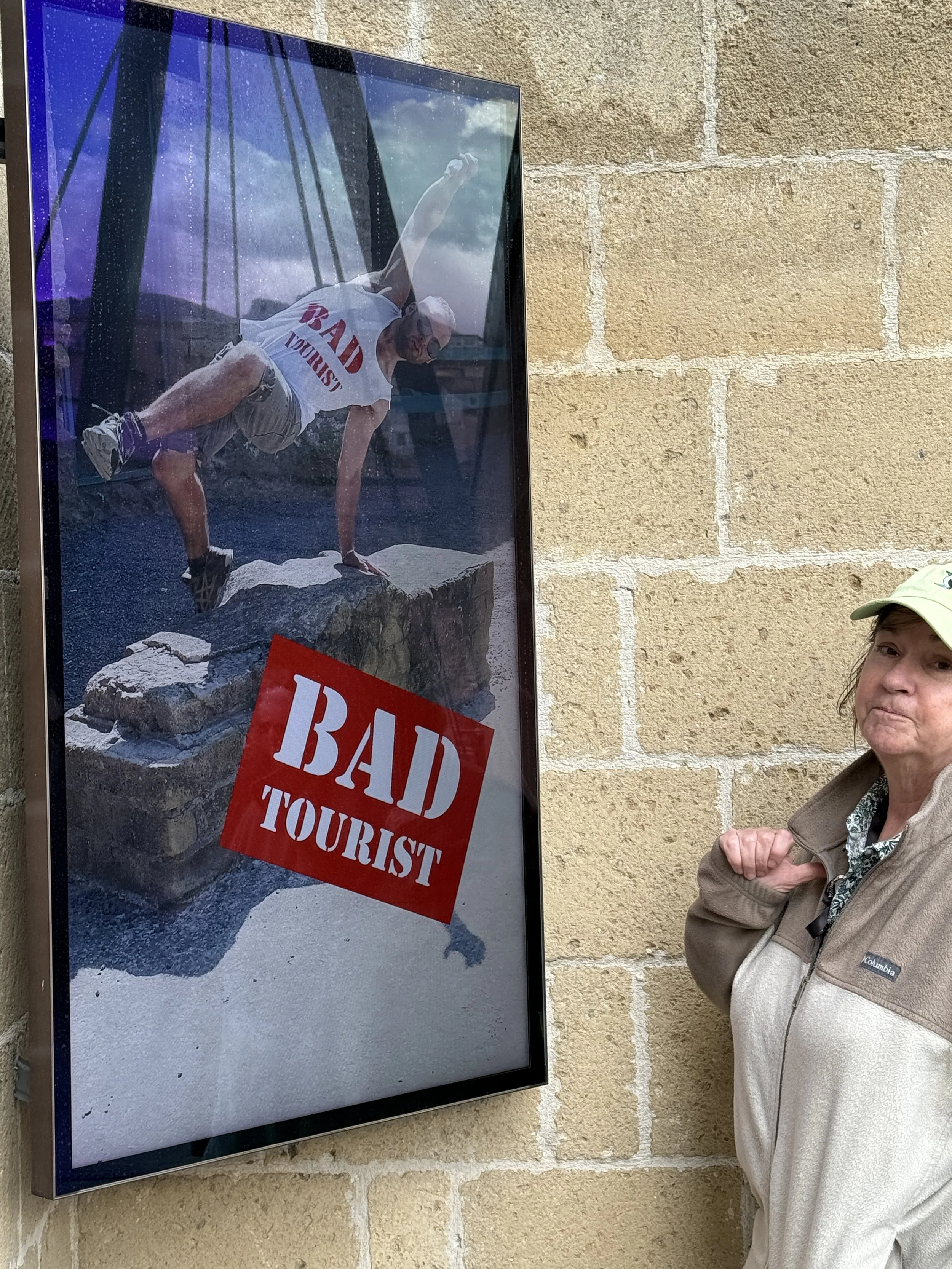
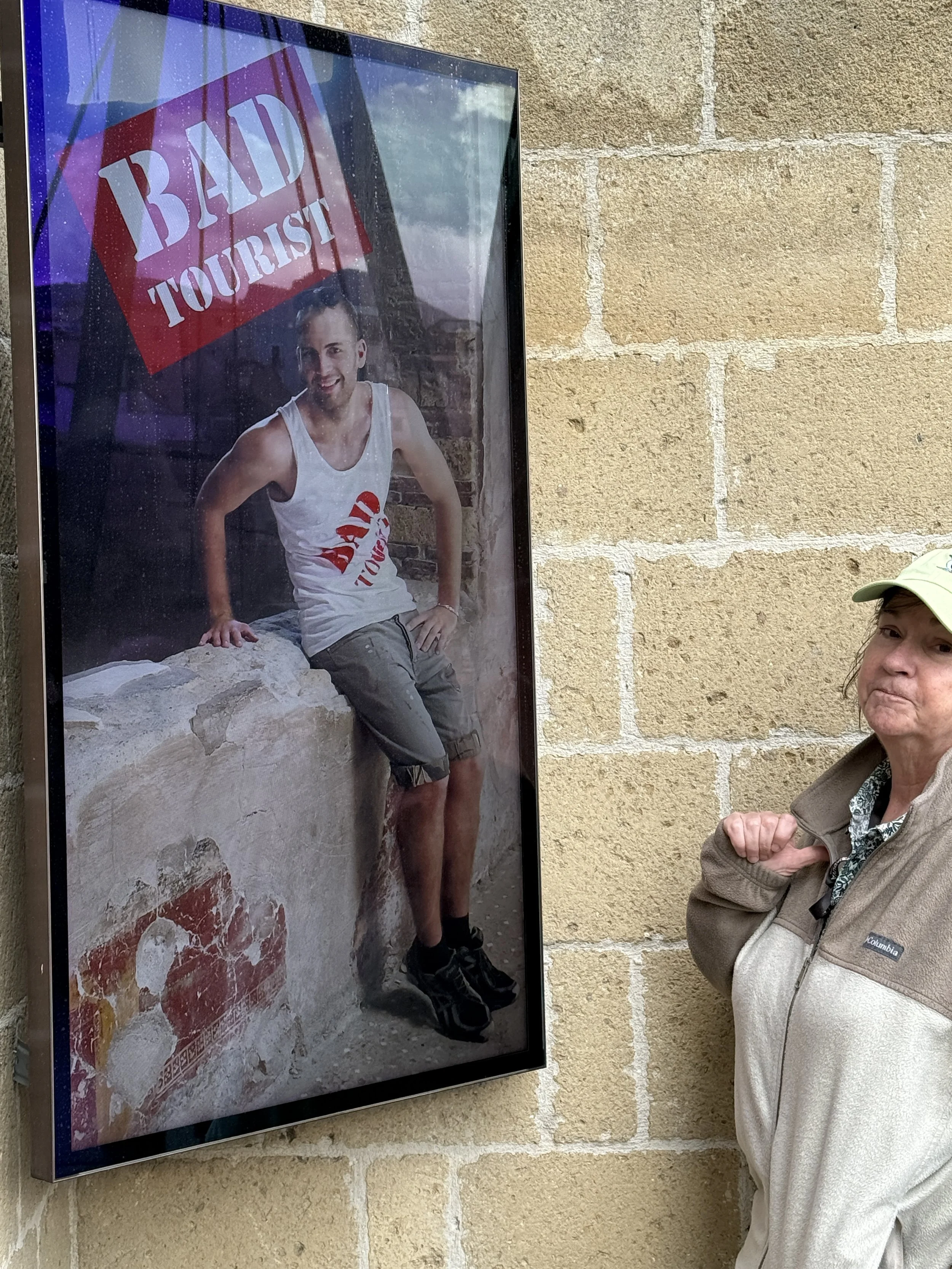
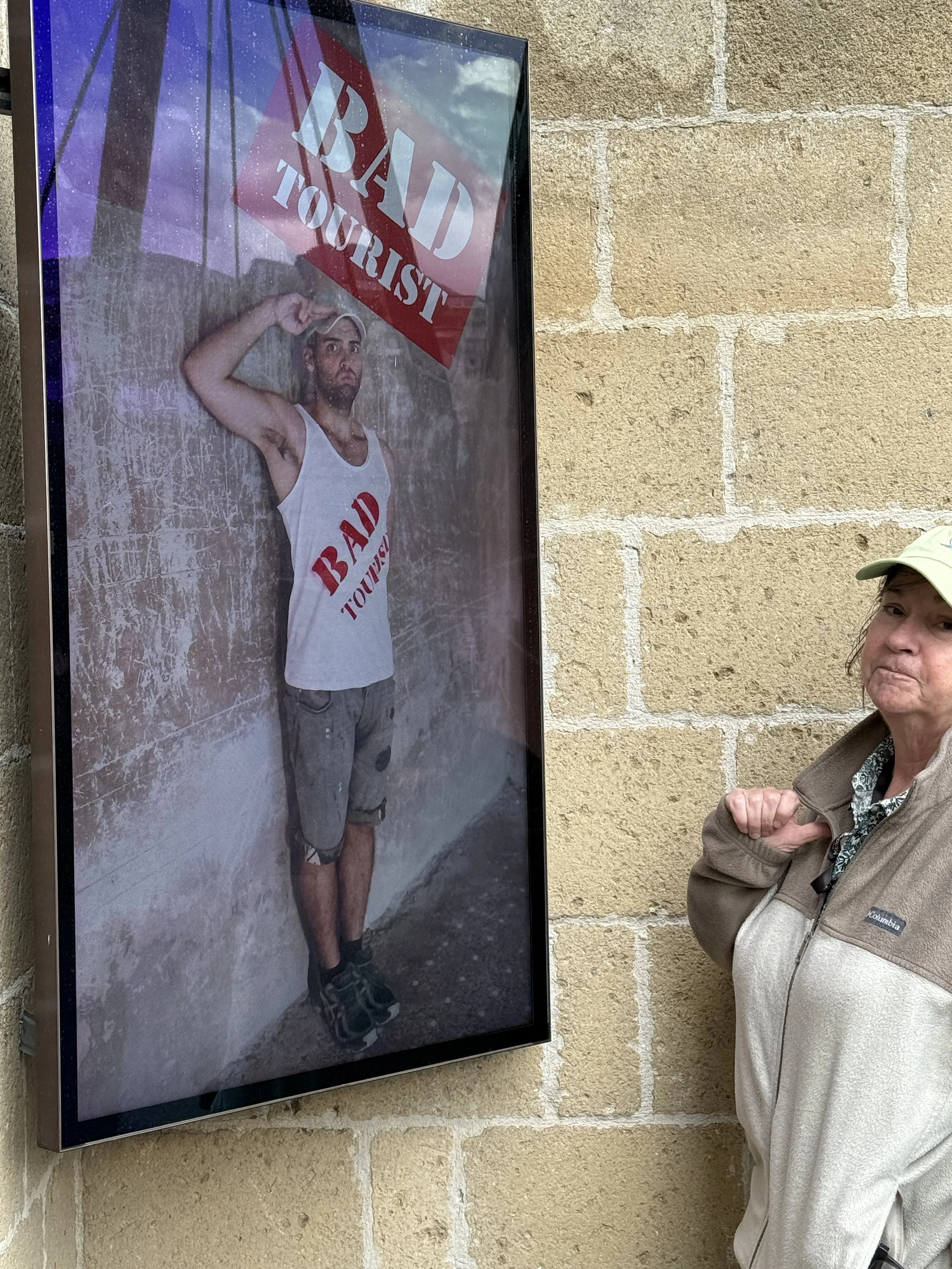
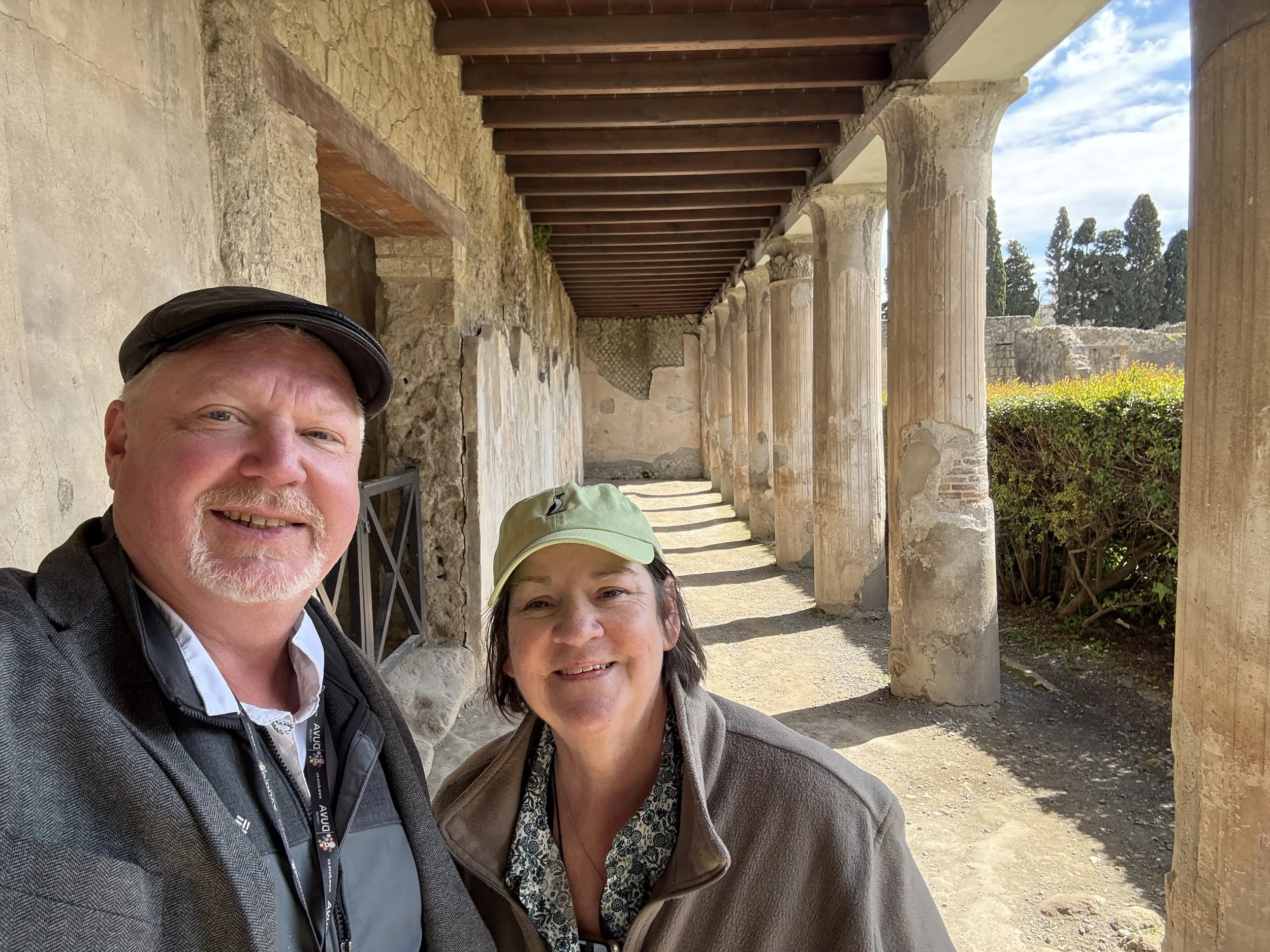
Some of the many original columns
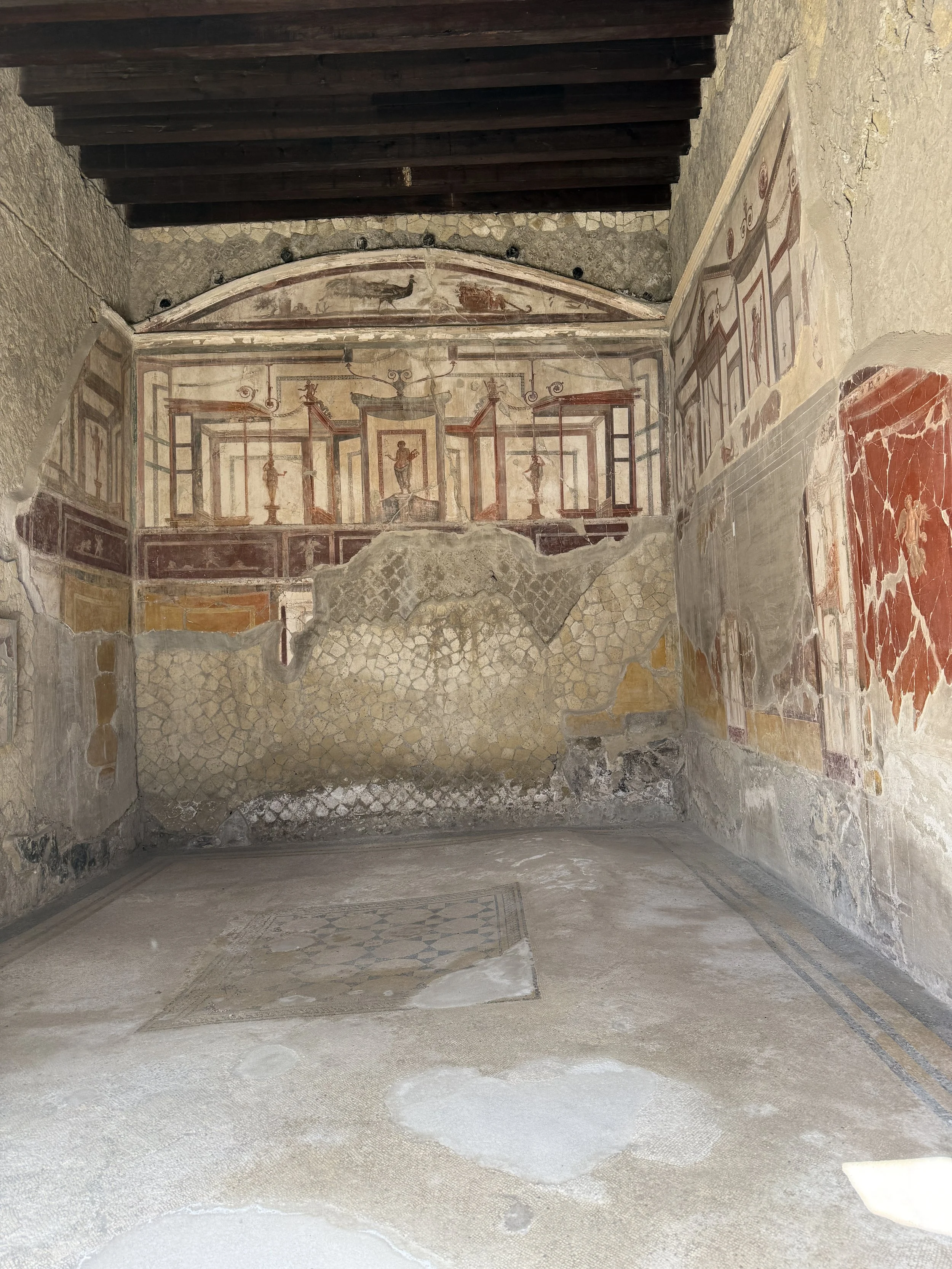
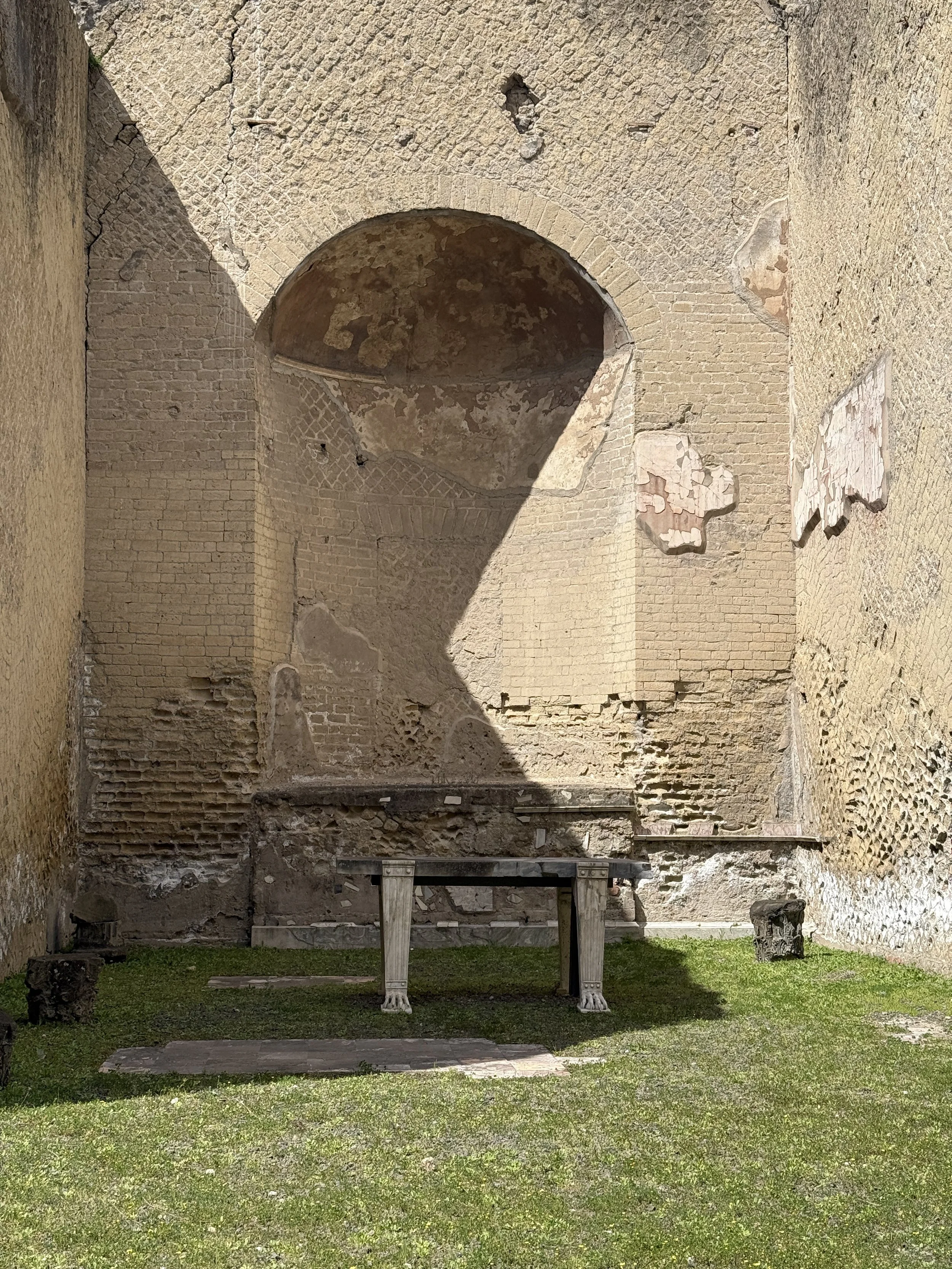
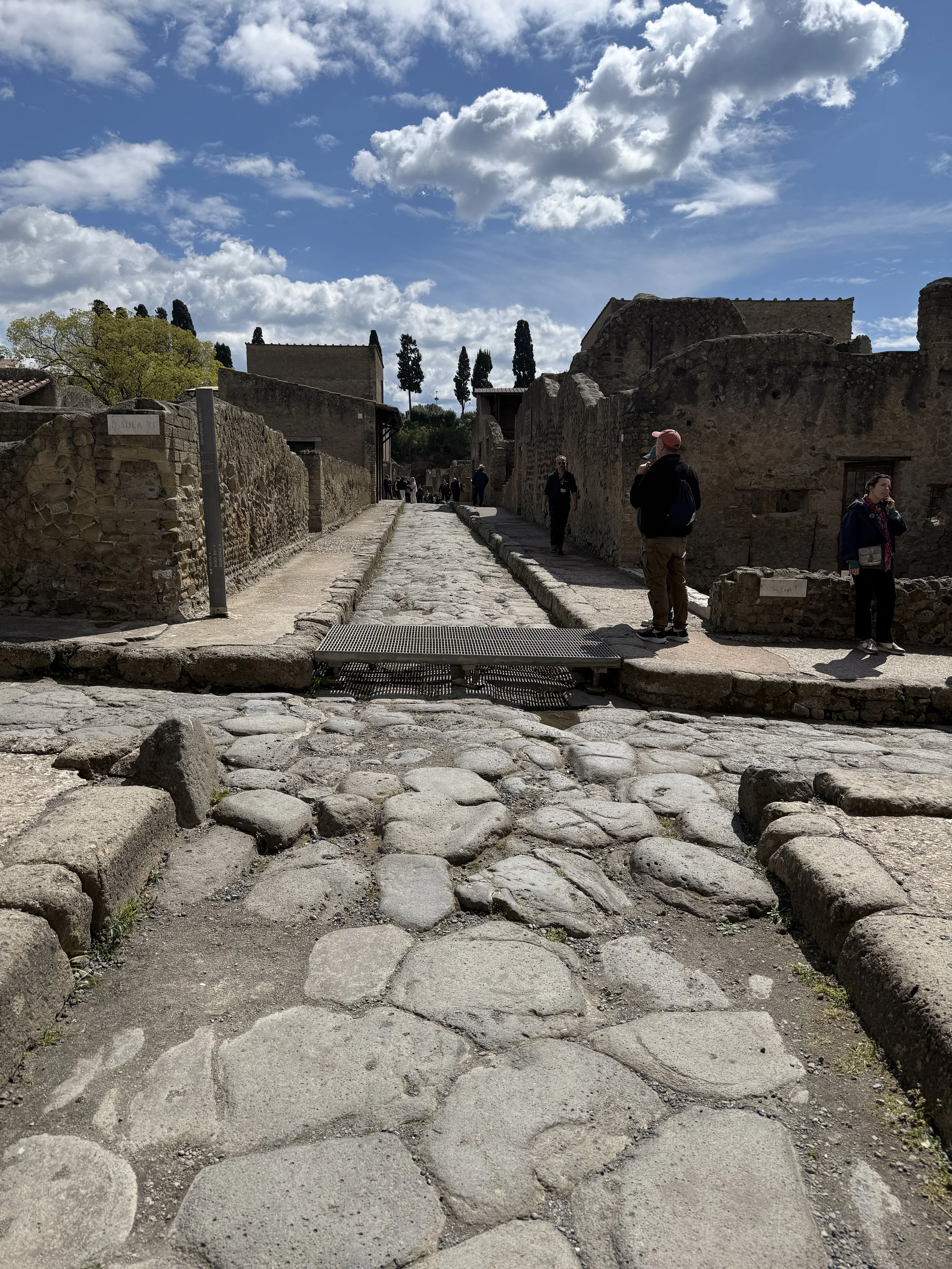
The house of Neptune and Amphitrite had a vividly colored wall mosaic of the sea god and his wife. There were many frescos and mosaics still intact throughout the ruins. Many have been moved to the museum and reproductions have been put into the ruins to give prospective.
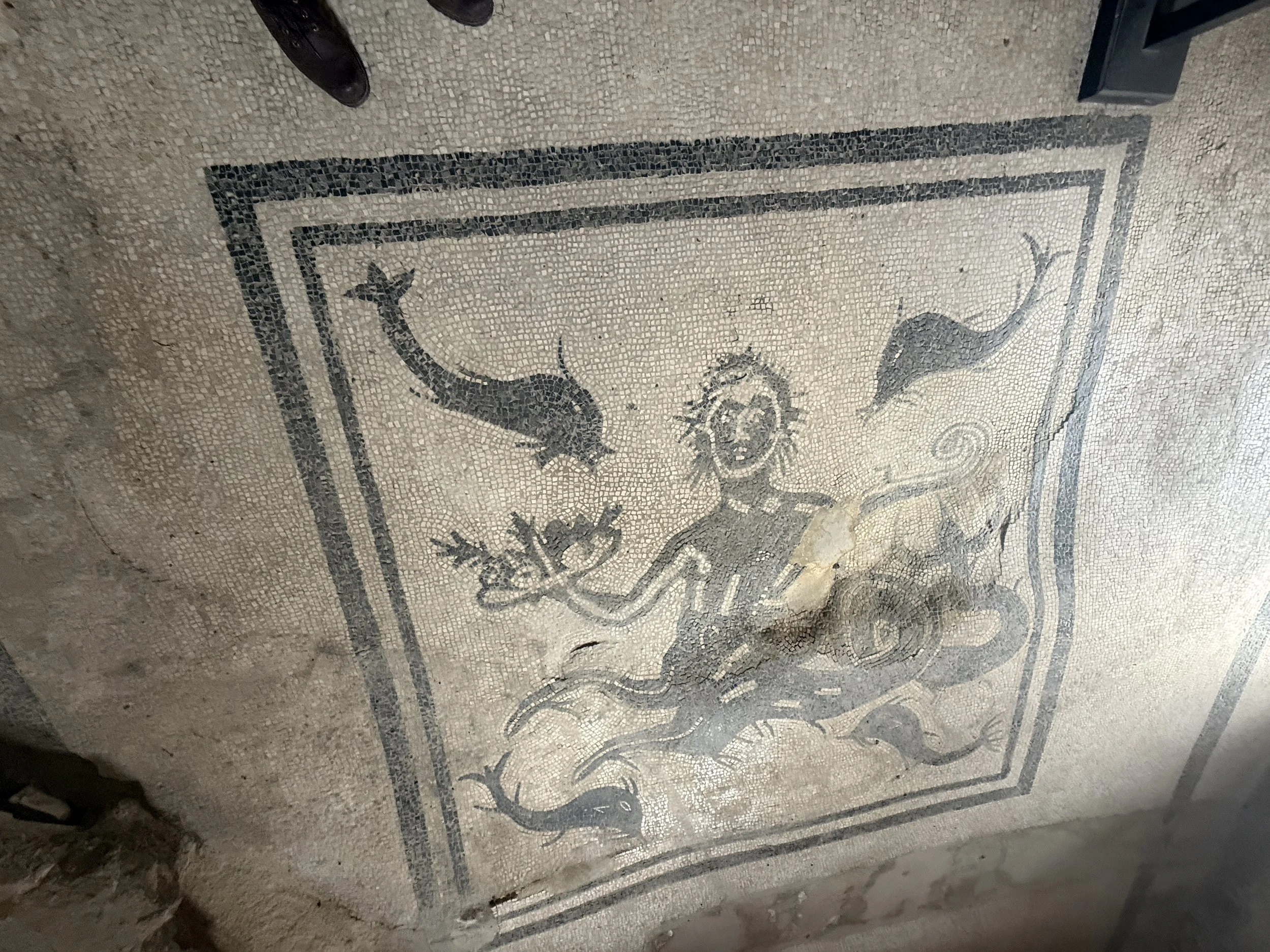
The public baths looked similar to the ones we’ve seen in Bath England. But these had remarkably well preserved black and white floor mosaics depeicting sea creatures like Triton.
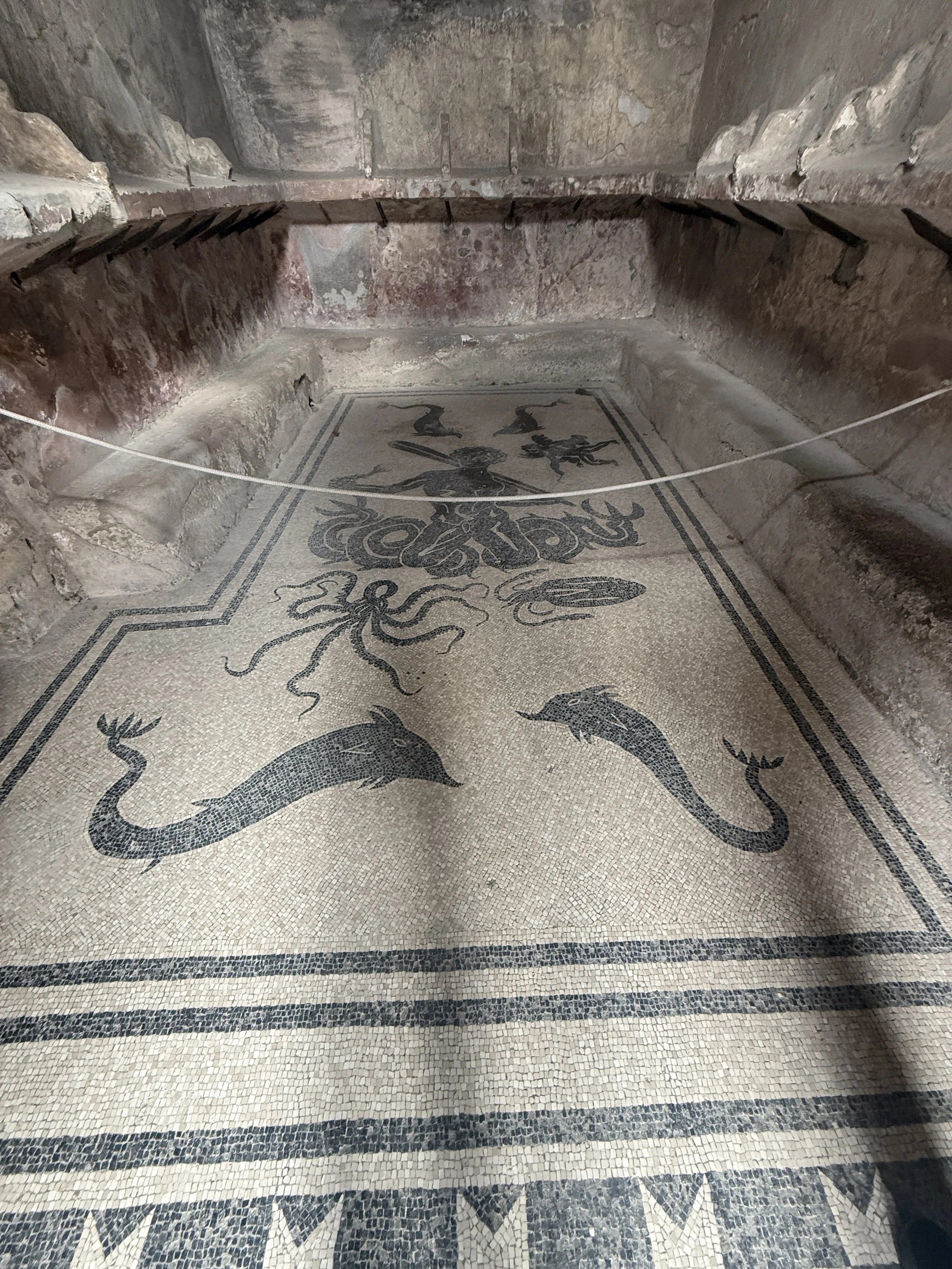
Mosaic tiles on the floor of the mens bath house. Neptune?
Once cool thing we saw at the Bronze Hydra Fountian. It has a five headed serpent (the mythical Hydra) coiled around a tree. Each of the heads functioned as a fountian mouth that sprayed water into a cross shaped swimming pool. The fact that it survived is amazing.
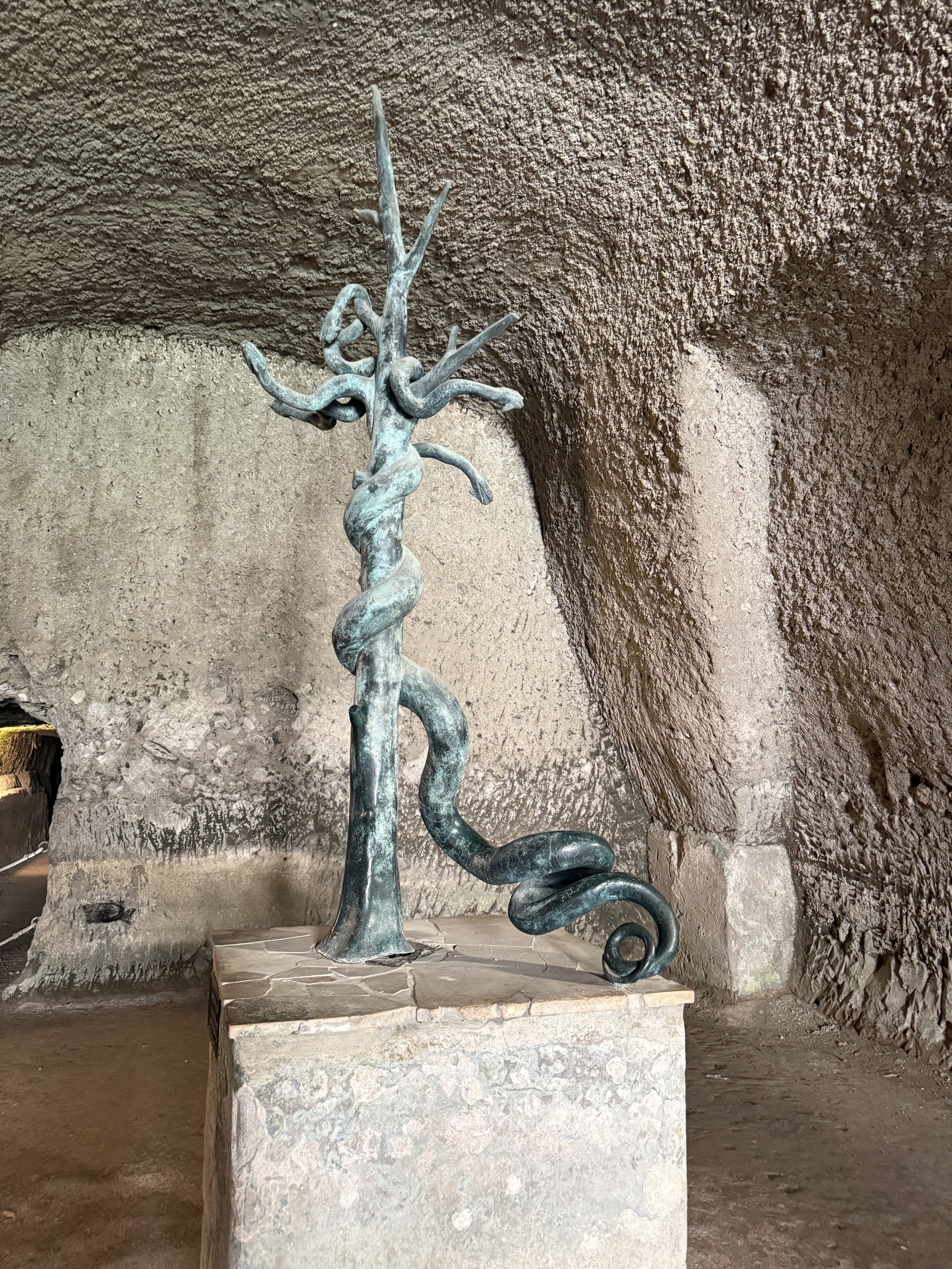
Hydra fountain from a pool. (Reproduction, the original is in a museum)
There were many more interesting buildings. The amount of preserved artifacts tell the whole story of the city. There were shops, bakeries, restaruants (or public eating places.) the stories are great to hear and very interesting.
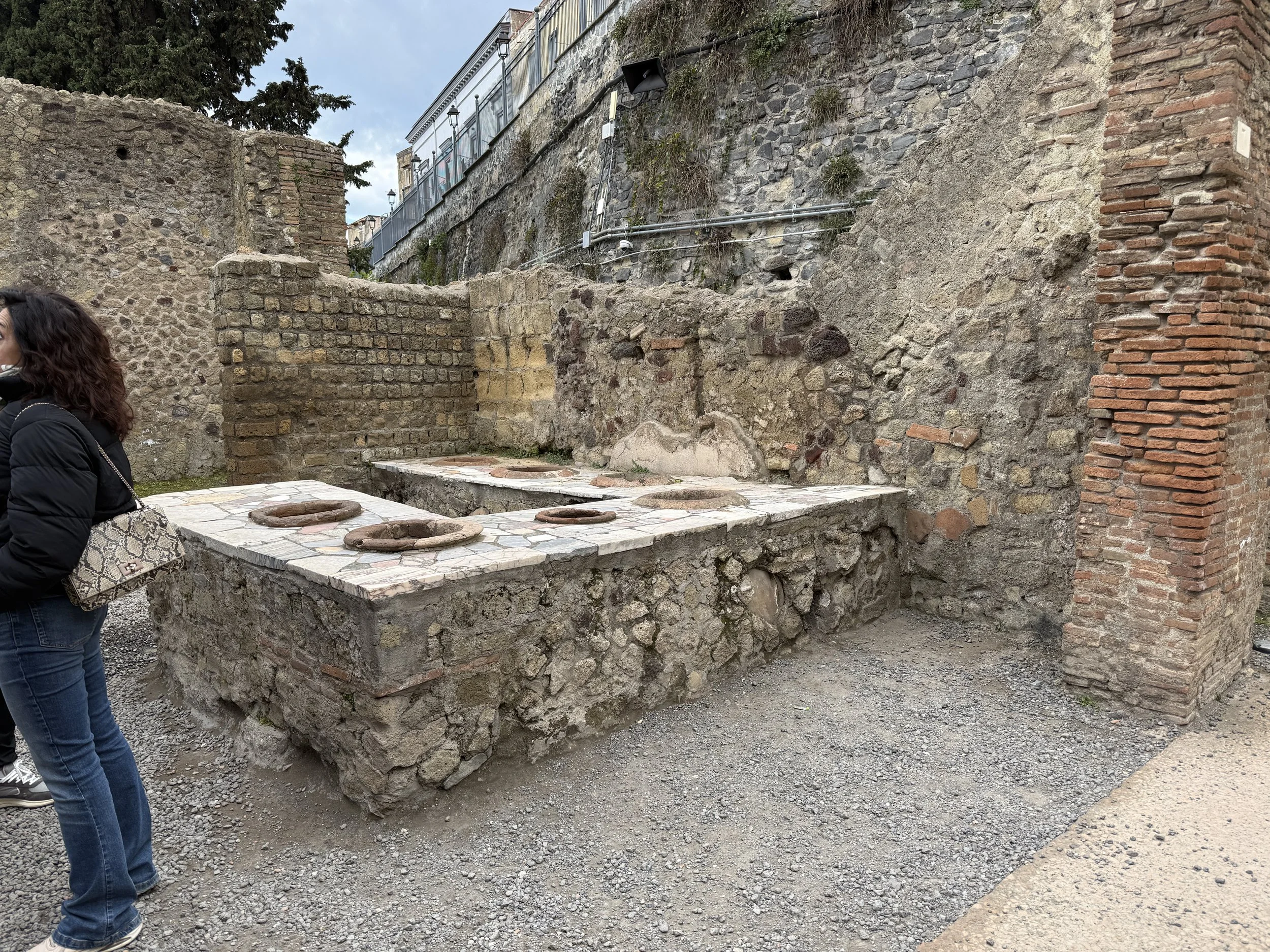
A Thermopolium, an ancient Roman food and drink counter open to the public.
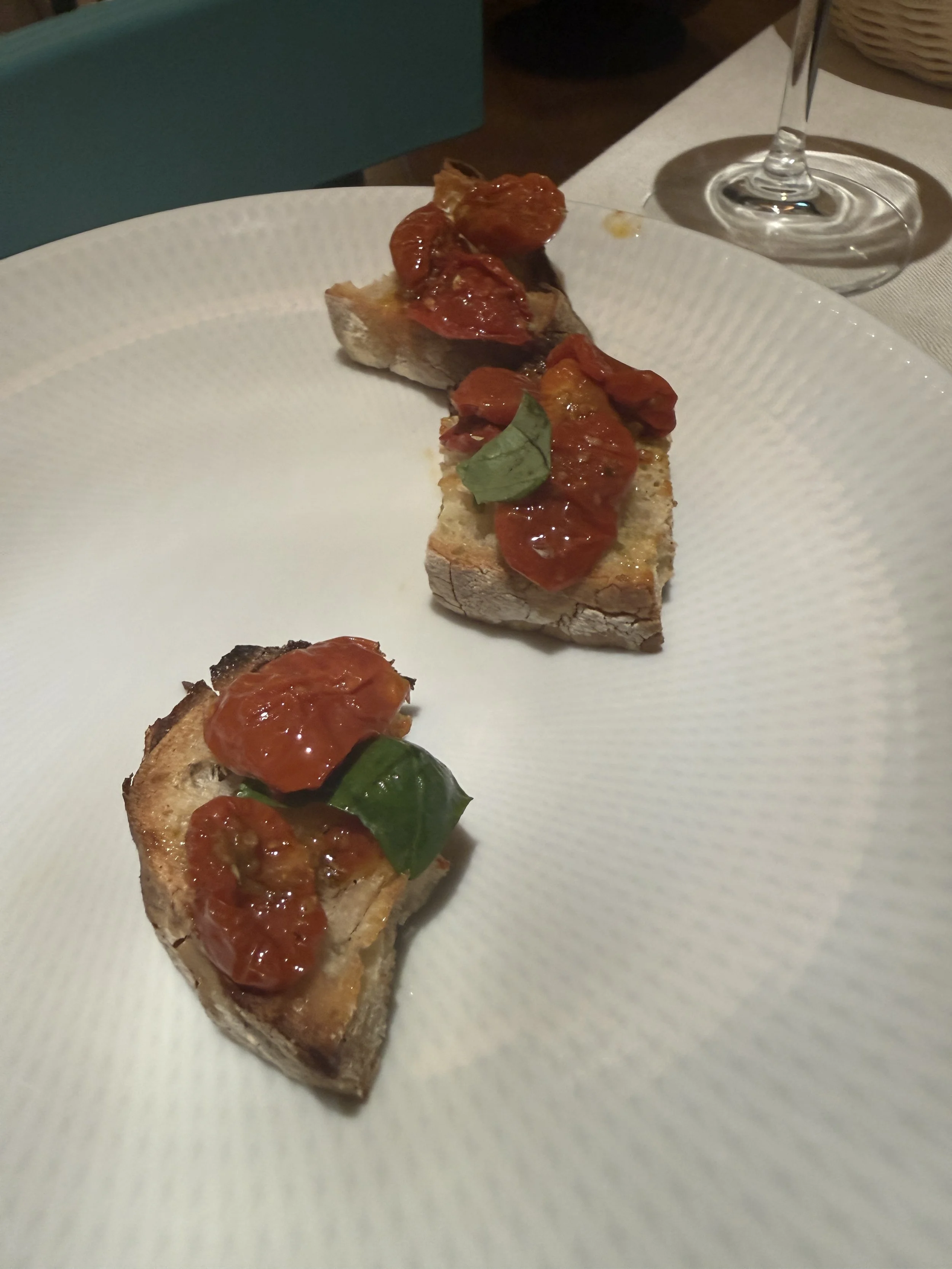
We were hoping to go to a seafood place for dinner tonight. Our host, Fabio, recommended Trattoria Da Emilia in Marina Grande. But it looked like they only had outside seating. The weather was too cold for that. We opted to try a place that our friend Deb recommended, Lo Stuzzichino. Our waiter was a bit of a jokester. When Sandy asked if one of the cocktails on the menu was good, he said “maybe”. We tried it anyway. It was good. We ordered some burcetta, tomato soup, gnocchi and grilled grouper.
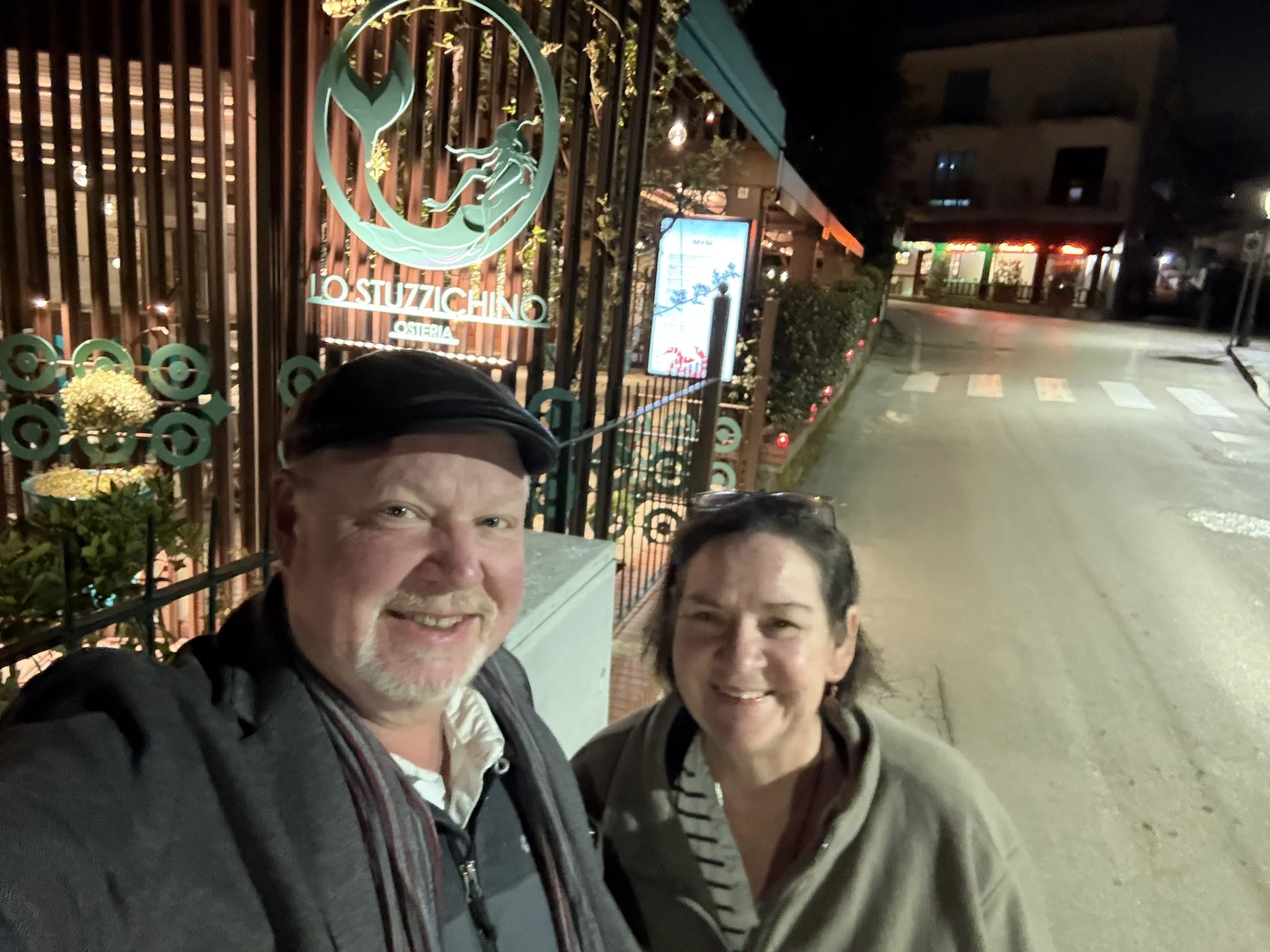
Lo Stuzzichino for dinner.
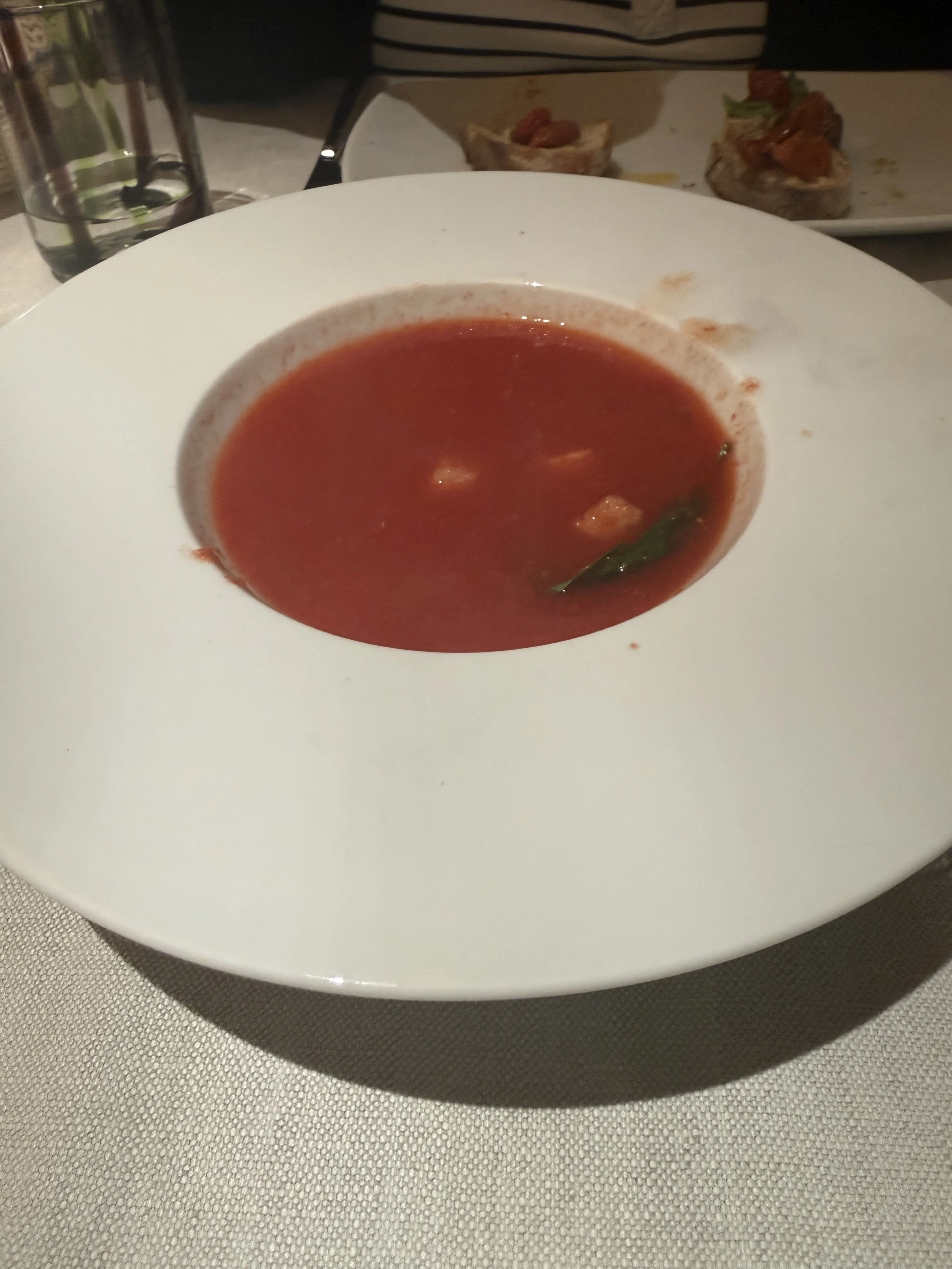
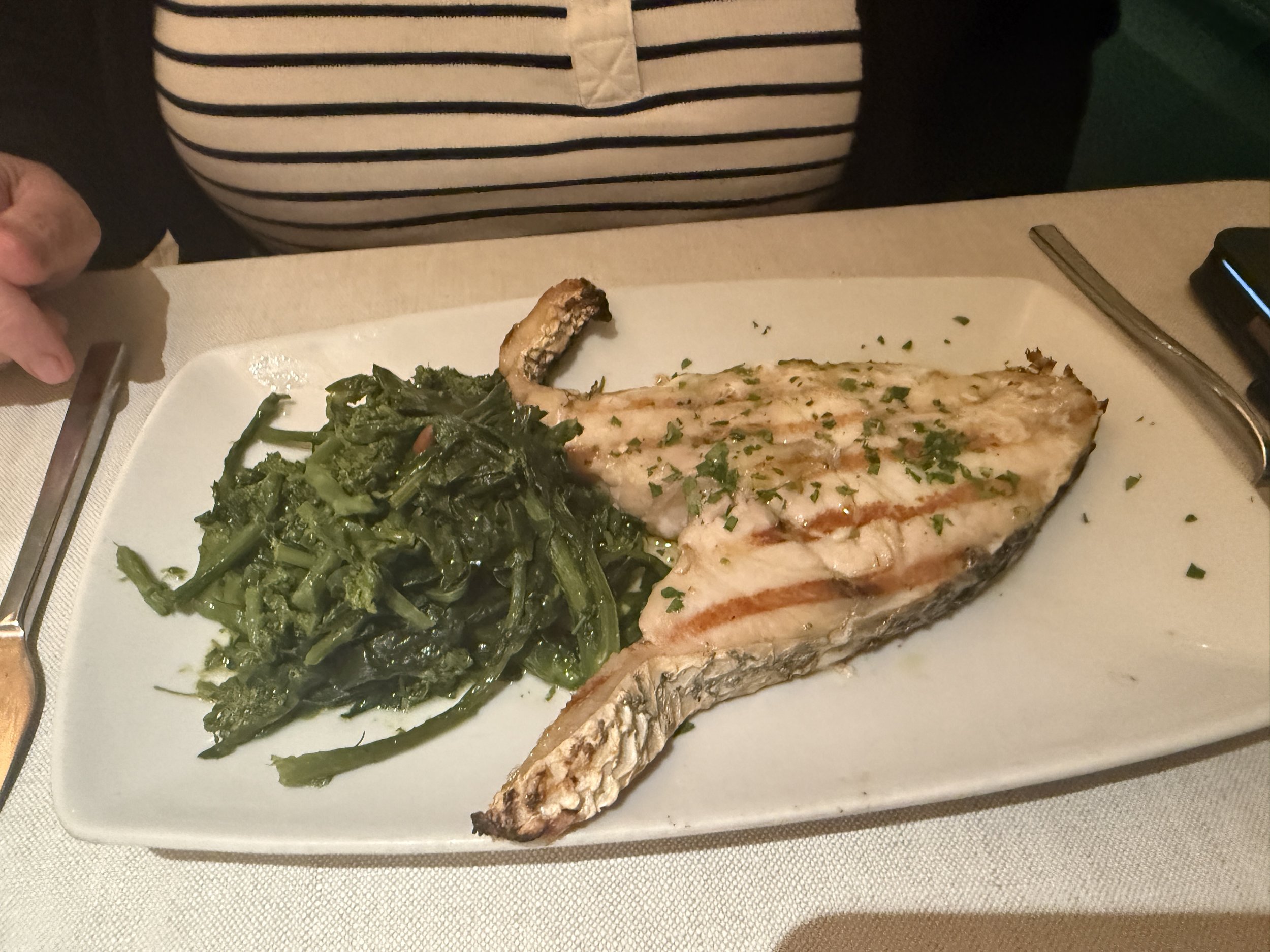
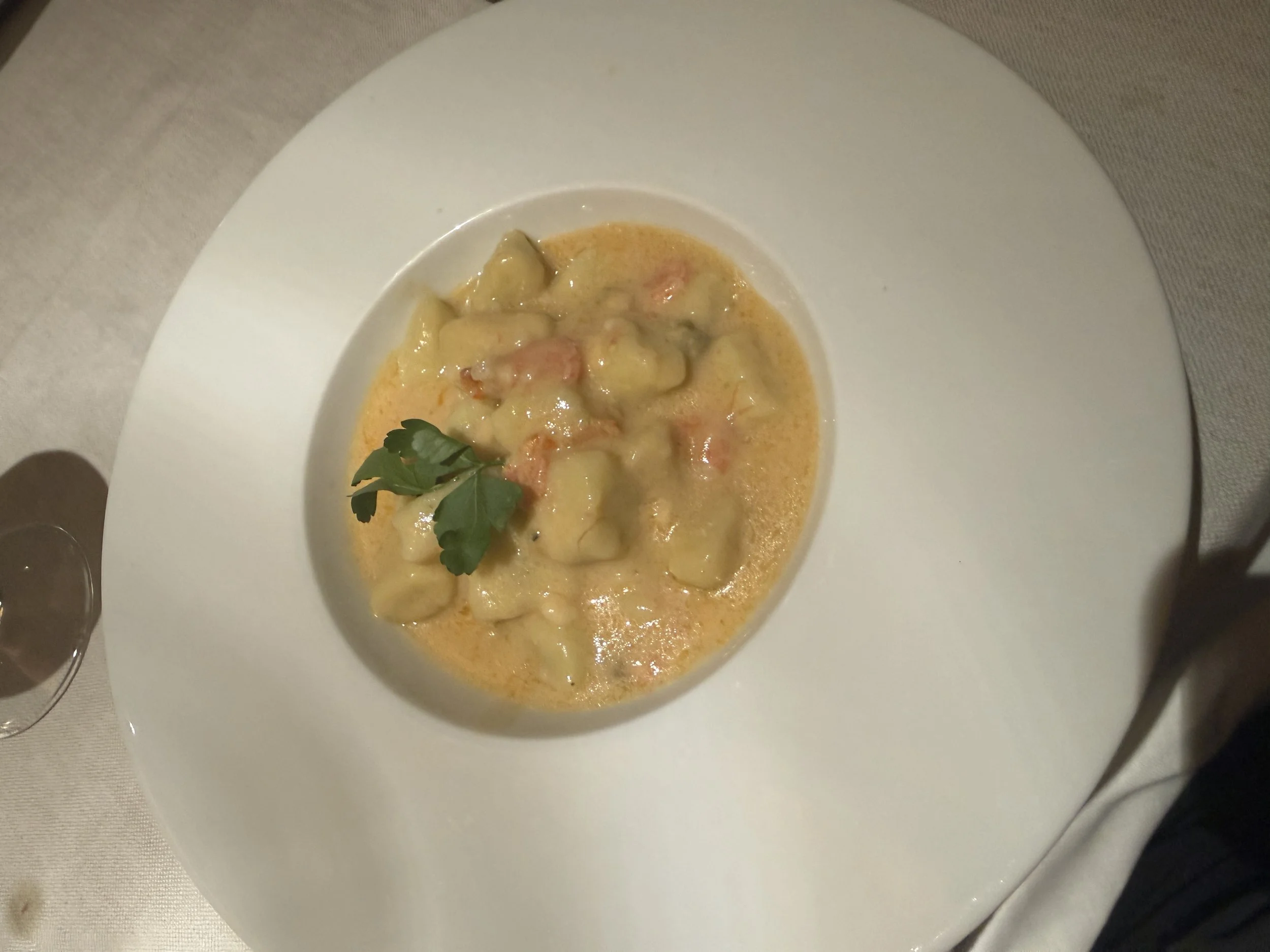
While we were eating we saw an Easter procession going down the street. When we arrived, we had noticed that there were small fire pots along the road. I thought it was just something for the local restaurant. This was the White Procession for Easter. It symbolizes the Virgin Mary’s frantic search for her son after his arrest. The people were wearing white robes and hoods. I was not able to get a picture as we were in the restaurant when they went by and I was not able to get outside in time.
We had parked on the street behind another car because the parking lots were full. Parking in Sorrento is a mystery to me. People park everywhere with no thought to how it impacts anybody. I thought we were ok. There was a white line on the side which usually indicates parking is allowed. (And there was another car there already). When we got back, there was a parking ticket on our car. Ugh!
